



A national standard of quality and trade driver
In a Muslim-majority country like Pakistan, Halal is the absolute baseline of daily consumption. But translating this cultural ubiquity into international trade requires transitioning Halal from an informal religious practice into an ironclad, regulated national standard.
Saima Asad, the co-founder and COO of Pakistan’s leading digital food channel Food Fusion, says that while the raw ingredients remain identical to non-Halal food, spiritual mindfulness and processing create a totally different product tier.
"Pakistan is an Islamic country, so whatever we eat, we have Halal. We have to make sure it's Halal. It's slaughtered in a Halal way, an Islamic way. There's a difference between normal meat, if you take one chicken, slaughtered simply, and the Islamic way, where you have to say 'Allahu Akbar' and then slaughter it. So, there’s that difference in the process. The meat is the same, but the process is different. We have to say 'Bismillah', it's also a religious thing," Asad told VOV.
By enforcing these strict parameters at a governmental level, Pakistan ensures that its exports align with both spiritual requirements and international food safety regulations.

The "TAYYIB" concept, the scientific standard of purity
The true elevation of Halal food comes from its pairing with an Islamic concept - Tayyib. While Halal dictates what is legally permissible, Tayyib focuses on wholesomeness, ethical handling, and absolute purity.
In the Pakistani culinary framework, Tayyib transforms Halal from a restrictive dietary boundary into a premium, hyper-hygienic lifestyle choice that appeals to conscious consumers. The science behind the ritual validates this pursuit of purity. The complete draining of blood during the slaughtering process is a natural way to cleanse the meat. Asad highlights how the intersection of science, ethics, and tradition creates a superior culinary experience.
According to Asad, "When you do it that way, first you have to release the blood of the whole chicken or whatever you are slaughtering. That cleans the bird or the animal you’re slaughtering. It’s proven by science that that's a better way to slaughter an animal than just cutting it.”
“If you have the same food at a Halal restaurant, you’ll enjoy it the same way, but it's done in a more hygienic way. The procedure that’s followed in an Islamic slaughtering gives the animal less pain. It will not be hurt by the slaughtering," Asad added.
Absolute prohibitions: beyond the slaughterhouse
Understanding Halal requires recognizing what is strictly forbidden (Haram). The boundaries are absolute, governing ingredients and cross-contamination in the cooking environment. Asad explains that Halal standards require absolute isolation from prohibited elements.
"There are few things permissible in Islam. We don't eat pork. It's completely forbidden. If pork is cooked in a certain pot, we prefer not to cook Halal food in that pot because it has touched pork. There are also some seafoods that are not permissible. There are other things that aren’t permissible in Islam, so we don't eat those," Asad said.
Because fruits and vegetables are inherently universal and permissible, the focus is tightly fixed on maintaining a rigid separation in the meat and processed food categories.
Full supply chain integrity and institutional verification
To function as an engine of global trade, Halal compliance can’t rely on trust alone. It requires complete supply chain integrity backed by verification.
Faiza Shafqat, the Trade and Investment Attaché at the Embassy of Pakistan in Hanoi, says true Halal encompasses the entirety of the logistics and preparation ecosystem.
“Non-Muslim countries need to learn Halal ethics, practices, and how to do it in the right way. There's still a lot of confusion. In the preparation and cooking, everything has to be done in the Halal way, throughout the supply chain," said Shafqat.
To prevent fraud and combat counterfeit labeling, strict regulatory oversight handles the auditing from farm to fork. Asad says institutional bodies must strengthen the monitoring of production facilities.
"You have to have a regulatory authority, an Islamic authority, that stamps and ensures that whatever they give certification to has followed the proper standards. They’ll visit facilities, slaughterhouses, and observe the process. That control authority must be there," said Asad.
When combined, Halal and Tayyib establish a universal baseline of safety that combines religious compliance with global consumer trends. Shafqat notes that Halal is designed to be inclusive.
"Halal and Tayyib is something for everyone. It doesn’t contradict any other religion," said Shafqat.
By standardizing hygienic practices, non-Muslim nations can unlock a huge, highly lucrative demographic – Muslims. Asad says establishing transparent Halal infrastructure is a powerful catalyst for tourism.
"We’ve traveled all over, to 10–15 countries which were not all Muslim countries, but they all had food that’s Halal, and they mention it because it involves certification. That promotes tourism because Muslims want to visit countries where Halal food is available. There are more than 1.5 billion Muslims, so you’ll be inviting all those 1.5 billion people to visit your country," Asad recalled.
Becoming a global Halal hub by 2030
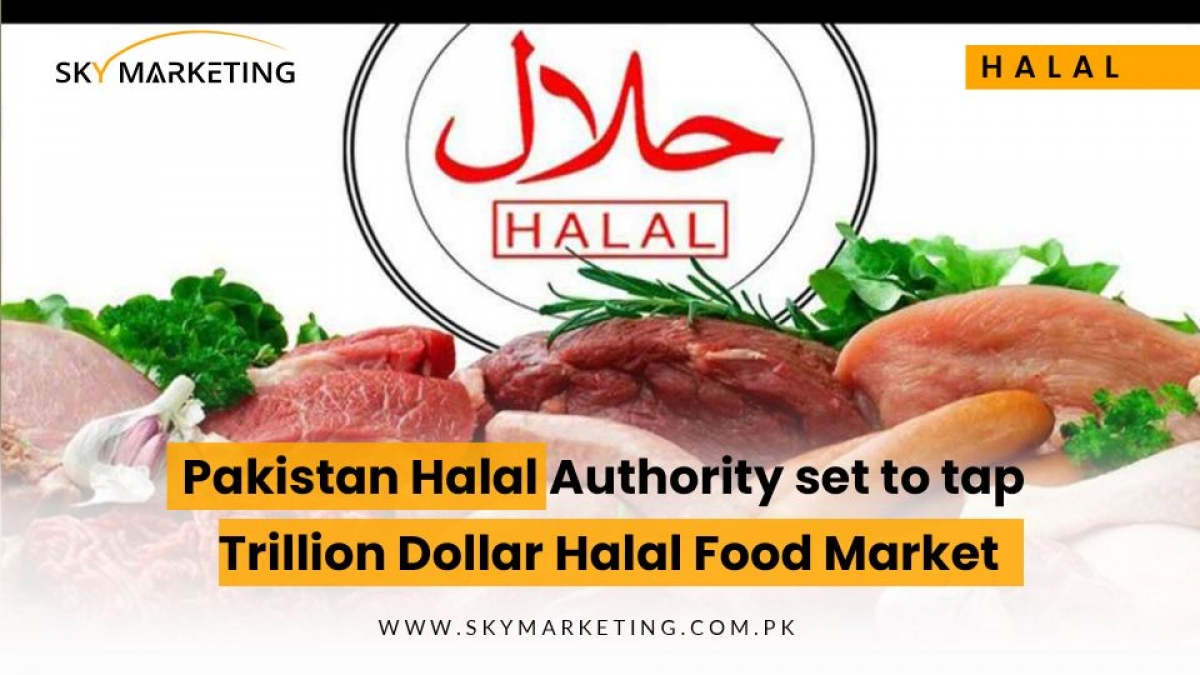
Pakistan’s ambition is to become a global Halal hub by the year 2030. It’s already a trusted exporter to highly demanding Halal markets, said Shafqat.
She added, “"Pakistan exports to many Muslim countries. The Middle East is one of the biggest markets for Pakistan’s Halal meat because they also follow the Halal standards and they know meat coming from Pakistan is safe. Pakistan is planning to do more to make people in other countries aware of Halal food."
The vision for 2030 relies heavily on building regulatory frameworks that harmonize with non-Muslim trading partners like Vietnam. Shafqat said inter-governmental collaboration is already underway to build those frameworks.
According to the diplomat, "The Vietnam Halal Authority and the Pakistan Halal Authority need to work together on this. I'm already in touch with Mr. Ramlan Bin Osman and we'll soon have a meeting between the Halal Authority of Pakistan and the Vietnam Halal Authority."
Pakistan’s perspective on Halal rewrites the global narrative on religious food traditions. By combining spiritual compliance with the scientific purity of Tayyib, and backing it with state-level regulatory enforcement, Halal has become synonymous with top-tier quality control.