(VOVWORLD) - When summer comes, Buon Ma Thuot city in the Central Highlands opens gong classes for local Ede ethnic minority students. Participants learn how to play the gong and other musical instruments and are encouraged to preserve the unique culture of their group.
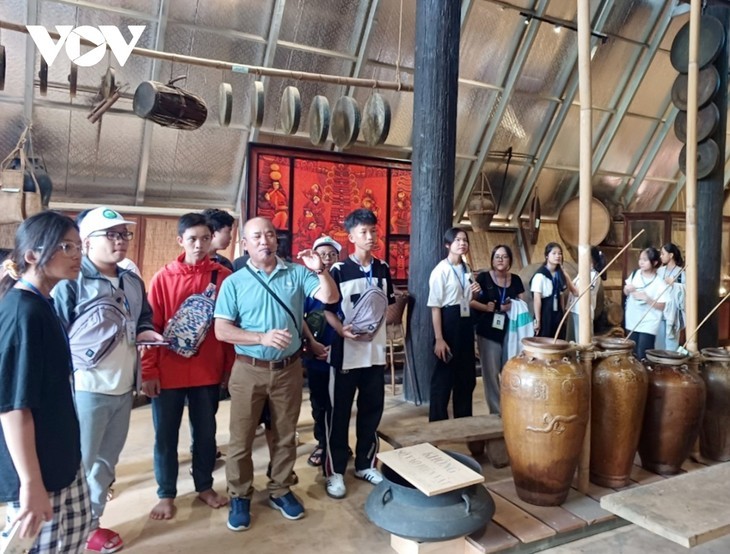 A group of Ede students on a study tour to learn about their culture. A group of Ede students on a study tour to learn about their culture. |
Every morning, the cultural house in Kmrong Prong B hamlet, Ea Tu commune, is filled with the sounds of gongs and laughter. 30 young people are being taught by experienced artists to play bronze and bamboo gongs.
“At first, I didn’t know how to play the gong. Thanks to the teachers’ enthusiastic instruction, now I can do it better. I’m very happy,” said Y Thien Nie.
Y Wih Eban, Secretary of Kmrong Prong B hamlet’s Party Committee, said that the class has attracted many young people this summer. “We’re happy to see more and more young people voluntarily joining the gong class. We hope to maintain it next summer.”
Another gong class has been opened in Ko Sier hamlet. The class, organized by Buon Ma Thuot city’s Communication, Culture, and Sports Center, is part of a plan to preserve and promote the culture of local ethnic minority groups from 2022 to 2025 with a vision to 2030. Two Xoang folk dance classes for women have also been organized in the city.
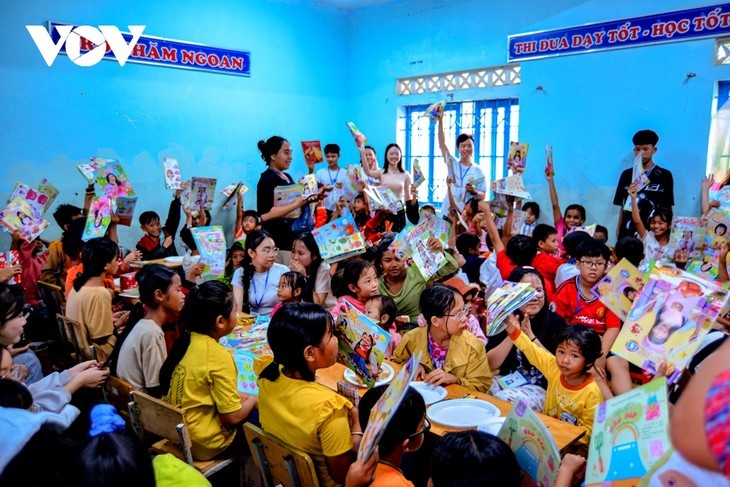 Summer activities attract a lot of Ede children. Summer activities attract a lot of Ede children. |
Since 2019 gong and Xoang classes have drawn hundreds of young ethnic minority people.
“This year, a large number of young people have registered for these classes. We plan to open more classes in hamlets and communes to encourage young people’s interest in their traditional culture,”Pham Thi Hai Binh, deputy head of the municipal Communication, Culture, and Sports Center, said.
Emeritus artisan Y Hiu Nie Kdam of M’Duk village, who has taught the gong to young people for many years, said he has been thinking about how to teach gong in a way that will be more appealing.
“Teaching young people the basics of gong playing in summer classes is a meaningful way to preserve the Ede culture. Many people now realize the importance of re-enacting traditional festivals and rituals to preserve the traditions of their predecessors,” Y Hiu Nie Kdam said.