(VOVWORLD) - The Netherlands is a global leader in semiconductor industry, and Vietnam is working to become a competitive hub. In this week’s Q&A, Tomas Konigs, Second Secretary at the Embassy of the Netherlands in Vietnam talks to VOV24/7’s reporter about the potential for business partnerships, key lessons from the Dutch semiconductor ecosystem, and opportunities for Vietnamese SMEs.
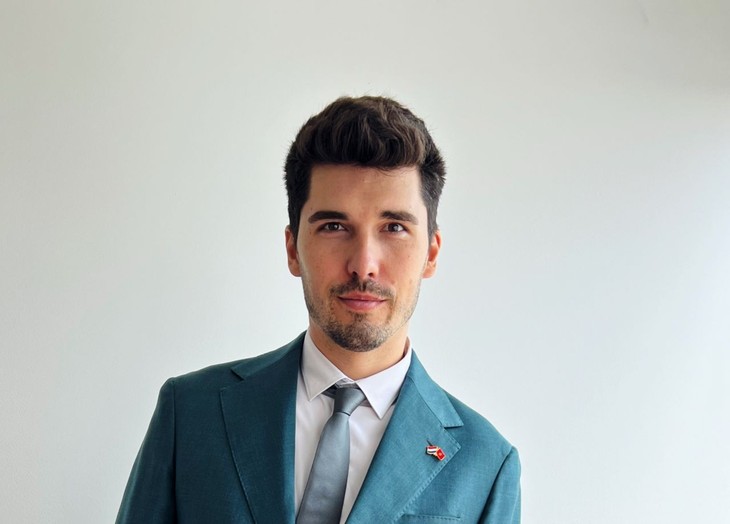 Tomas Königs, Second Secretary to the Netherlands Embassy in Vietnam (Photo credit: Tomas Königs) Tomas Königs, Second Secretary to the Netherlands Embassy in Vietnam (Photo credit: Tomas Königs) |
Bao Tram: Welcome to VOV24/7’s program! Thank you, Mr. Tomas Konigs, Second Secretary at the Embassy of the Netherlands in Vietnam, for joining us.
Tomas Konigs: Thank you for having me.
Bao Tram: The Netherlands is recognized as a major semiconductor powerhouse in Europe. How do you evaluate the cooperation potential with Vietnam in this field?
Tomas Konigs: The Netherlands is a global leader in the semiconductor industry, while Vietnam is expanding its role in the sector’s value chain. Vietnam is becoming increasingly attractive to Dutch high-tech companies that aim for long-term scalable growth over immediate production, which they would not find in other countries in the region. In particular, we noticed that Dutch companies in the semiconductor equipment manufacturing value chain find their way to Vietnam, including BESSY, VDL ETG, Technotion, and Lucassen. As Vietnam continues to address its existing challenges and builds on its achievements in the semicon sector, we expect more Dutch companies to follow.
Bao Tram: What factors should Vietnam prioritize - policies, human resources, or infrastructure - to become a stronger link in the global semiconductor value chain?
Tomas Konigs: All three, actually. Vietnam has strong advantages: integration through FTAs, a young workforce, and a strategic location. But semiconductor factories require stable electricity, and global investors need English-speaking personnel to operate smoothly. Another very important step is establishing an effective one-stop shop with English-speaking officials to support foreign investors. Currently, having to deal with many different authorities can reduce Vietnam’s competitiveness compared to other countries.
Bao Tram: From the Netherlands’ experience, what lessons could be useful for Vietnam?
Tomas Konigs: The semiconductor value chain is not just about global giants like ASML. The Dutch ecosystem includes over 300 interconnected suppliers in mechanics, optics, mechatronics and engineering services. Notably, SMEs account for 41% of total revenue and 59% of jobs in our semicon industry. Therefore, I encourage Vietnam to attract not only the big names, but also small and medium-sized enterprises, which create innovation and resilience in the ecosystem.
Bao Tram: You mentioned the crucial role of SMEs in the Dutch semiconductor ecosystem. What opportunities do you see for Vietnamese SMEs to participate in the semiconductor supply chain?
Tomas Konigs: So when you look at SMEs, they usually do not have the large capacities like Samsung and Intel to bring their own suppliers with them abroad. I think that's why it's also important that the Vietnamese supplier ecosystem matures so that they will be able to enable the presence of these Dutch SMEs, for instance, in this case, in Vietnam. And that's precisely the reason why we have designed the program for, SemiExpo Vietnam in the way that we have for the goal to connect the Dutch high-tech SMEs that are already in Vietnam with the Vietnamese suppliers that they need.
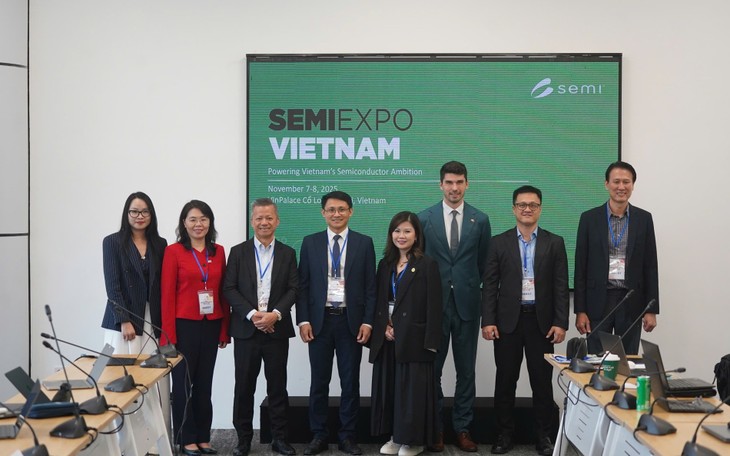 Organizing Committee members and supporting partners of 2025 SEMI Expo Vietnam at the press conference introducing the event (Photo: NIC) Organizing Committee members and supporting partners of 2025 SEMI Expo Vietnam at the press conference introducing the event (Photo: NIC) |
Bao Tram: How is the Dutch Embassy helping connect Dutch technology companies with Vietnamese partners?
Tomas Konigs: My embassy always stands ready to support Dutch companies that are interested in exploring opportunities in Vietnam with local insights and networks. As a supporting partner of this year's SEMI Expo Vietnam, my embassy has invited various Dutch high-tech companies to the expo, and I warmly encourage Vietnamese companies that are interested in becoming suppliers to the global semiconductor value chain to attend the afternoon session on Friday the 7th of November to hear what companies from the Netherlands and other countries are looking for in their potential suppliers.
Bao Tram: Thank you, Mr. Tomas Konigs, for your valuable insights. We look forward to seeing stronger cooperation between Vietnam and the Netherlands in building a dynamic semiconductor ecosystem.