(VOVWORLD) - Vietnam is entering a new era of development — one marked by a shift from extensive growth to improving growth quality through productivity, science and technology, modern governance, and a twin transition: digitalization and greening, said a Vietnamese senior expert.
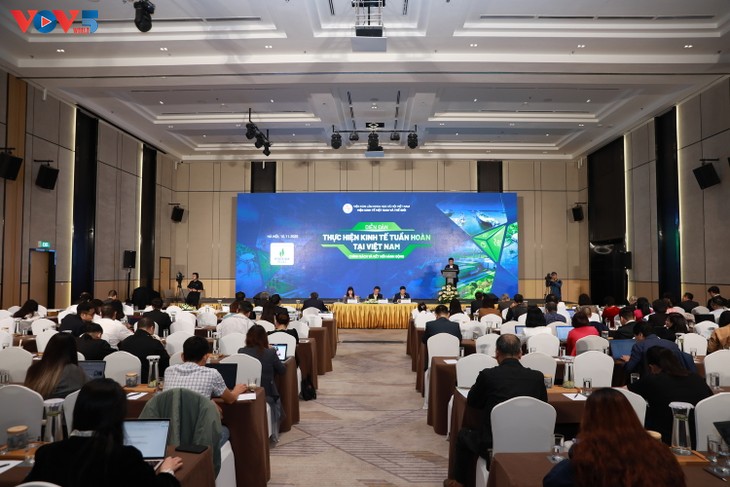 Forum “Implementing Circular Economy in Vietnam: Policies and Action Linkages” Forum “Implementing Circular Economy in Vietnam: Policies and Action Linkages” |
Professor Dr. Le Van Loi, President of the Vietnam Academy of Social Sciences, addressed a forum held in Hanoi on Monday titled “Implementing Circular Economy in Vietnam: Policies and Action Linkages.”
According to Professor Loi, the circular economy will serve as a core pillar for sustainable development, helping Vietnam reduce dependence on natural resources, cut emissions, and improve the efficiency of material and energy use, while unlocking new markets, jobs, and value chains.
“Our orientation toward a circular economy is not separate from national development strategies. It is an integral part of a new growth model that links green, digital, and inclusive goals with modern governance standards. It combines market dynamics with social responsibility and cultural preservation — and, most importantly, places people at the center of every policy choice,” Loi explained.
“This spirit has been clearly affirmed in Vietnam’s Green Growth Strategy, Circular Economy Development Scheme, and National Action Plan. These documents not only define the vision but also provide the tools and benchmarks to turn that vision into reality,” he added.
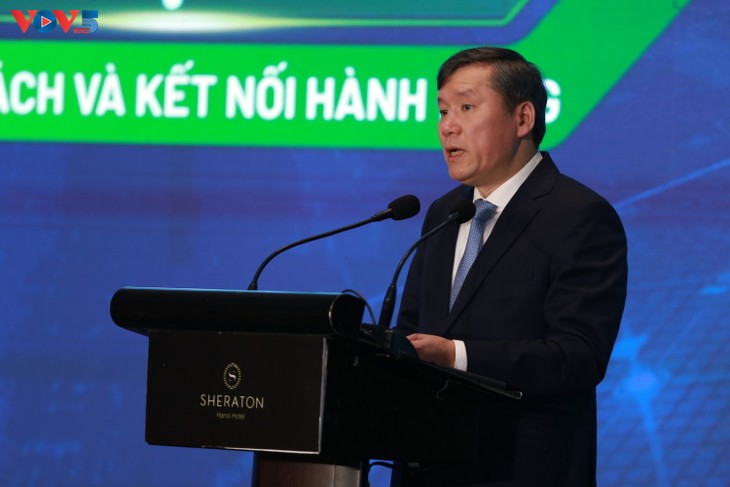 Professor, Dr. Le Van Loi speaks at the forum. Professor, Dr. Le Van Loi speaks at the forum. |
Presentations at the forum outlined the roadmap for implementing the National Circular Economy Plan through 2035, highlighting the key role of Extended Producer Responsibility (EPR) in managing resources and waste.
From the agricultural perspective, experts proposed leveraging 150 million tons of by-products generated each year to establish closed-loop value chains that integrate biotechnology and indigenous knowledge, thereby advancing low-carbon, eco-sustainable agriculture.
In urban settings, discussions focused on waste sorting at source, developing localized plastic recycling networks, and boosting recycling rates to curb greenhouse gas emissions.
From the business standpoint, participants called for refining green finance mechanisms, expanding tax incentives, and fostering innovative circular business models to accelerate Vietnam’s transition toward a green and sustainable economy.