(VOVWORLD) - Every day at around 4 a.m., farmers from the outskirts of Hanoi bring their homegrown produce into the city and gather at a market on Cau Moi street in Nga Tu So ward. For years, Cau Moi market has catered to early risers seeking fresh food at affordable prices.
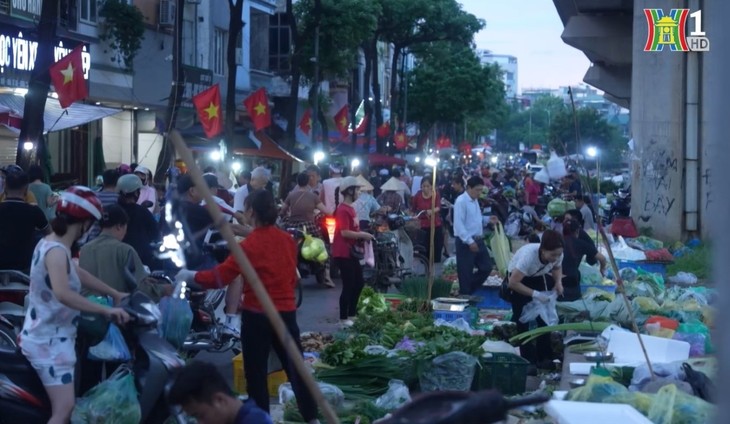 Bustling Cau Moi market at the crack of dawn (Photo: hanoionline.vn) Bustling Cau Moi market at the crack of dawn (Photo: hanoionline.vn)
|
Rain or shine, many low-income residents head to Cau Moi market at dawn to shop for their families. Fresh vegetables, fruits, and other staples are sold at prices far lower than at convenience stores or supermarkets, the biggest incentive for shoppers willing to wake before sunrise.
As the morning progresses, the market becomes busier and more diverse: homemakers, morning exercisers stopping by for breakfast ingredients, and even students who depend on wholesale prices to manage living costs. The most frequent customers are the elderly, especially pensioners, for whom early market trips are both a habit and a smart financial choice.
Ngo Thi Buoi, a resident of Dong Da district, said she gets up early to exercise at 4 a.m. and then go to the market at 5. She doesn’t shop in supermarkets because prices are higher. “Everything is much cheaper at the market. I save 38 cents a day. If I can save like that every day, it’s good. I have to save because I only rely on my pension.”
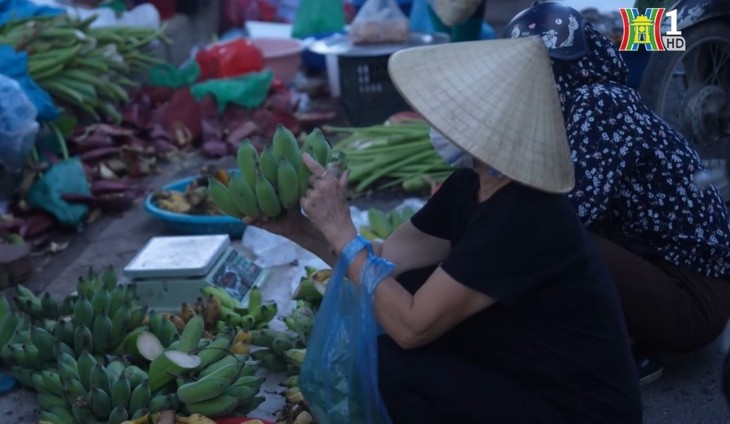 Elderly shoppers make up the largest crowd at Cau Moi market. (Photo: hanoionline.vn) Elderly shoppers make up the largest crowd at Cau Moi market. (Photo: hanoionline.vn)
|
Students from other provinces also depend on the market to cope with Hanoi’s high living costs. By waking up early to shop and cook at home, they can significantly reduce their monthly spending.
Vu Hai Dang, a student from Ninh Binh province, told VOV, “I’m boarding with my friend. We often go to the market at 5 a.m. to buy food for the whole week. We make a list of how much meat and vegetables we need so we can estimate our minimum monthly costs. For example, we spend 1.2 to 1.5 USD per week on vegetables and 5.7 to 7.6 USD on meat. It’s easier to bargain at this market and the prices suit our budget.”
Shopping every day at traditional markets has long been part of Vietnamese culture. Beyond being a place to buy goods, markets serve as social hubs.
 A wide variety of fresh, high-quality produce at Cau Moi market (Photo: hanoionline.vn) A wide variety of fresh, high-quality produce at Cau Moi market (Photo: hanoionline.vn)
|
With essential goods becoming more expensive, shoppers are adjusting their habits. Many choose local markets that operate during limited hours, rather than paying higher prices at convenience stores or supermarkets. Others shop once and portion out their food for the week to reduce waste.
A Hanoi resident named Cap Mai Lien said, “I often shop two to three times a week. Many farmers at this market sell home-grown produce, so the food is fresh, abundant, and cheap.”
In challenging economic times, more homemakers are turning to wholesale markets to control family expenses. At the same time, digital-savvy shoppers hunt for discounts on apps and websites. Saving even a few cents per item can add up, helping households save tens of dollars each month.
Markets like Cau Moi are becoming more crowded, with both buyers and sellers seeing rising benefits in the early-morning economy.