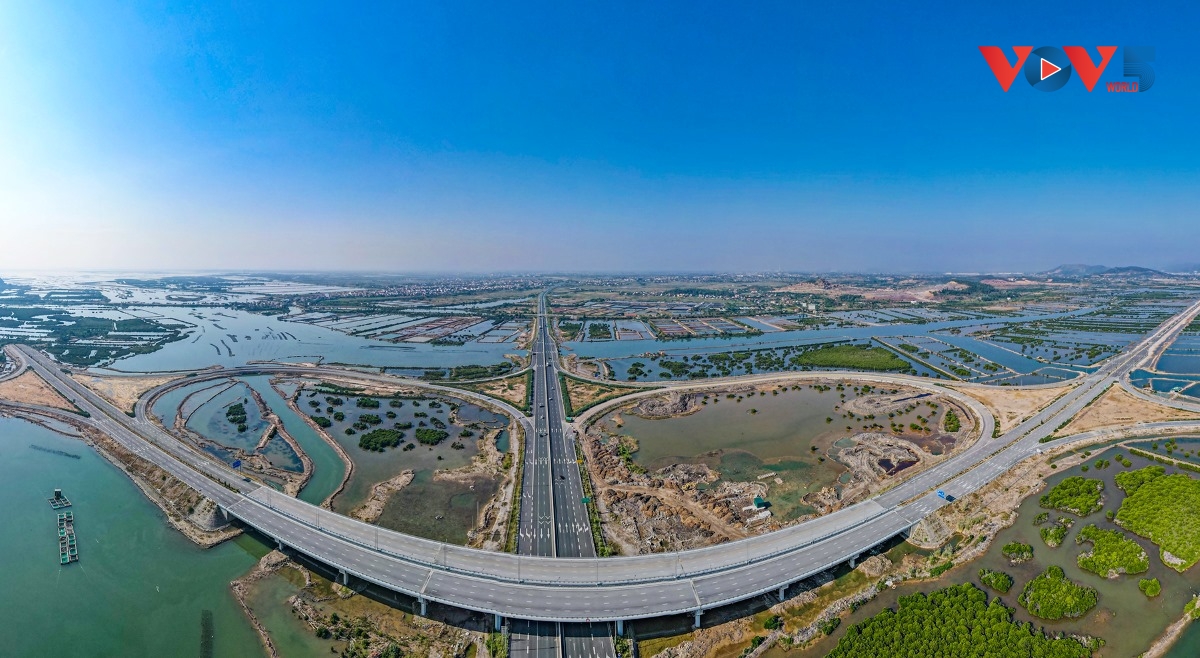
Approved during the fourth session of the provincial People's Council on June 16, the revised planning is considered a key milestone as Quang Ninh completes its administrative restructuring and transitions to a stable two-tier local governance model.
According to provincial Party Secretary Quan Minh Cuong, the adjustments ensure consistency with national, regional and sectoral master plans. They are designed to meet the socio-economic development demands of a new era while maximizing Quang Ninh’s potential, strategic advantages and pivotal role within the Red River Delta and the nation as a whole.
In line with the Politburo’s orientation on estabishing centrally run cities, Quang Ninh has proposed the revisions to strictly follow the central level’s major policies and development strategies.
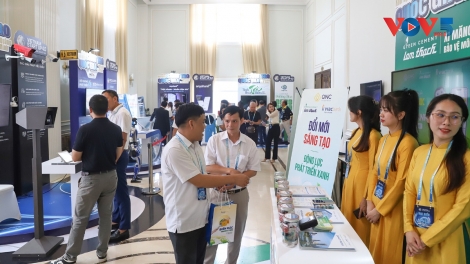
A resolution adopted at the provincial People’s Council’s 4th session also raises Quang Ninh’s average Gross Regional Domestic Product (GRDP) growth target from 10% to 12% annually until 2030. By 2030, per capita GRDP is projected to reach 20,000 USD. The digital economy is expected to become a key growth driver, underpinned by digital infrastructure, data and e-government.
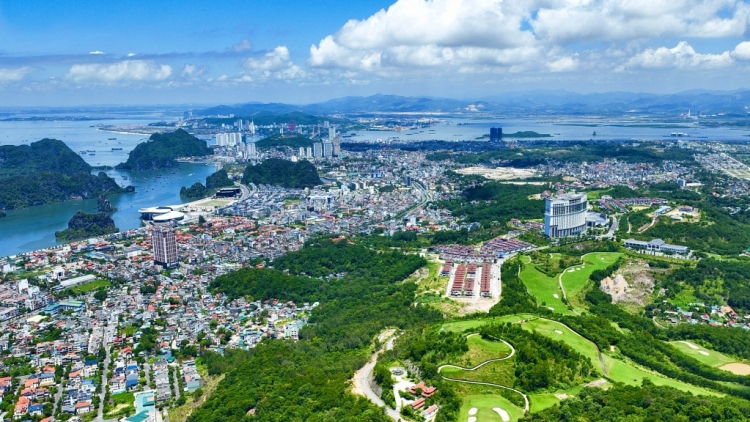
The new spatial model consists of three development corridors—urban-coastal, border-gate and ecological-mountainous; four economic zones with distinct functions based on regional advantages; and five growth poles—Ha Long, Van Don, Mong Cai, Quang Yen and Yen Tu—each specializing in areas ranging from the digital economy and international free trade to border-gate development and heritage culture.
Vu Van Dien, Deputy Chairman of the provincial People’s Committee, said the revised planning creates new competitive advantages, including the eastern coastal axis that shortens travel time between Van Dong and the Bac Luan Bridge III, and the western axis connecting to Gia Binh Airport in Bac Ninh province and Tan Thanh Border Gate in Lang Son.
"A new expressway built along the riverfront route and linked to the Hai Phong-Gia Binh Expressway and Ninh Xa Station will seamlessly connect the entire Yen Tu cultural heritage complex,” said Dien.
He added, once the planning is implemented, the remote district of Ba Che bordering Lang Son will be less than 30 minutes from Ha Long Station, opening up 2,800 hectares of flat land ready for development. Even at the planning stage, Quang Ninh has already attracted considerable interest from strategic investors.
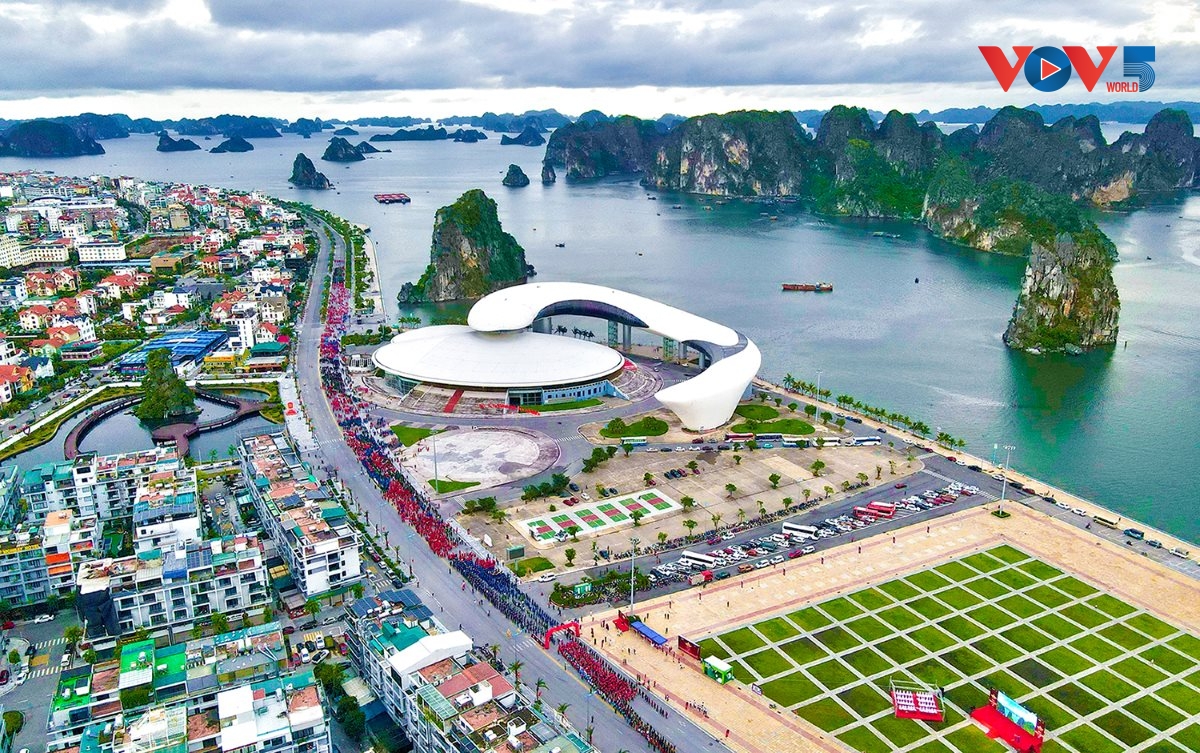
The overarching vision is to develop Quang Ninh into an international gateway, a global center for services and tourism, and a national hub of the marine economy.
Quang Ninh also aims to build modern, green and sustainable coastal cities that offer an internationally benchmarked quality of life and serve as pioneers of innovation.
Given its long-term significance, the planning is regarded as a historic roadmap for Quang Ninh’s development over the coming decades. Realizing this vision will require the immediate engagement of the entire political system.
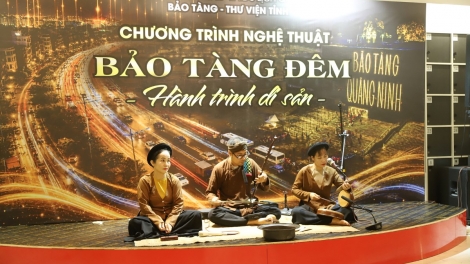
Quang Ninh is also pioneering new growth models tailored to emerging trends, including the blue marine economy, the night-time economy, the low-altitude economy, and Transit-Oriented Development (TOD) urban models.
Quang Ninh’s three strategic breakthroughs focus on developing multi-modal infrastructure centered around the Hanoi–Quang Ninh high-speed railway, cultivating high-quality human resources, and piloting unprecedented economic models. It has also established a roadmap toward net-zero emissions, prioritizing offshore wind power, and gradually reducing dependence on coal-fired thermal power.
Delegates at the fourth session of the provincial People's Council called for accelerating the implementation of the planning’s programs and objectives.
Hoang Ba Nam, Chairman of the People’s Council of Ha Long Ward, emphasized that economic growth must go hand in hand with preserving traditional cultural values, protecting the environment and pursuing green, sustainable development. He also stressed the need to prioritize healthcare and education investments to ensure residents fully benefit from development gains.
"The adjustments ensure continuity and avoid disruptions, giving investors greater confidence. We need to prioritize resources for key projects, reserve land for social and rental housing, and invest in urban wastewater treatment systems to protect the Hạ Long Bay World Natural Heritage Site," said Nam.
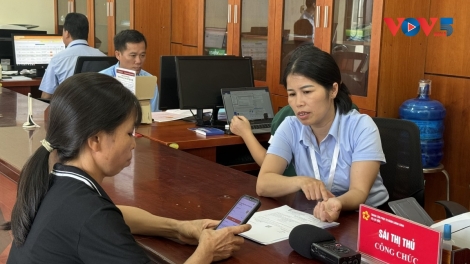
According to Trinh Thi Minh Thanh, Chairwoman of the provincial People's Council, Quang Ninh will continue streamlining its organizational apparatus and building a capable workforce to meet development requirements in the new phase.
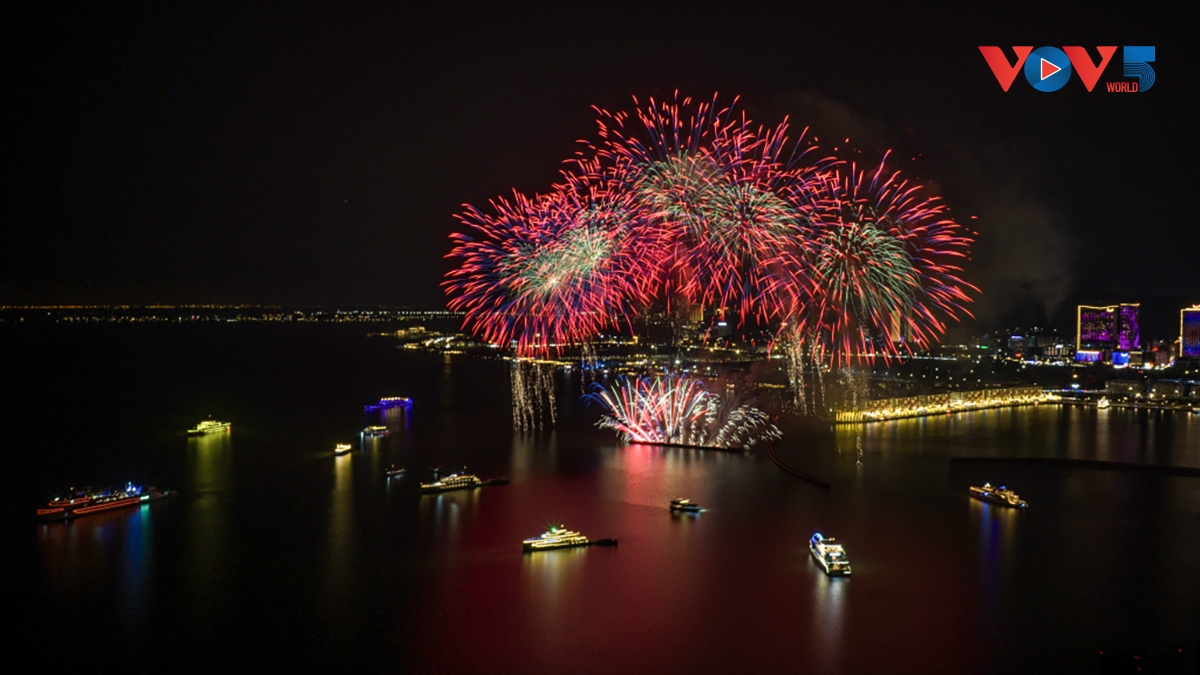
Quang Ninh will also unlock growth potential in culture and tourism, promote agriculture, the marine economy and aquaculture, and leverage its strategic location and infrastructure network to develop logistics, import-export activities and manufacturing industries. These efforts will provide both a legal foundation and fresh momentum for Quang Ninh’s next stage of development.
"We will urgently translate the provincial planning into concrete programs, schemes and key projects,” said Thanh, adding, “At the same time, we must innovate our thinking, mobilize and use resources efficiently and sustainably, maximize the guiding role of public investment, unlock social capital, create new growth drivers, and realize the development goals outlined in the adjusted planning."
By shifting toward a multi-polar, multi-centered urban network, Quang Ninh is moving away from development defined by administrative boundaries and toward development driven by functional spaces. The revised provincial planning is expected to inject fresh momentum into economic growth and provide the critical legal foundation for Quang Ninh’s ambition of becoming a centrally run city—a globally recognized, green, smart and sustainable heritage coastal metropolis.