




The E De people hold their mothers’ contributions in high regard. Children take their mother’s surname, and women take the initiative in marriage. The woman and her family take the lead in arranging the marriage and prepare the wedding offerings requested by the groom’s family as a gesture of gratitude for raising their future son-in-law. Depending on the agreement between the two families, the young woman may stay with the groom’s family for a period of time to show off her good character, diligence and faithfulness.
After this period, if the groom accepts her, the official welcoming ceremony is held to bring the groom to his wife’s family. If the young man changes his mind, his family invites the bride’s family to formally decline the marriage. In that case, his family must compensate the bride’s family with twice the amount of wedding offerings requested earlier and provide a cow or a pig as an apology. In practice, however, it is very rare for a young man to change his mind after accepting a woman’s marriage proposal.

“The son-in-law welcoming ceremony takes place after the engagement ceremony. The groom’s family has the right to request wedding offerings. After the young woman has stayed with the groom’s family for three years, we’ll go to the wife’s home. All the required wedding offerings must be provided before the groom goes to the bride’s family,” newlywed groom Y Quoc Nie shared his joy at coming to his wife’s home.
On the day of the ceremony, the groom’s family prepares a jar of rice liquor and a pig to send him off. The bride’s family presents all the requested offerings, with a pair of bronze bracelets considered the most important.

On the way to the bride’s home, groups of young people may tease and stop the procession as a symbolic gesture, reflecting the belief that the more challenges and obstacles the couple encounters, the stronger and happier the marriage will be.
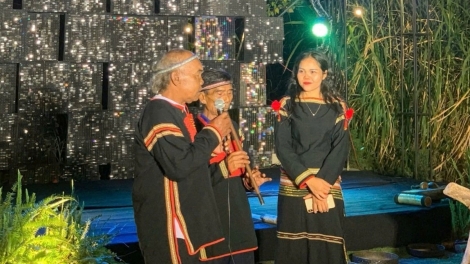
At the bride’s home, a village elder speaks on behalf of both families, introducing their parents and other family members. The bride and groom then exchange the bronze bracelets, officially becoming husband and wife. If either person returns the bracelet, is unfaithful, or commits a serious wrongdoing, they must fully compensate the other family for the wedding offerings.
“When the groom arrives, the two families and their elders review the agreement of wedding offerings made earlier, for example the offerings for the groom’s parents,”said village elder Y Tham Kbuor.
After all the rituals are completed, the couple offers rice liquor to each other and shares a piece of rice and a piece of liver, symbolizing their willingness to share both joy and hardship. On the joyful sound of gongs, family members and friends give gifts to the couple.

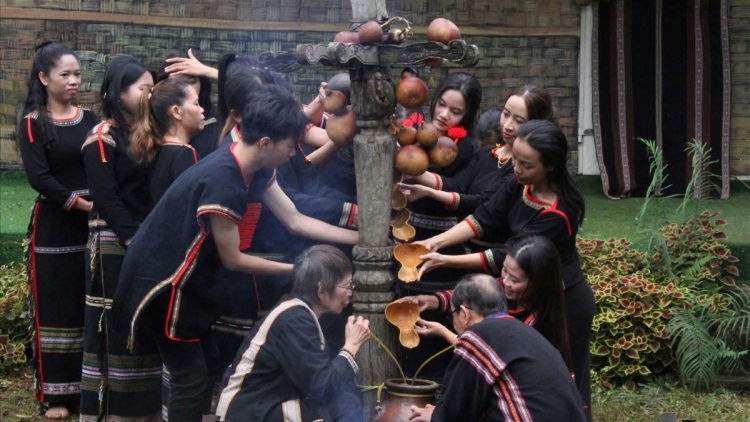
A traditional E De son-in-law welcoming ceremony has been reenacted at the Dak Lak Museum, attracting large numbers of local people and tourists. Artisan Y Djing Adroong from Tong Ju village says that staging the wedding ceremony for visitors helps preserve the community’s cultural identity and serve community-based tourism.
“I’m very honoured to take part in this reenactment and revisit the traditions and cultural beauty of the E De. Community-based tourism in Tong Ju village is a good way to create livelihoods for local people who will contribute to preserving their cultural heritage through brocade weaving, gong performances and traditional ceremonies. I hope E De cultural values will reach more people and be preserved for generations to come,” said Adrong.
Steve, a tourist from Scotland said, “The music festival was very interesting. It’s the first time I have been here. I’d like to come back again. I really enjoyed the E De culture. These people deserve more time on television and the media.”
The son-in-law welcoming ceremony marks the union between two people and two families. It reflects the E De people’s deeply rooted values of affection, solidarity and their enduring cultural identity.