(VOVWORLD) - Vietnam and Bulgaria issued a joint statement on the establishment of a strategic partnership, on the occasion of Party General Secretary To Lam’s visit to Bulgaria from Wednesday to Friday.
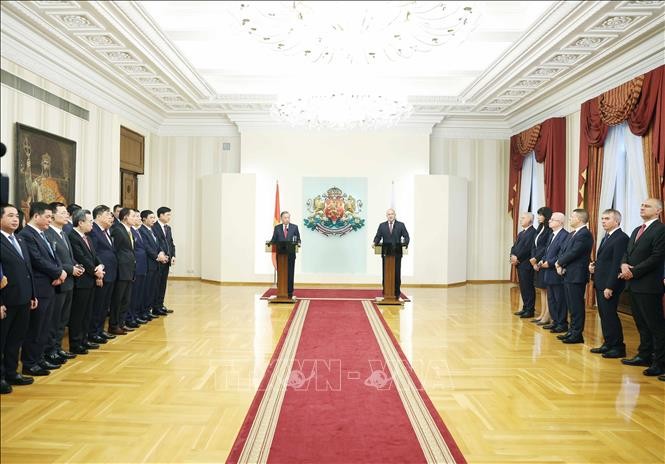 Party General Secretary To Lam and Bulgarian President Rumen Radev at a press conference in Sofia, Bulgaria, October 24, 2025. (Photo: VNA) Party General Secretary To Lam and Bulgarian President Rumen Radev at a press conference in Sofia, Bulgaria, October 24, 2025. (Photo: VNA) |
The strategic partnership aims to elevate bilateral relations to a new height, both bilaterally and multilaterally, consolidate and enhance existing bilateral cooperation mechanisms while fostering the creation of new ones.
Vietnam and Bulgaria will continue to deepen cooperation across diverse areas, with a view to bringing tangible benefits to their peoples and contributing to peace, stability, cooperation and prosperity regionally and globally.
The two sides will strengthen political and diplomatic cooperation, foster ties between their legislative bodies, enhance cooperation in security and law enforcement, advance the negotiations of new agreements, maintain coordination in information sharing, and promote cooperation in cybersecurity and combating high-tech crime, drug trafficking, and transnational organized crime.
The two sides agreed to promote cooperation in trade, identifying this as one of the central pillars and a key driving force for elevating bilateral relations from “traditional” to “strategic, substantive and effective.” They will support each other in economic cooperation and in improving market access in the EU and ASEAN.
At the same time, the two sides agreed to promote practical cooperation in science and technology, education and training, agriculture, culture, tourism, sports, labor, environment, and healthcare; as well as to enhance cooperation between localities and people-to-people exchanges.
They will strengthen consultations on regional and international issues, and to work together in addressing traditional and non-traditional security challenges.
Vietnam and Bulgaria voiced support for multilateralism, the full respect for and adherence to international law, the peaceful settlement of disputes on the basis of international law, especially the UN Charter, without the threat or use of force.
Both sides emphasized the importance of maintaining peace and stability and ensuring security, safety, and freedom of navigation and overflight, unimpeded commerce, and upholding the rule of law at sea in accordance with international law, including the 1982 United Nations Convention on the Law of the Sea (UNCLOS).