(VOVWORLD) - A small wool embroidery workshop in Hanoi is helping young people with special needs build confidence, develop skills, and take steps toward earning an income. Behind this model are an artist’s passion, a mother’s perseverance, and a shared hope for a more inclusive future.
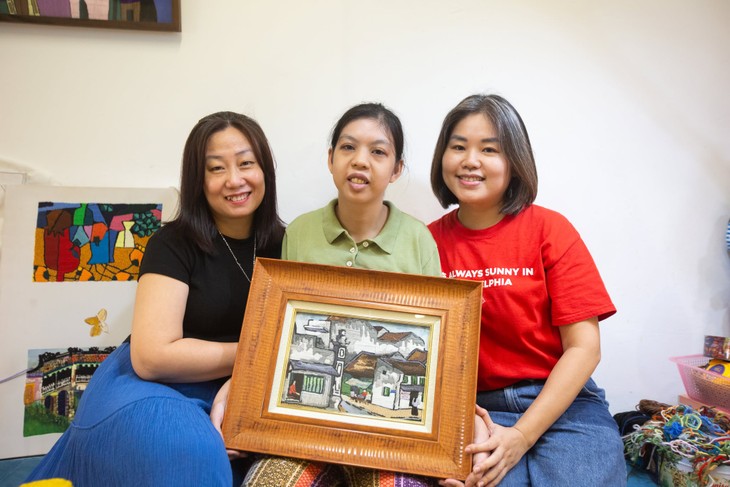 (From left) Hong Van, Lam Giang, and Thu Ha pose for a photo with Giang's most beloved street painting (Photo: Khanh Long) (From left) Hong Van, Lam Giang, and Thu Ha pose for a photo with Giang's most beloved street painting (Photo: Khanh Long) |
A learner grows in confidence
“My name is Vu Lam Giang. I’m 20 years old.”
At the wool embroidery class at 16 Hang Chuoi Street, Giang always introduces herself cheerfully. Unlike many peers with similar developmental challenges, she can communicate verbally and enjoys talking with teachers and friends.
Asked why she joined the class, she said, “Because I’ve never learned this before, so I wanted to try and see if I could. At first, it was difficult, now it feels easy…The wool thread is heavier than normal. …This is my fifth piece already. I like the city painting most because it’s beautiful. It took me two months to finish. I like to talk with classmates, so they can communicate more too.”
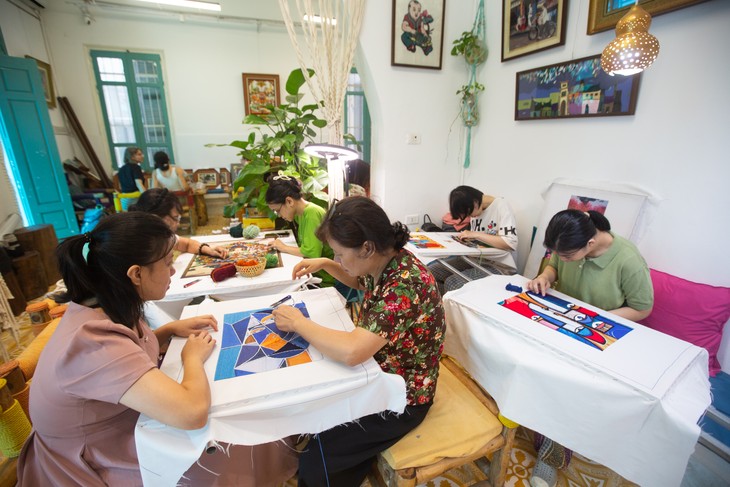 Ms. Hong Van’s wool embroidery workshop is in a house on Hang Chuoi Street, Hanoi. (Photo: Khanh Long) Ms. Hong Van’s wool embroidery workshop is in a house on Hang Chuoi Street, Hanoi. (Photo: Khanh Long) |
Skills take shape
Artist Nguyen Thi Hong Van runs the studio — a combination of wool embroidery production and free vocational training for youth with a disability, autism, hearing impairment, or other difficult circumstance.
“When I graduated, I wanted to embroider a wool painting to see how it would turn out. That idea kept burning in me, especially after I started working at Craftlink, where I met people from mountain areas, taught people with disabilities, and learned about vocational models,” Van told VOV.
Wool embroidery requires patience and precision. A single artwork can take months to complete. The biggest challenge isn’t the needle — but staying focused so every stitch is soft and even.
“The wool embroidery technique is a bit different. When you push the needle through, you must be meticulous. Just a tiny slip can ruin the whole piece. If you punch continuously and carelessly, the fabric can tear — the punch needle is quite large, and the fabric is thick,” Van explained.
Van’s class has 10 regular learners right now, but the demand is much greater. “Many children with special needs want to attend my class, but my model is small. I want a stable market for the products and more community support. My hope is that learners will master the craft and create products of real value — not something that people buy only out of sympathy,” says Van.
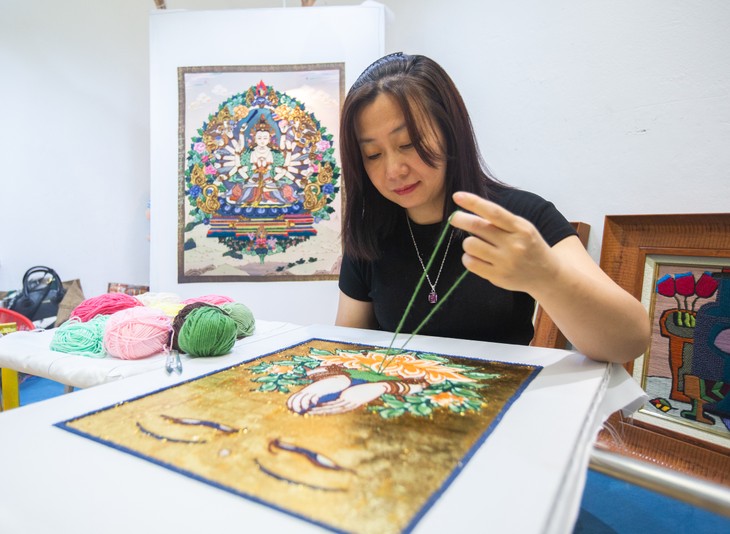 Ms. Van said her strongest impression of wool dates back to her childhood and when she began studying at university, her passion for wool grew even stronger. (Photo: Khanh Long) Ms. Van said her strongest impression of wool dates back to her childhood and when she began studying at university, her passion for wool grew even stronger. (Photo: Khanh Long) |
A mother’s determination — and concerns ahead
Giang’s mother, Leu Thi Thu Ha, has been her steadfast companion. She speaks candidly about her family’s situation and motivation, “My daughter has mental retardation. I used to be a kindergarten manager in HCMC. But when Giang reached vocational age, I had to give up my job and accompany her. She is well-behaved and can do housework, cook simple meals, and take care of herself. But she’s as innocent as a 9-year-old girl.”
Despite Giang’s abilities, finding a place willing to support her proved difficult. “They don’t have enough patience,” Ha said.
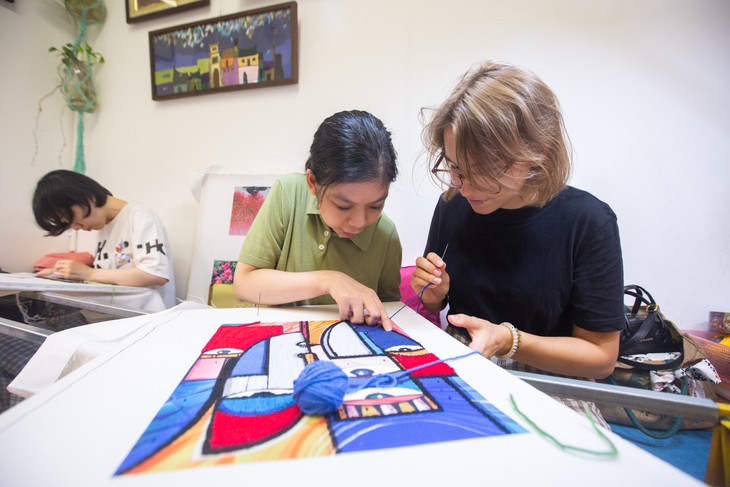 Giang feels happy to talk with people and help others. (Photo: Khanh Long) Giang feels happy to talk with people and help others. (Photo: Khanh Long) |
To her relief, Ms. Van welcomed Giang — and the transformation has been clear, “After almost a year, Giang is nearly done with her fourth artwork. She can sit for a full morning, four hours straight.”
But sustainability remains the biggest worry, said Ha, adding that their biggest concern — hers and Ms. Van’s — is that they’ve been working with students like this, but there’s no significant income.
“This is a vocational class, so the children must be able to work and earn money to support themselves and their families. We want everyone to recognize their efforts and the true value of what they create,” said Ha.
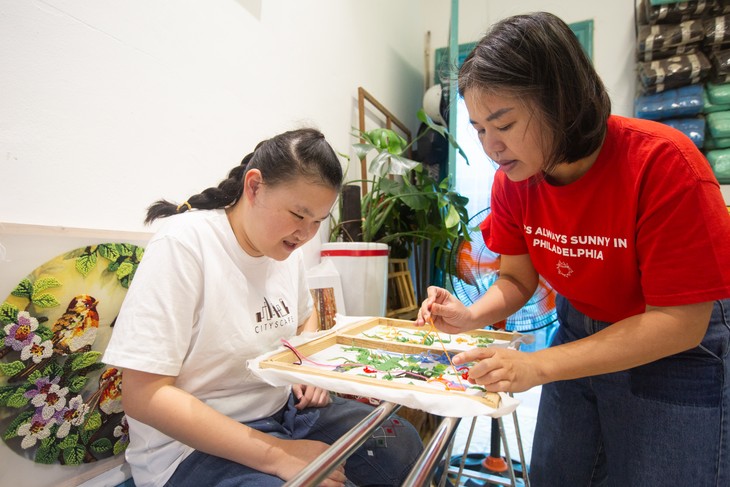 In addition to helping her daughter, Ha is eager to support other children in the class (Photo: Khanh Long) In addition to helping her daughter, Ha is eager to support other children in the class (Photo: Khanh Long) |
From learning to livelihood
Embroidery products have already reached customers. Van is committed to high-quality, practical designs – framed art and home décor items that are valued for their craftsmanship, not purchased out of charity.
By teaching a skill, Van is nurturing determination, social interaction, and vocational potential for children with special needs. For families like Giang’s, the ultimate hope is a stable income and a meaningful role in society. To turn that hope into reality will require collective support from businesses, organizations, and the community.