(VOVWORLD) - Hanoi has set a target to make its cultural industry a key economic sector contributing 8% of the city’s GRDP by 2030. To meet this goal, the capital is actively developing music tourism.
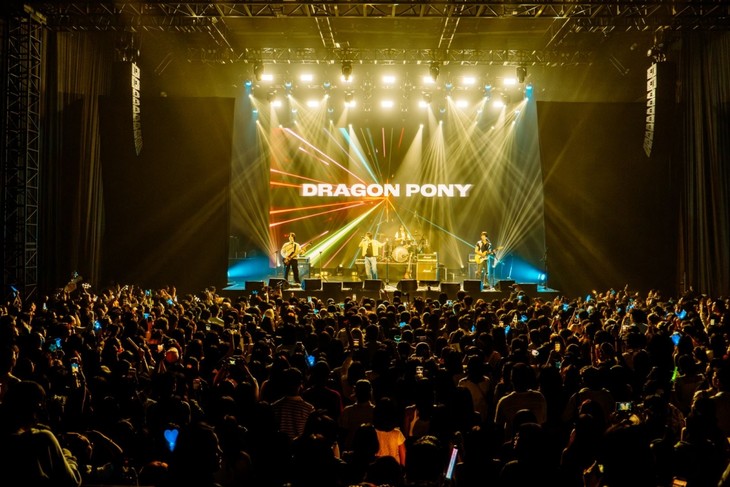 A performance by Dragon Pony at Korea Spotlight 2025 (Photo: bvhttdl.gov.vn) A performance by Dragon Pony at Korea Spotlight 2025 (Photo: bvhttdl.gov.vn) |
In early November, 'King of K-pop' G-Dragon held two concerts in Hanoi as part of the G-Dragon 2025 World Tour. Each night attracted around 50,000 spectators, including fans from China, Japan, South Korea, Singapore, Malaysia, and Thailand.
During this time, searches for accommodation in the capital surged 250%. Many of those who came for the music also toured the city, tasting local specialties like pho, snail noodles, and young green rice, experiencing Hanoi’s café culture, and enjoying the distinctive autumn atmosphere of northern Vietnam.
Big concerts in the capital like “V Concert – Radiant Vietnam”, “Call Me by Fire,” and “Say Hi, Brother” have enhanced Hanoi’s image as a friendly, modern tourist destination.
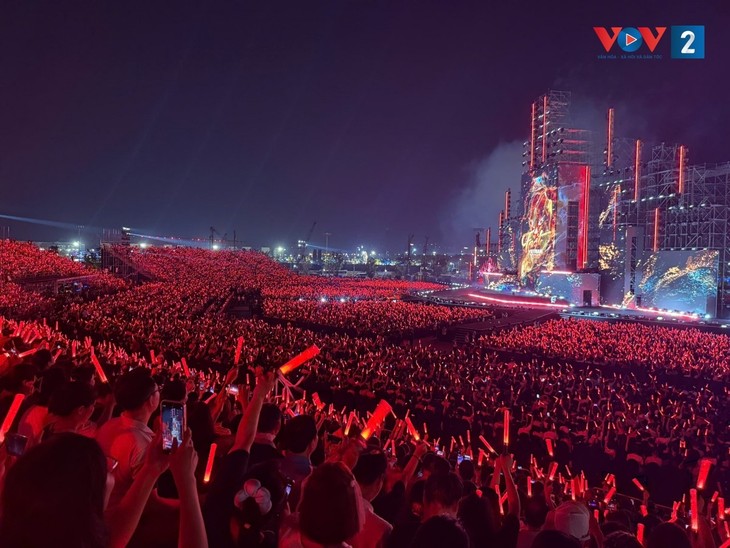 The "V Fest – Vietnam Today" concert draws tens of thousands f spectators. (Photo: VOV2) The "V Fest – Vietnam Today" concert draws tens of thousands f spectators. (Photo: VOV2) |
“Music concerts are attracting tourists to Hanoi and enhancing its reputation as a good place to visit,” Pham Duy Nghia, Director of the Ban Chan Viet Travel Company, said.
Today, audiences, especially young people, are willing to travel across provinces and cities to attend live music events, marking a significant shift in how contemporary audiences engage with music and the arts. This trend calls for event organizers to elevate production quality in a systematic and professional way, from content and sound to lighting, stage design, and service operations, in order to enhance the overall audience experience.
Audiences now seek not only to listen to music but also to immerse themselves in a thoughtfully curated artistic space with clear themes and emotional depth. The growing diversity of formats, from large-scale concerts to themed music programs, is enriching the musical landscape and expanding entertainment choices for different audience groups.
By effectively embracing these trends, Hanoi has strong potential to become a regional hub for major music events across Asia, said musician Nguyen Tien Manh, Vice Chairman of the Hanoi Musicians’ Association.
“Hanoi possesses many special advantages, particularly its deep cultural layers and urban identity, where traditional cultural legacy blends with modernity. If music, architecture, and landscapes are combined with historical stories, the city can create music and arts festivals and long-term concert series bearing the Hanoi brand. When infrastructure, policies, and identity develop in harmony, Hanoi can absolutely become a concert destination and a regional hub for music events in Asia,” Manh said.
According to Dr. Le Quang Dang of the Vietnam Institute of Culture, Arts, Sports and Tourism, alongside large-scale outdoor concerts targeting young audiences and fans of mass events, Hanoi must also invest in professional, specialized music forms and high-quality artistic venues to attract audiences with a deeper appreciation of the arts.
He also emphasized the need for careful planning of tourism activities linked to music events, along with stronger promotional efforts to draw visitors before and after each event.
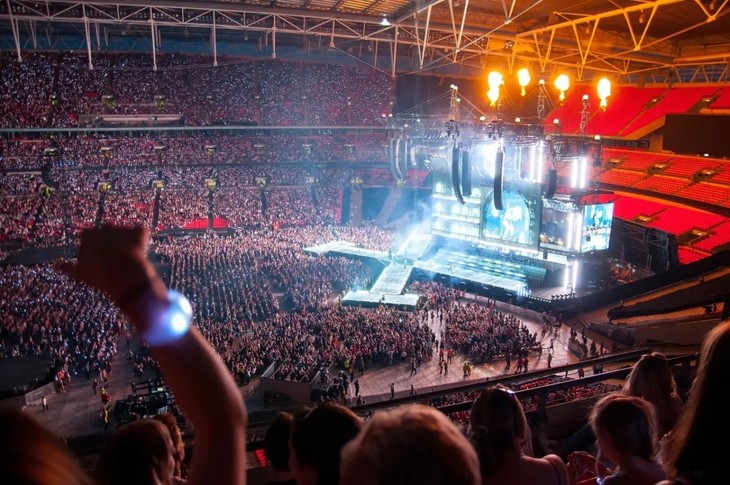 Young fans pack out a music venue. (Photo: bvhttdl.gov.vn) Young fans pack out a music venue. (Photo: bvhttdl.gov.vn) |
“Hanoi’s music events linked with tourism should be organized in combination with smaller-scale programs performed in professional artistic spaces such as theaters. They also need to be integrated with other cultural and tourism events to help extend visitors’ length of stay and increase their spending. It is essential to boost communication to appropriate tourist markets and target groups according to their needs and preferences,” said Dang.
With its favorable conditions and great potential, Hanoi’s music tourism serves as an important channel for developing the capital’s cultural industries, contributing to enhancing the city’s competitiveness on the tourism map.