(VOVWORLD) - Amid the rapid evolution of the Fourth Industrial Revolution and digital transformation, developing high-quality digital human resources has become an urgent priority for localities. With its strong potential in high-tech industries and being one of Vietnam’s three largest human resource training centers, Thai Nguyen is pioneering in training digital human resources for the semiconductor and artificial intelligence (AI) sectors, helping Vietnam advance further into the global high-tech value chain.
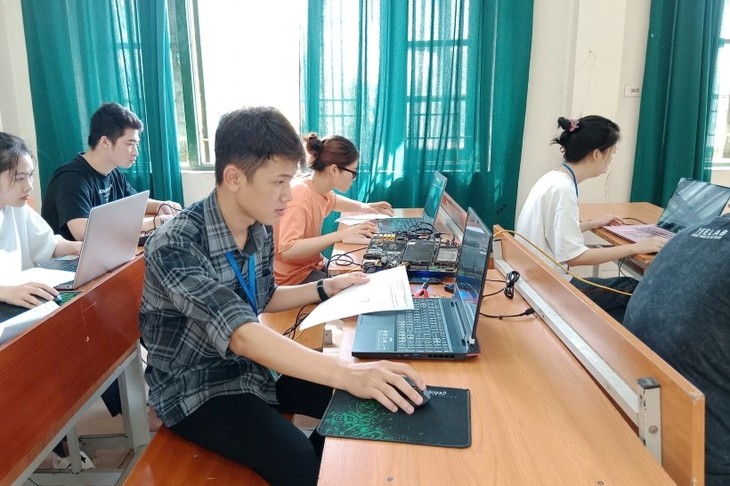 Students of Thai Nguyen University of Technology practice using a digital electronics lab. (Photo: Thai Nguyen University) Students of Thai Nguyen University of Technology practice using a digital electronics lab. (Photo: Thai Nguyen University) |
To implement the policy on developing human resources for the semiconductor industry to 2030, with a vision toward 2050, the Prime Minister has approved Thai Nguyen University as one of 18 public higher education institutions prioritized for receiving investment in a semiconductor laboratory at grassroots level to support human resource training.
From the 2024–2025 academic year, three member universities under Thai Nguyen University, the University of Technology, the University of Information Technology and Communication, and the University of Sciences, have launched new training programs related to semiconductors and microchips.
Assoc. Prof., Dr. Ngo Nhu Khoa, Chairman of the Council of the University of Engineering and Technology, said: “In the first courses, we apply the 3+2 program, which means students will engage in the first three-year foundational training in Vietnam, and the last two years of specialized training in Taiwan. We aim to create conditions for students to study in practical environments at advanced universities abroad.”
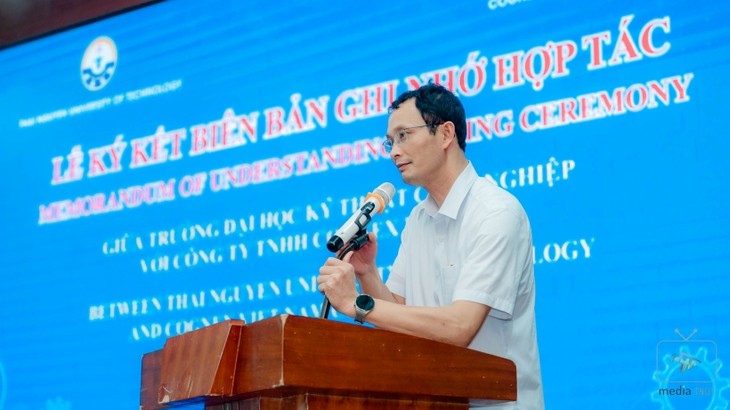 Assoc. Prof., Dr. Ngo Nhu Khoa, Chairman of the Council of the Thai Nguyen University of Technology (photo: Thai Nguyen University) Assoc. Prof., Dr. Ngo Nhu Khoa, Chairman of the Council of the Thai Nguyen University of Technology (photo: Thai Nguyen University) |
Alongside current two courses on semiconductor industry, Thai Nguyen University continues to invest in infrastructure for its member schools, including design labs, online classrooms, and self-study spaces for students and specialized courses taught by lecturers from partner countries.
Assoc. Prof., Dr. Phung Trung Nghia, Rector of the University of Information and Communications Technology , said: “With our strength in information technology, the university will focus on microchip design. Students will study theory and practice on software tools for integrated circuit design. We have cooperated with institutions, research institutes, and domestic and international enterprises to improve the facilities. We have invested in computer labs with licensed software for hands-on practice and signed agreements with companies to send students for internships.”
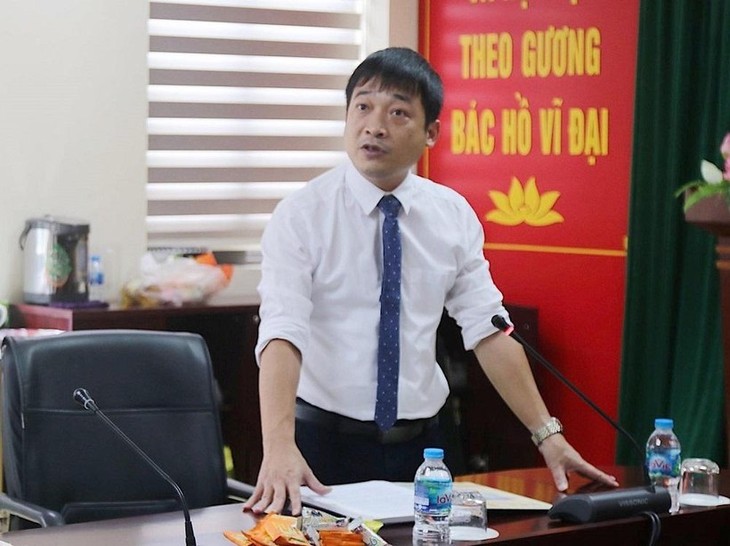 Assoc. Prof., Dr. Phung Trung Nghia, Rector of the University of Information and Communications Technology (photo: Thai Nguyen University) Assoc. Prof., Dr. Phung Trung Nghia, Rector of the University of Information and Communications Technology (photo: Thai Nguyen University) |
The training model in IT and semiconductor technology at Thai Nguyen University enables students to access modern technology and opens up extensive international cooperation in semiconductor education, a field that demands high practicality and global connectivity. Many domestic and foreign partners have coordinated with Thai Nguyen University in developing internationally standardized programs. Sun Edu International Education Joint Stock Company is one of the collaborators.
Luu Hue Tien, General Director of Sun Edu, said: “The cooperation between Sun Edu and Thai Nguyen University of Information and Communication Technology aims to optimize the semiconductor chip design training program. We will seek additional sponsorship to provide licensed software for students and lecturers and train the teaching staff so the university can independently expand chip design courses in the future.”
Thai Nguyen province has promulgated a strategic plan to develop human resources for the semiconductor and AI industries through 2030. It targets to train workforces in semiconductors, IT, and AI, including 2,000 with university and postgraduate degrees, 500 with college-level qualifications, and more than 2,000 with intermediate-level training.
The provincial People’s Committee has identified the key tasks, including promoting cooperation between educational institutions and enterprises, building policies to support human resource training, and enhancing AI applications in education and training.
Assoc. Prof., Dr. Hoang Van Hung, President of Thai Nguyen University, said: “Thai Nguyen University has invested heavily in establishing a digital ecosystem of laboratories, digital library, and modern infrastructure. We are determined to ensure high-quality semiconductor training that meets the market demand for human resources in line with the Government’s 2030 orientation.”
Alongside long-term human resource preparation, short-term goals have also been set. Nguyen Viet Chinh, Executive Director of Cognex Vietnam Co., Ltd., said: “In the short term, we expect students tofully acquire skills in multivision and robotics. With these skills, students will have the capacity to develop Vietnam’s semiconductor industry.”
Graduates, engineers, and experts trained at Thai Nguyen’s universities will soon become part of Vietnam’s high-quality workforce in the semiconductor industry. With state investment and the participation of major technology corporations, Thai Nguyen is well-positioned to become one of the country’s leading centers for semiconductor and AI training, research, and application.