“Digital Border Information” model proves effective in Lang Son province
(VOVWORLD) -Since April 2025, the Bắc Xa Border Guard Station in Lang Sơn province has been carrying out the Politburo’s Resolution No. 57 on breakthroughs in science, technology, innovation, and national digital transformation by launching the “Digital Border Information” model. Over half a year later, this model has shown that it’s not only a technological solution but also a testament to the border guard force’s initiative in educating local residents about the law and fostering a peaceful border area.
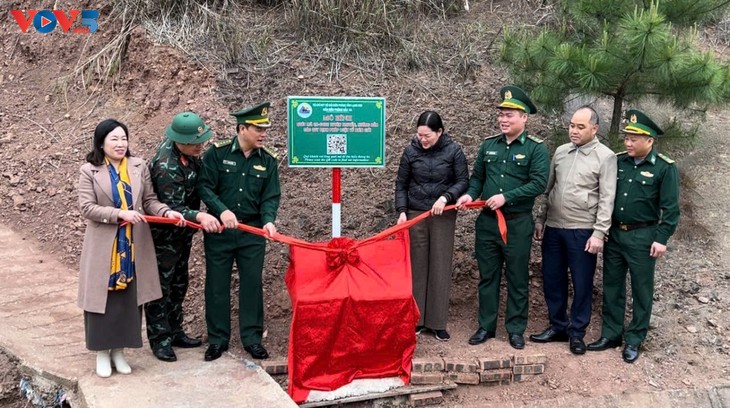 Bac Xa Border Guard Station launches the "Digital Border Information" model. (Photo: Duy Thai/VOV-Northeast) Bac Xa Border Guard Station launches the "Digital Border Information" model. (Photo: Duy Thai/VOV-Northeast) |
Bac Xa Border Guard Station oversees over 33 kilometers of the border shared with China. The area is characterized by rugged mountains and a sparse population — just over 10 people per square kilometer. Most residents are Nùng ethnic people who earning their living from forestry and have limited opportunities to participate in community activities. These conditions make traditional communication and awareness-raising efforts challenging, leading to limited outreach effectiveness. At the same time, the region remains vulnerable to hostile forces that may take advantage of these limitations to spread misinformation, entice local residents, or violate border regulations.
In response to these challenges, Bac Xa Border Guard Station has proactively applied information technology by developing the “Digital Border Information” model. The model aims to improve the quality and effectiveness of communication on border laws, while also promoting local culture to residents and tourists more quickly and comprehensively.
Its mode of operation is simple and highly accessible. With just a smartphone camera, users can scan QR codes placed at community locations to instantly reach information on border laws, security and defense, local attractions, and general regulations.
People expressed their opinions: "Today I came to complete some administrative procedures and was given guidance by a Border Guard officer, who also helped me scan the QR code. It provided lots of useful legal information."
"I find this model very easy to use. Just scan the QR code to update news and images of the commune, the villages, and the Border Guard Station."
"I often drive through the border area. Border guards introduced and guided me to scan the QR code so I could better understand border regulations, especially the rules on not transporting prohibited or illegal goods. The information is concise, easy to understand, and very suitable for local people’s awareness."
Lieutenant Colonel Hoang Ngoc Huan, Political Commissar of Bac Xa Border Guard Station, said that the model is an initiative arising from the unit’s emulation movement, aimed at promoting technical innovation and enhancing the quality of border gate and border management.
The model’s effective implementation reflects the unit’s proactive approach in combining administrative reform and digital transformation with community engagement, thereby creating a strength in fulfilling the tasks of the Lang Son Border Guard force: "Through its implementation, the model has proven effective and stable. Residents in border areas, as well as visitors can easily access information about the border and related regulations. The model has delivered practical results in communications and has been replicated across the Lang Son Provincial Border Guard for wider application."
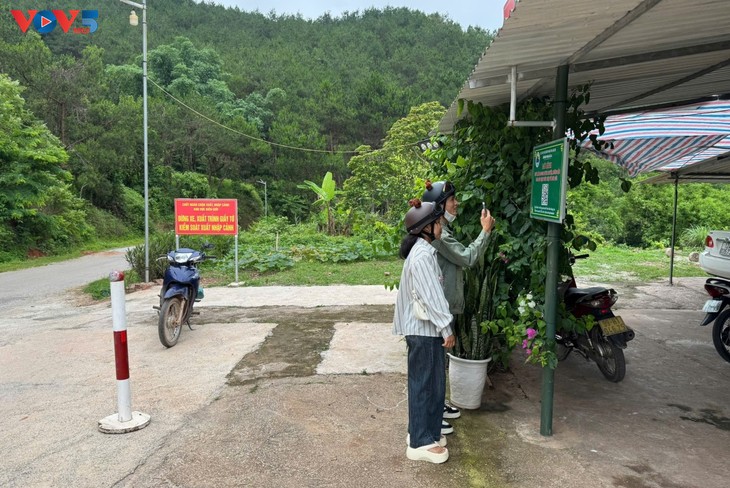 Bac Xa Border Guard Station coordinate with Kien Moc Commune People's Committee to install QR codes at various locations. (Photo: Duy Thai/VOV-Northeast) Bac Xa Border Guard Station coordinate with Kien Moc Commune People's Committee to install QR codes at various locations. (Photo: Duy Thai/VOV-Northeast) |
To bring the model closer to the public, Bac Xa Border Guard Station coordinated with the Kien Moc Commune People's Committee to install and display QR codes at various locations, including village cultural houses, commune headquarters, border guard posts, and along border patrol routes. Since April, QR codes have been placed at 13 border village cultural houses, and four border guard posts. In addition, two information signs, and eight QR codes have been installed along border marker inspection roads, and border protection ways.
Thousands of residents have already accessed information through the model. Ma Thi Hien, Vice Chairman of the Kien Moc Commune People's Committee, said: "When implementing this model, the local Party Committee and authorities worked hand in hand with the officers and soldiers of Bac Xa Border Guard Station. Working teams were sent to the villages to guide residents on how to scan the QR codes, access the information links, and understand legal documents related to border regulations."
In addition to the "Digital Border Information" model, Lang Son Provincial Border Guard has actively incorporated guidance on using digital platforms into legal dissemination sessions, and village or hamlet activities. They have organized initiatives including "Volunteer Saturday" and "Border Classes" to help people become familiar with QR codes, make online declarations, and access public service information portals. These efforts gradually introduce border communities to technology toward their mastery of digital transformation, and enable them to participate directly in border and gate management.
The model implemented at Bac Xa Border Guard Station has proven highly effective in border management and protection. It has become a practical and engaging information channel, allowing people to learn about border policies and laws, while also promoting local culture and tourism to visitors.
The integration of IT in Border Guard work, exemplified by the "Digital Border Information" model, represents an essential trend in the new situation, contributing to the development of a strong and peaceful border.