(VOVWORLD) - When we suddenly find ourselves at the scene of an accident, our first instinct is often to call the 115 emergency line. But unlike in movies, where ambulances arrive almost instantly, it’s sometimes not so quick in the real life. If a victim stops breathing, just five minutes without oxygen to the brain can result in irreversible damage. It’s in moments like these that the importance of basic first aid truly becomes clear. In Vietnam, more people are recognizing the importance of knowing what to do before the ambulance arrives.
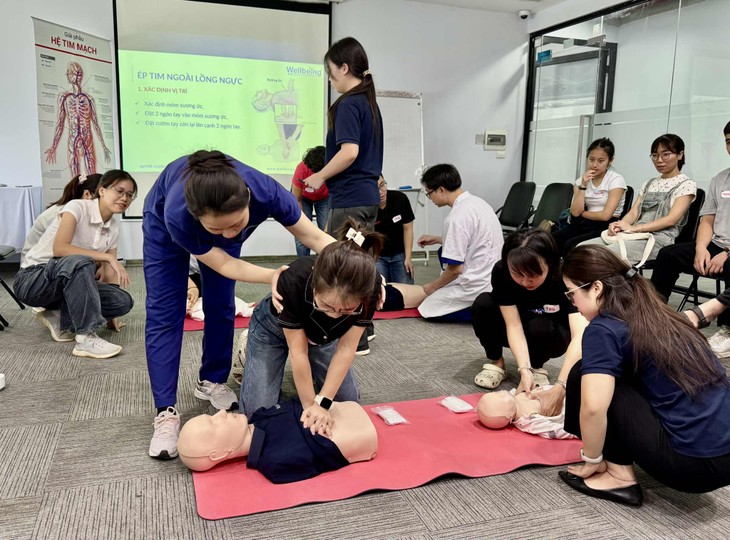 Participants learn first aid method of DRSABC (photo: Cam Thi) Participants learn first aid method of DRSABC (photo: Cam Thi) |
On a Saturday morning at the Wellbeing Center on the 12th floor of Mipec Tower, Hanoi, around 20 people gather for a basic first aid class. The session begins with videos showing real-life accident scenes of a worker who suddenly collapsed, showing signs of heart arrest. And here is an athlete who staggered and fell on the court, showing signs of a stroke. Some bystanders wanted to help, but didn’t know how.
Many learners share the reasons why they decided to join the class.
“I’m entering the age of being a grandmother. Kids can choke or get food stuck while eating, it’s scary. And my parents are elderly, so sudden health issues could happen anytime. I think having first aid knowledge is essential, at least within the family. Out on the street, I’ve seen people hesitate to help because they’re afraid of making things worse. Knowing what to do makes a difference.”
“I’m learning for myself, to know how to act in emergencies. I was once in an accident where no one around knew what to do, and neither did I. Now I understand how to approach a scene, assess for danger, check responsiveness, and monitor vital signs like breathing and pulse.”
“I play football, and injuries happen all the time. Usually, coaches help out, but what if they’re not there? I want to know what to do when someone gets hurt. That’s why I signed up.”
Accidents in daily life come in many forms. That’s why first aid skills need to be adaptable, to the type of injury, the location, and the victim’s conditions.
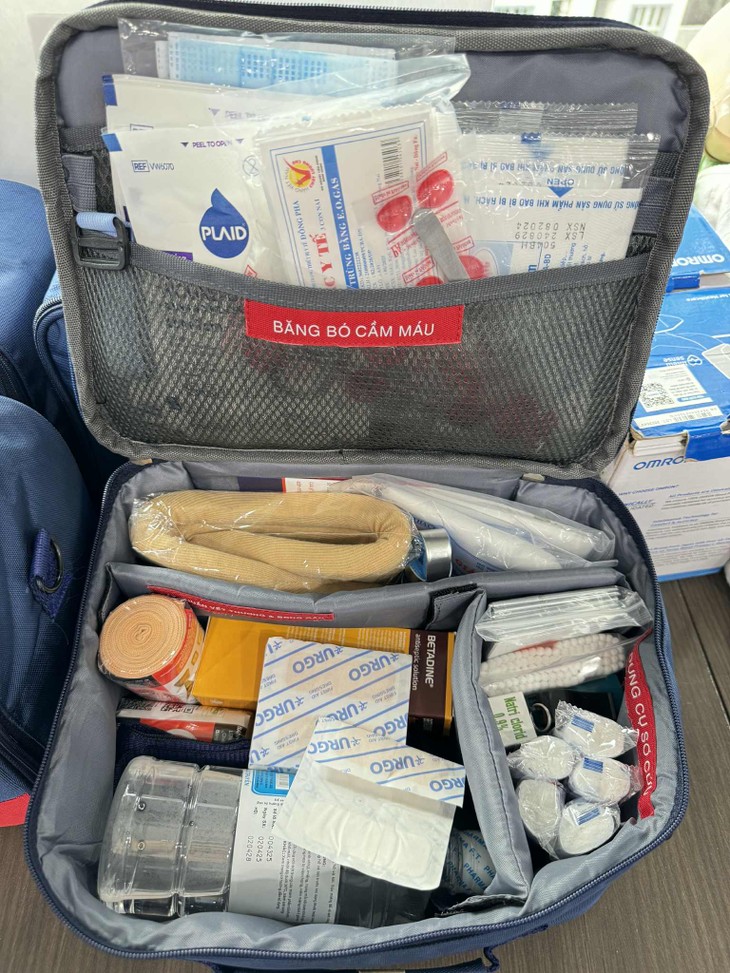 First aid kit prepared by Wellbeing (photo: Cam Thi) First aid kit prepared by Wellbeing (photo: Cam Thi) |
What is first aid?
First aid is the act of providing initial assistance and care to all victims at the scene before emergency services arrive. Those providing first aid are not necessarily medical professionals and often do not have access to full medical equipment. With basic first aid knowledge and skills, anyone can help a victim and assist medical personnel in safely transporting the victims to a healthcare facility.
To address this, Wellbeing has launched community-focused training programs, including basic first aid courses for adults and children, and specialized training for babysitters, preschool teachers, and those who work directly with kids.
Dr. Tran Thi Phuong Thanh is a lecture at Wellbeing: “Our courses focus on six basic steps in first aid. We train learners to recognize symptoms and respond to emergencies like cardiac arrest, stroke, choking, drowning, electric shock, bleeding, fractures, and how to properly bandage and transport victims.”
Learners also practice real-world scenarios using whatever is available at the scene, plus common medical tools like splints, bandages, antiseptics, blood pressure monitors, glucose meters, and AEDs (Automated External Defibrillators).
The four basic principles of first aid
When performing first aid, there are four basic principles to follow:
- Stay calm and don’t risk your own safety, the victim’s safety, or that of others;
- Assess the situation to ensure the scene is safe;
- Carry out initial first aid to preserve life and promote recovery; and
- Follow the correct steps to avoid omissions, panic, or overlooking important information.
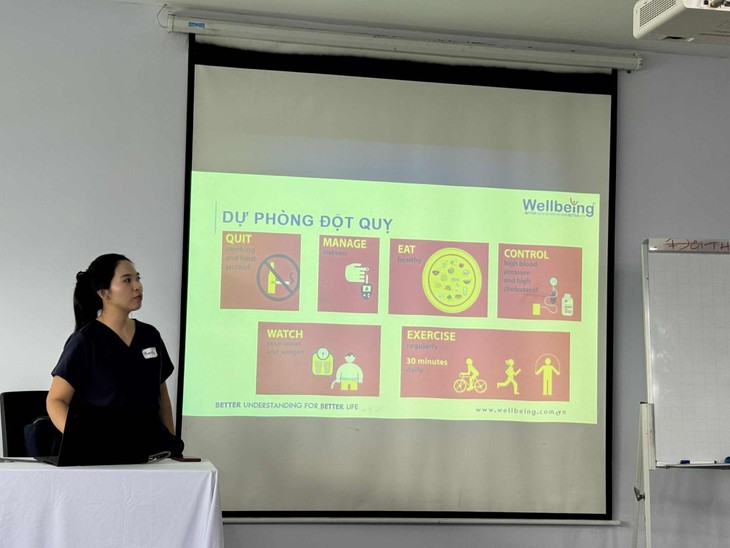 Dr. Tran Thi Phuong Thanh is a lecture at Wellbeing. (photo: Cam Thi) Dr. Tran Thi Phuong Thanh is a lecture at Wellbeing. (photo: Cam Thi) |
Dr. Thanh explains there are special first aid principles for specific situations. The main goal of first aid is to sustain life, minimize secondary injuries, and create the best possible conditions for recovery. Beyond theory, practical training is essential before performing in real situations.
In cardiac arrest scenarios, Dr. Thanh instructs on the 6-step DRSABC for cardiac arrest outside a medical facility: Danger, Response, Send for help, Airway, Breathing, and CPR.
- D for assessing whether the scene poses danger to the victim or yourself;
- R for checking if the victim is responsive;
- S for sending messages to call emergency services; A for ensuring the airway is clear; (In Vietnam, the emergency number for medical emergencies, including ambulances, is 115)
- B for checking if the victim is still breathing; and
- C for checking the victim for CPR, including perform chest compressions, give rescue breaths.
If the patient can still breathe or have pulse, we should place the patient in a recovery position while waiting for medical staff to arrive.”
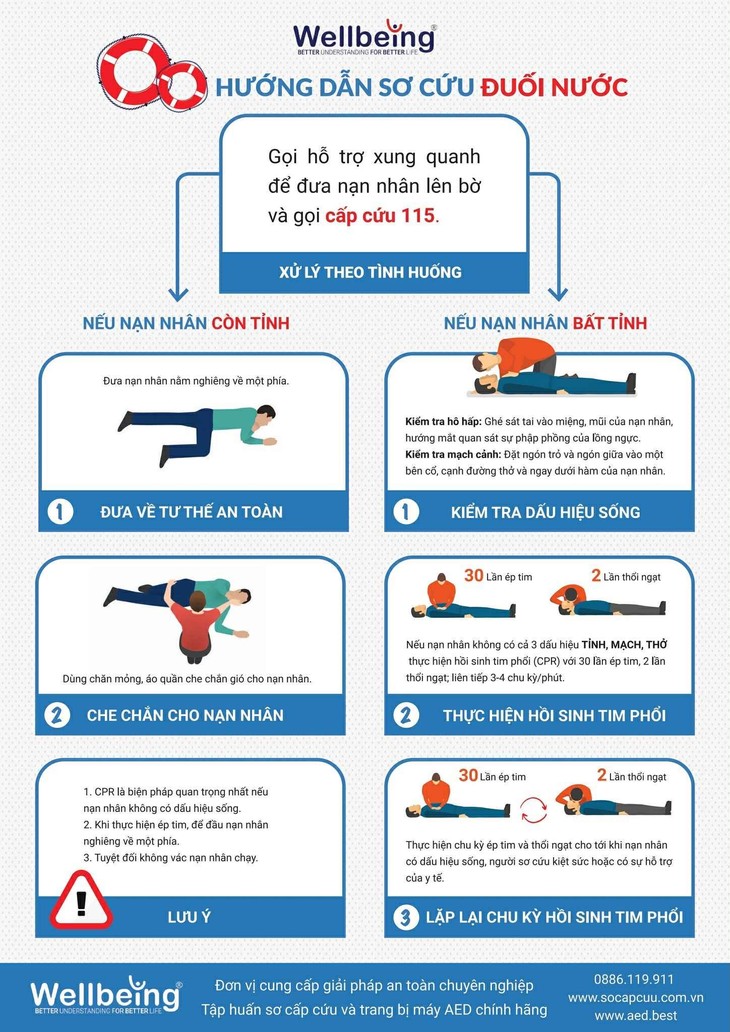 Drowning first aid Drowning first aid |
In class, the learners practice on modern mannequins and medical equipment. Wellbeing also provides online accounts for learners to review the material and share accurate knowledge with the community to support public health care and preparedness in unexpected situations.
With so much first aid content available on social media, Dr. Thanh advises people to seek reliable sources for updates and, if possible, attend a hands-on first aid course. This will boost your confidence in providing first aid to their families and others.
Even a few hours of training can save a life.