(VOVWORLD) - Building a modern city takes more than high-rise buildings and wide, straight streets. A city also needs a “circulatory system” – a well-functioning drainage network. Proper planning, smart operations, and community awareness are three pillars that help cities stay resilient amid climate change. The challenge is not unique to Hanoi. It’s shared by urban centers throughout Vietnam.
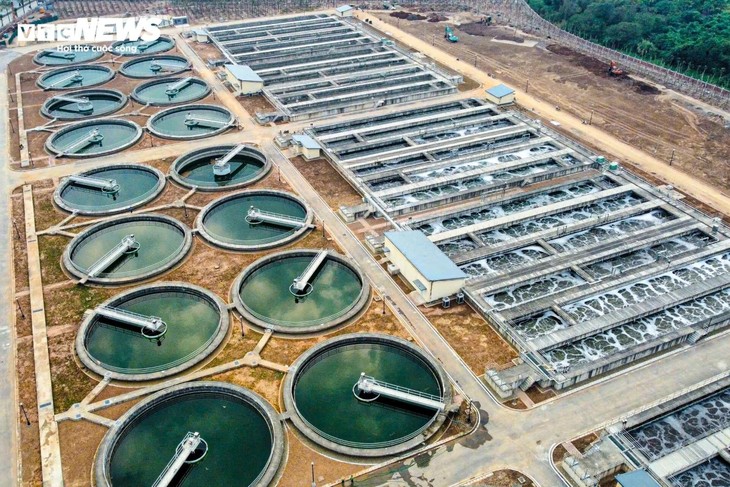 Yen Xa wastewater treatment plant in Hanoi (Photo: Vien Minh/VTC News) Yen Xa wastewater treatment plant in Hanoi (Photo: Vien Minh/VTC News) |
For years, Hanoi, Ho Chi Minh City, Da Nang, and other cities have been growing rapidly, increasing population density and traffic. While transportation infrastructure has benefitted from strong investment, underground drainage systems have not received the same attention.
Many cities have aging, undersized drain pipes that were installed decades ago. At the same time, rainfall has increased. Larger volumes of water are falling in shorter periods of time, making overload inevitable.
Experts say that despite some renovations, Hanoi’s drainage infrastructure is under enormous pressure from rapid urbanization. In many new residential areas, nearly every surface has been paved - yards, sidewalks, parking lots - leaving virtually no permeable ground for rainwater to soak into.
With natural infiltration blocked, stormwater rushes directly into an already overloaded drainage system, worsening flooding. This is a multidimensional issue involving engineering, planning, management, and public awareness.
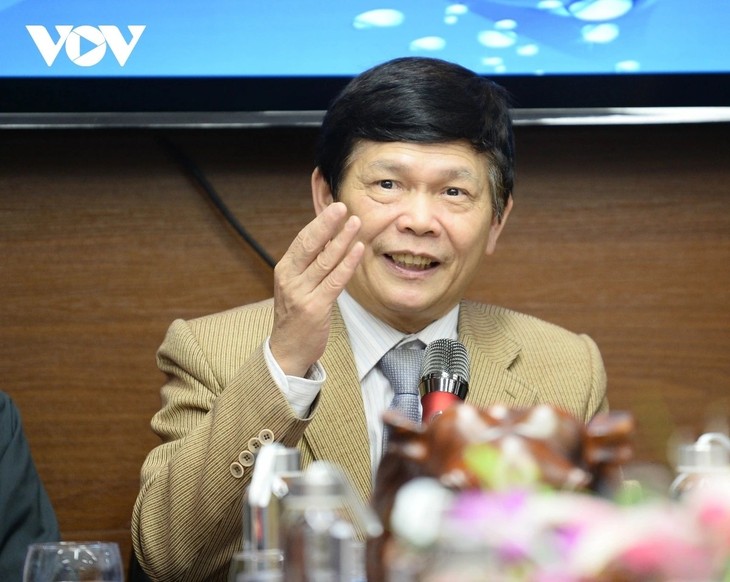 Professor, Dr. Tran Duc Ha, former Director of the Hanoi Institute of Water Supply and Sewerage Research (Photo: Van Ngan/VOV) Professor, Dr. Tran Duc Ha, former Director of the Hanoi Institute of Water Supply and Sewerage Research (Photo: Van Ngan/VOV) |
Hanoi’s urban development has been very rapid, and such growth, technical infrastructure simply can’t keep up during major rainstorms, said Professor Dr. Tran Duc Ha, former Director of the Hanoi Institute of Water Supply and Sewerage Research.
“New urban areas are often more flood-prone than the old quarter because of gaps in planning. We tend to focus on raising ground levels without considering soil permeability, greenery, lakes, or drainage. The principle is that drainage systems can only handle typical rainfall; in heavy storms, water must be retained on-site. Our new urban areas still lack a sustainable drainage mindset,” he added.
Hanoi generates more than one million cubic meters of household wastewater in 24 hours, but less than 30% of it is treated to standard. Many lakes and rivers are severely polluted by untreated wastewater. Meanwhile, the capital receives 1,600 to 1,800 millimeters of rainfall per year, most of which, instead of being absorbed or used, becomes runoff, causing flooding.
“We haven’t invested in or renovated the drainage systems and now lack sufficient pumping stations to move water out of the city,” Bui Ngoc Uyen, Deputy Head of the Digital Transformation Environment System Department of the Hanoi Drainage Company, said.
Even the best planning falls short if public awareness is lacking. In many areas, drains are blocked by household waste, plastic bags, and construction debris.
Huu Thong, a resident of Yen So ward, commented on repeated flooding of many Hanoi neighborhoods during periods of heavy rain, “One or two years ago, the drainage here was very fast, but now it’s gotten much worse. Floodwater makes it hard to move around. Lots of people have to walk and vehicles break down.”
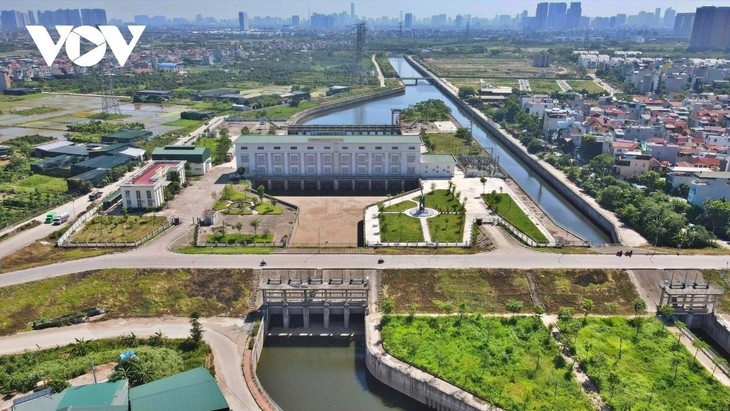 Yen Nghia drainage pumping station in Hanoi (Photo: Van Ngan/VOV) Yen Nghia drainage pumping station in Hanoi (Photo: Van Ngan/VOV) |
Some places have begun strictly enforcing infiltration indicators for development projects, mandating green spaces and complete drainage systems right from the design stage. These are positive steps that need wider adoption nationwide.
In addition to technical solutions, getting citizens involved in monitoring, maintaining, and protecting public spaces can create tangible improvements. This is not about shifting responsibility but about strengthening policy through community participation. Authorities must continue planning, investing in, and maintaining drainage systems, while communities help to protect shared assets.
As climate change intensifies, cities can’t treat flooding as a problem to cope with reactively. A proactive approach is needed that’s based on green infrastructure, smart technology, and community involvement.
Urban drainage is a function of how people choose to interact with their environment. Sustainable urban development requires a civic-minded community that understands that the city’s drainage system, like all urban infrastructure, needs to be harmonized with nature.