(VOVWORLD) - A modern city is defined not only by its skyscrapers or brightly lit nightscapes, but by how clean it is, how green it is, and how efficiently it uses energy. For Vietnamese cities, a transition to green energy is the key to unlocking a sustainable future.
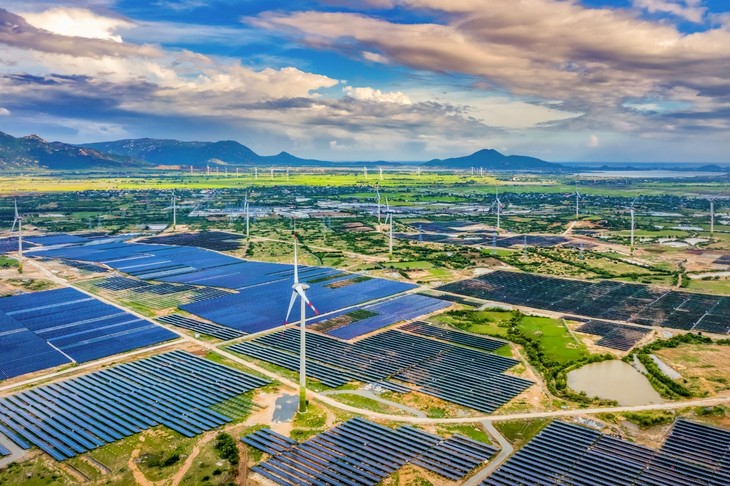 Renewable energy sources in Khanh Hoa province (Photo: tapchicongsan.org.vn) Renewable energy sources in Khanh Hoa province (Photo: tapchicongsan.org.vn)
|
Amid rapid urbanization, a growing population, and soaring electricity demand, Vietnamese cities are facing major challenges: air pollution, greenhouse gas emissions, and an overloaded energy infrastructure.
To ensure that cities, and Vietnam as a whole, become truly clean, the government is accelerating the shift from coal to renewable energy, and from passive consumption to smart, efficient energy use.
Professor Tran Quoc Tuan, Research Director and Fellow Scientist at France’s technological research organization CEA, said, “Vietnam has high demands for green energy, smart grids, new semiconductor materials, and nuclear technologies. Integrating these into practice aligns with the Government’s vision for national development.”
Major urban centers like Hanoi, Da Nang, and Ho Chi Minh City are already adopting green electricity models. Installing rooftop solar panels, using wind-powered systems for public lighting and expanding electric mobility and smart residential areas are shaping a greener urban landscape.
According to Tran Thanh Son, head of the Electrical Engineering Faculty at Electric Power University, the Government has issued a roadmap for smart grid development. “In urban areas, Vietnam already has essential infrastructure in place.”
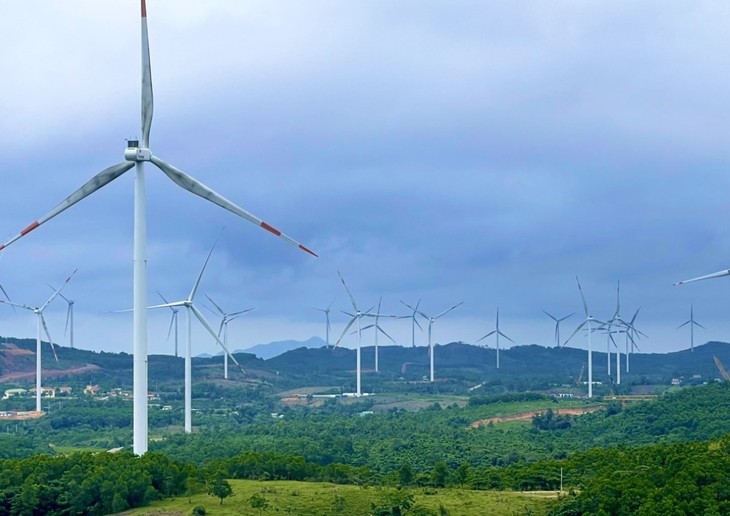 A wind power project in Quang Tri province (Photo: VGP/Minh Trang) A wind power project in Quang Tri province (Photo: VGP/Minh Trang)
|
Green energy is no longer just an idea on paper. It is becoming visible on streets and in buildings. In new urban areas, solar-powered public lighting is gradually replacing traditional lamps.
More rooftops are covered with solar panels, reducing electricity costs and easing pressure on the national grid. EV charging stations are becoming a common sight in residential areas, shopping malls, and public spaces.
Vietnam’s major cities are now accelerating the transition toward greener energy in line with the national goal of achieving net-zero emissions by 2050, said Mr. Son. “New technologies and methods for calculating, operating, and controlling smart power systems are being developed. They will help speed up the energy transition and support Vietnam in achieving net-zero emissions by 2050.”
According to the revised Power Development Plan VIII, Vietnam aims to increase the share of renewable energy to 47% of total electricity generated by 2035. This means lower air pollution, reduced noise and emissions, and lower energy costs.
More importantly, the attitude toward green energy is rapidly changing. Urban authorities are now integrating energy planning into spatial planning, from smart public lighting and solar-powered resettlement housing to microgrids for green industrial zones. From energy to environment, from technology to consumer behavior, the green energy transition represents a comprehensive, system-wide shift.