(VOVWORLD) - Vietnam is expected to launch international financial centers in Ho Chi Minh City and Da Nang this year. This move prompts key questions: Why now? Can Vietnam compete with established hubs like Hong Kong and Singapore? What opportunities and challenges lie ahead? To shed light on these, we spoke with Mr. Nguyen Hong Hai, Adjunct Associate Professor of Politics and International Development at the University of the Sunshine Coast, Australia. He is also Assistant Professor of Politics and International Relations, College of Arts and Sciences, VinUniversity.
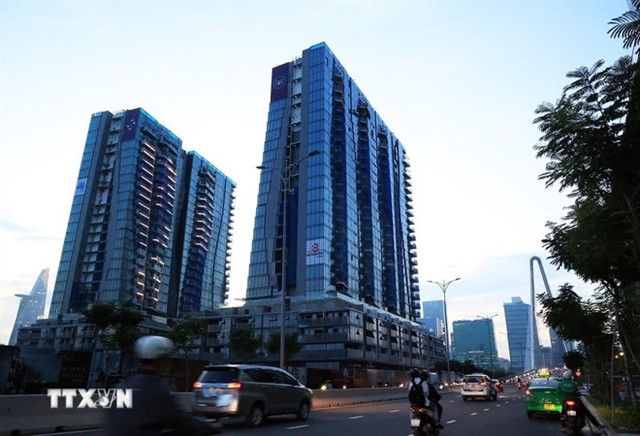 The core area of the International Financial Center on Thu Thiem Peninsula, An Khanh Ward, HCM City. (Photo: Hong Dat/VNA/VNS) The core area of the International Financial Center on Thu Thiem Peninsula, An Khanh Ward, HCM City. (Photo: Hong Dat/VNA/VNS) |
Reporter: Thank you, Mr. Hai, for speaking to VOV24/7. Asia currently has three international financial centers ranked among the world’s top 10, with Hong Kong and Singapore in 3rd and 4th place, just behind New York and London. We have been trailing behind them for a long time, so why is this the right moment for Vietnam to launch an international financial center?
Mr. Hai: The purpose of establishing these international financial centers is not to compete with or replace the financial centers in Hong Kong or Singapore, but to attract flow of capital and develop human resources and technology to serve Vietnam’s development. This responds to the question “Why now?”.
Vietnam is set to enter a new era with two development goals: by 2030 become a developing country with modern industry and a high-middle income, and by 2045 become a developed country with high income. In other words, a new era characterized by prosperity, strength, and happiness. The recent adoption of the “four pillars” resolutions by the Communist Party of Vietnam, which are focused on international integration, innovation, science and technology, development of the private economic sector, and the renewal of law-making efforts, aims to achieve those two goals.
But how can we translate those goals on paper into reality? I think the two key factors –which are always true for all societies – are financial and human resources. Founding and putting into operation two international financial centers will level up those resources for Vietnam.
After 40 years of doi moi Vietnam has emerged as a new top destination in Southeast Asia and the Indo-Pacific region for international investment, and a hub of innovation that sees science and technology development as the best way to avoid the middle-income trap in pursuing artificial intelligence and the Industrial Revolution 4.0.
Establishing two international financial centers in Vietnam involves three things that serve the country’s development goals: good timing, good conditions, and good synergy.
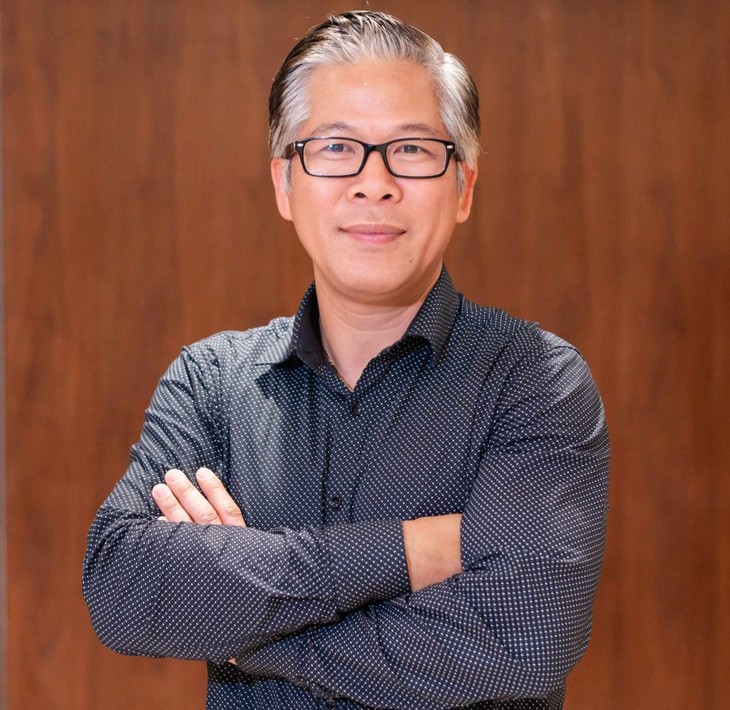 Mr. Nguyen Hong Hai, Adjunct Associate Professor of Politics and International Development at the University of the Sunshine Coast, Australia, and Assistant Professor of Politics and International Relations, College of Arts and Sciences, VinUniversity. Mr. Nguyen Hong Hai, Adjunct Associate Professor of Politics and International Development at the University of the Sunshine Coast, Australia, and Assistant Professor of Politics and International Relations, College of Arts and Sciences, VinUniversity. |
Reporter: Once they’re established, how can we position ourselves alongside hubs that have a history of 50 to 100 years?
Mr. Hai: As I said, the main purpose of these international financial centers is not to compete with their counterparts in Hong Kong and Singapore – and frankly we can’t compete with them, for many reasons. Where Vietnam’s international financial centers can make a difference is as an enabling environment for investment.
As a rule of the thumb, the flow of capital is never-ending. It travels from one venue to another where it can make a profit. As long as investors see an opportunity to make a profit in Vietnam they will pour their money in and the international financial centers will succeed. In other words, international financial centers will be a win-win for both Vietnam and the international investors.
 Aerial view of central Da Nang, one of the two planned locations for Vietnam's International Financial Center. (Photo vneconomy.vn) Aerial view of central Da Nang, one of the two planned locations for Vietnam's International Financial Center. (Photo vneconomy.vn) |
Reporter: What risks do you foresee, and how can Vietnam avoid them while building a competitive edge?
Mr. Hai: Given the sweeping development of AI – which is both a driver and a threat – there are always risks and challenges associated with financial centers. I see at least 3risks:
First, the institutional factor. How can we develop an institutional framework that not only enables but can govern and supervise banking and financial activities properly when globalization is making these activities more complex than ever?
Second, money laundering and financial crime. A mechanism that enables the free flow of capital is always at risk of being misused for money laundering and linked to all sorts of illegal financial activities. AI is a source of threats in this space.
Third, compliance with the rules of the game. When capital travels internationally,Vietnam must comply with the international rules of the game, requiring policy adjustments in taxation, finance, and administration.
For Vietnam’s international financial centers to succeed, Vietnam must make the institutional issue an advantage.
Reporter: Thank you for your insight. That was Mr. Nguyen Hong Hai, Adjunct Associate Professor of Politics and International Development at the University of the Sunshine Coast, Australia, speaking with VOV24/7.