(VOVWORLD) -Liberia, a country on the west coast of Africa, has diverse ethnic groups, rich traditions, and great community life. In this Culture Rendezvous session, Liberia born Jerome Crawford, who is now living in Hanoi, provides a glimpse into the way people eat and prepare food as well as perception of appearance in his native country.
Reporter: Hi Jerome! Welcome to our show. If you could choose one thing to introduce about Liberia first, what would it be?
Jerome: Liberia food. We have the best food in the world. We do have some of the vegetables you have here, but the way they cook, the recipe is quite different from the way you guys cook, for example, the sweet potato leaves. We do eat it back home, but it's made and prepared in another way that is completely different. We use palm oil to prepare the food. And unlike in Vietnam, where you separate your dishes like you cook the meat, you put it this way. You cook this vegetable, you put it this way. We usually just put everything in one pot. And we are the country known for eating a lot of meat, and what we do is we don't eat one set of meat. If we're eating, we like to put all the animals in the pot. So you have seafood, you'll have food from the forest, like meat from the forest. Yeah, the food is good. We have variety of different dishes, because there are 16 local ethnic groups, and each of those ethnic groups have their own food.
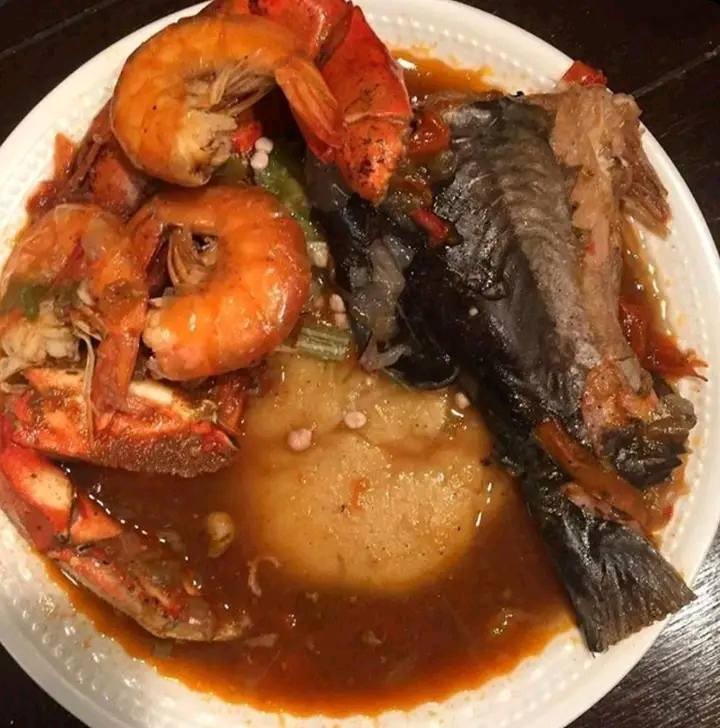 Fufu and soup stands as a popular dish to the Liberian community (Photo: Destiny Online Television) Fufu and soup stands as a popular dish to the Liberian community (Photo: Destiny Online Television) |
Reporter: Do you add any seasonings or anything like that?
Jerome: Yes, we use a lot of seasonings. First, you boil the meat separately. Then you slice the sweet potato leaves—what we call potato grains—into small pieces. Heat some oil in a pot, let it get hot, then add the sliced leaves and sauté them for about one to two minutes. After they are lightly fried, add the meat along with the oil. Let everything cook together for about 15 minutes.
Reporter: Wow! By the way you cook it, I guess it’s basically like a stew, right?
Jerome: Yes, most of the food we cook is prepared like a stew. We don’t usually eat the kind of watery soups you often have here. We do have one soup that’s somewhat similar, called pepper soup. It’s made with a lot of chili, meat, and water, which you bring to a boil. It’s usually served with rice. We eat rice just like Vietnam. And for us, it’s even more extreme, because while you have rice and noodles here, for us it’s mostly rice. Even if you eat noodles, if you haven’t eaten rice, it’s like you haven’t really eaten. It’s rice in the morning, rice in the afternoon, rice at night—breakfast, lunch, and dinner.
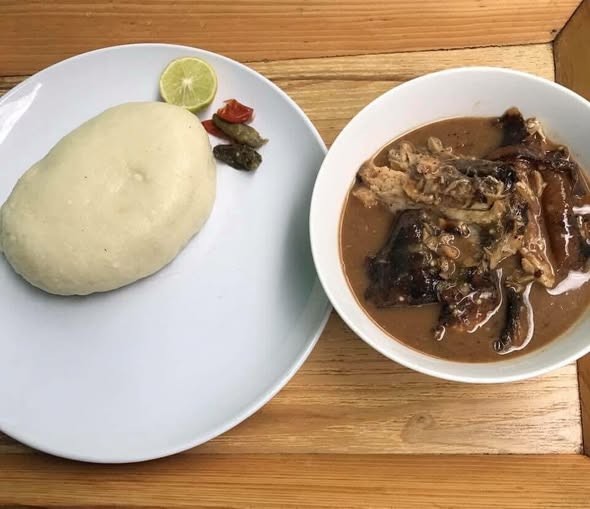 GB or Gaygbah, a very popular food in Liberia (Photo: De Licia Life N Travel) GB or Gaygbah, a very popular food in Liberia (Photo: De Licia Life N Travel) |
But some ethnic groups do have their own traditional foods, as I mentioned. Some use cassava. It’s prepared in a way that’s a bit like sticky rice—soft and tender—something you can chew or even swallow whole. We have fufu, and we also have another one called GB (Gaygbah). It’s tougher than fufu, so when you eat it, it carries you a long time. Fufu originates from West and Central Africa, where it is traditionally made from cassava, yam, or plantain and eaten as a daily staple.
GB (Gaygbah) originates from specific ethnic communities that process cassava differently, producing a tougher, more filling food meant to sustain people for longer periods. So if you eat in the morning, you might have to skip lunch and just wait for dinner. So that's the regular things people eat there.
Reporter: Okay, so I’m curious. Since you use so many different kinds of meat in one pot, how do you usually buy them? Do you get everything from the local market or from the supermarket?
Jerome: Yeah, we do. We go to the local market, like, the way you have the local market here. People call it wet markets. Yeah, we have our version of wet market. And more people prefer going to the wet market than to go to the supermarkets because the produce from there are fresh. Most of the farmers don't put in a lot of chemicals, yeah, so people trust the local people then to go to the supermarket.
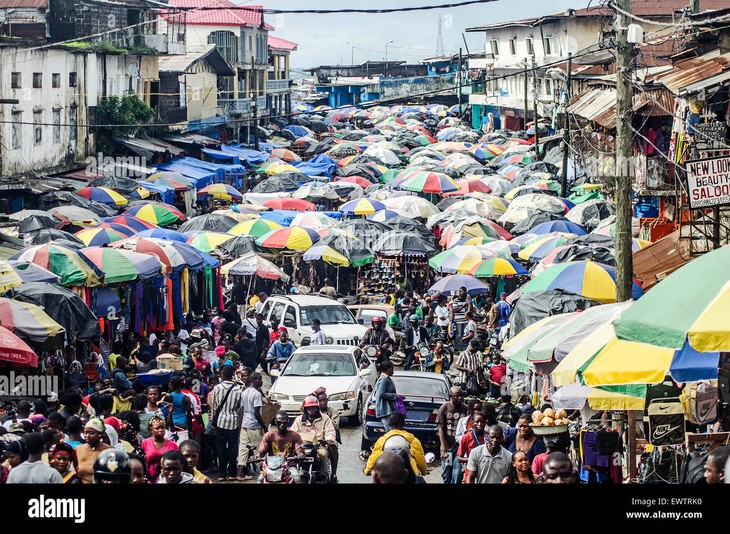 Waterside market, Monrovia, Liberia ( Photo: alamy.com) Waterside market, Monrovia, Liberia ( Photo: alamy.com) |
Reporter: Okay, correct me if I’m wrong, but I remember reading somewhere that being chubby is considered a sign of beauty and wealth in Africa. Is that true?
Jerome: So it’s perceived that way. In Africa, if you’re skinny, people often think you’re sick or that something is wrong. Being slim or very thin can make people suspicious, like, “What’s going on with you?” You’re expected to have some meat on your bones. Being chubby—even if you don’t eat a lot of meat—is generally accepted. It’s seen as a sign of good health and even wealth.
It’s the opposite of what you often see here, where being fat is considered unhealthy. Back home, we don’t really do fat shaming. It’s actually welcomed. You’ll see many Africans with pot bellies like mine. Having a belly is considered a sign of good fortune and that you’re doing well, compared to someone who looks skinny but healthier by other standards.
Reporter: That’s so interesting! Thank you very much, Jerome. I know that you still have tons of things to share with us about Liberia. We can’t wait to welcome you here next time on VOV 24/7 Culture Rendezvous.