(VOVWORLD) - Positive signs of a possible end to the Russia-Ukraine conflict have emerged recently, following US-Russia, US-Ukraine, and European summits.Important diplomatic and security moves have been made.
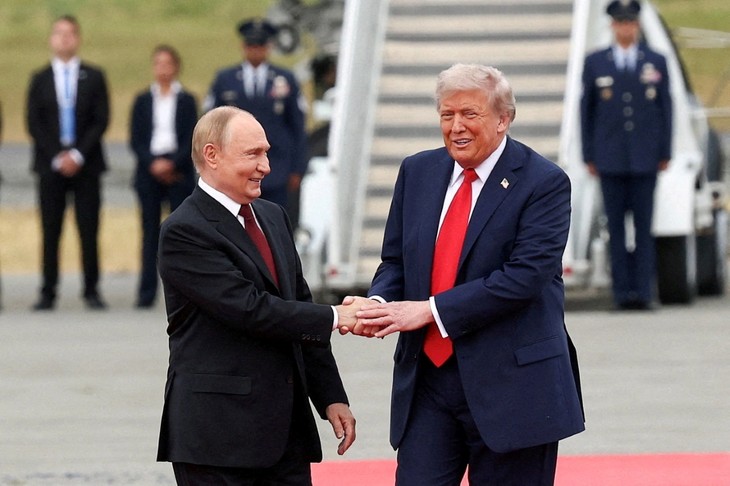 US President Donald Trump meets Russian President Vladimir Putin in Alaska, August 15, 2025. (Photo: Reuters) US President Donald Trump meets Russian President Vladimir Putin in Alaska, August 15, 2025. (Photo: Reuters) |
Last Friday, US President Donald Trump met Russian President Vladimir Putin in Alaska. Three days later, Trump met with Ukrainian President Volodymyr Zelensky and a number of European leaders at the White House. These high-level diplomatic activities are raising hopes for ending the Russia-Ukraine conflict.
Commitments to Ukraine and Europe
A number of important agreements marking a turning point in the Russia-Ukraine conflict were reached at Monday’s meeting between Trump, Zelensky, and European leaders including German Chancellor Friedrich Merz, French President Emmanuel Macron, UK Prime Minister Keir Starmer, Italian Prime Minister Giorgia Meloni, Finnish President Alexander Stubb, NATO Secretary General Mark Rutte, and European Commission President Ursula von der Leyen.
Trump agreed in principle with the European leaders to build a new security guarantee mechanism for Ukraine, similar to NATO’s Article 5 on collective defense, although he ruled out the scenario of Ukraine joining NATO.
NATO Chief Mark Rutte said that the US’s agreeing to take part in the security guarantees with Europe was “truly a breakthrough” for Ukraine. UK Prime Minister Starmer described the meeting as a “historic step forward” for the security of Ukraine and Europe. The commitment also marks a significant shift in the US position toward Europe, as Trump had for months rejected the possibility of US involvement in Ukraine’s post-conflict security, arguing that it’s Europe’s problem.
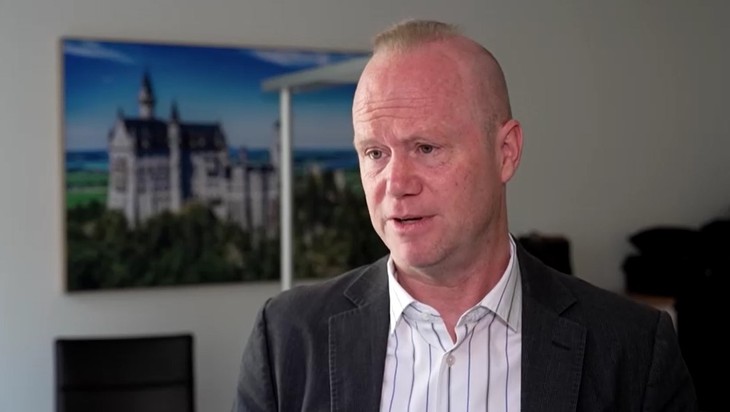 Moritz Weiss, Head of the Department of International Relations at Ludwig Maximilian University in Munich, Germany (Photo: Reuters) Moritz Weiss, Head of the Department of International Relations at Ludwig Maximilian University in Munich, Germany (Photo: Reuters) |
“The outcome, I think, is on the one hand, first of all, positive. We have seen that Europe speaks with a united voice. We have seen that Trump is taking that into consideration. And we have seen that Zelensky's, let's say, demands were at least regarded also as appropriate. Second, I think what is also very, very important is there will be follow-up talks, or at least that is the plan at the moment. And I think talking about peace is always better than making war,” said Moritz Weiss, Head of the Department of International Relations at Ludwig Maximilian University in Munich, Germany.
Heather Grabbe, an expert from the Brussels-based Bruegel Institute, said that US security commitments could be a key factor in building a long-term solution for Ukraine. “There are very detailed negotiations now to be done, but the idea that Ukraine could benefit from the kind of guarantees that NATO members have, that would be a huge step forward if it's realized.”
Last Saturday, the White House announced that Trump had instructed his security team to coordinate with Europe in the future security mechanism for Ukraine. Trump made it clear that US troops will not be deployed in Ukraine, but Washington could support coordination efforts and provide other security tools for its European allies.
Bilateral and trilateral summits
Alongside security commitments for Ukraine, the parties are working to create a favorable framework for bilateral and trilateral summits between Russia and Ukraine, with representatives from the US and European countries.
Last Saturday, Trump said he had called Putin to arrange a meeting between the Russian and Ukrainian presidents in the coming weeks. If held, this would be the first high-level meeting between Russian and Ukrainian leaders since the conflict began in February 2022. That meeting could then be followed by a trilateral summit with Trump.
To realize this scenario, US Vice President J.D. Vance, Secretary of State Macro Rubio, and Special Envoy Steve Witkoff will continue close coordination with both Russia and Ukraine.
After the US-Russia summit in Alaska, Putin did not rule out the idea of meeting his Ukrainian counterpart but emphasized certain conditions. Russian Foreign Minister Sergei Lavrov echoed the message amid reports that a Russia-Ukraine summit might soon take place.
“We do not reject any format, either bilateral or trilateral, on resolving the conflict in Ukraine. The main issue is that any format, 1+1, 1+2, or multilateral, must not serve for publicity in the press, social media, or communication. Everything needs to be done step by step, starting at the expert level and going through all the necessary stages before reaching a summit. That has always been our approach,” said Lavrov.
Observers said there is a good chance of a Russia-Ukraine summit, or a trilateral summit with the US, or a multilateral summit with European countries, but Europe’s current focus on security guarantees for Ukraine could become an obstacle.
In its latest announcement, Russia said it does not accept any scenario involving NATO military presence on Ukrainian territory, stressing that any security guarantees for Ukraine must take into account Russia’s long-term and strategic security interests.