(VOVWORLD) - The Nam Thang Long heritage route connects craft villages on the outskirts of Hanoi, including Phuc Tho commune, whose fields bloom year round, Ha Thai lacquer painting village, and Phuc Am village, famous for its ancient houses and suit tailoring. The route connects Hanoi’s traditional culture and crafts with the city center.
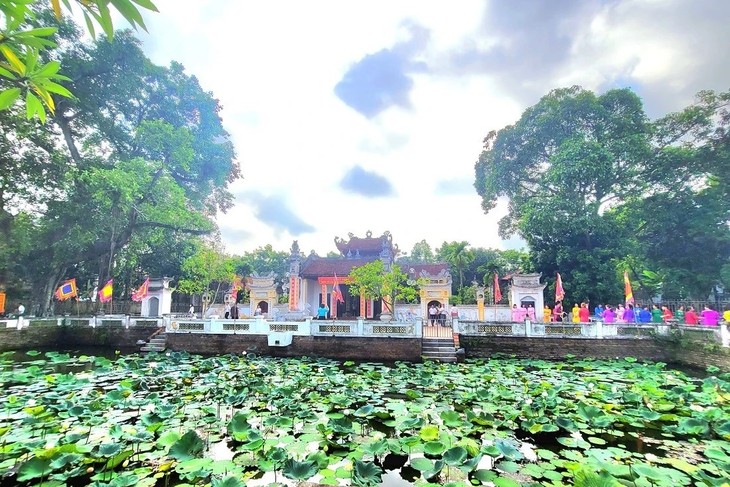 Noi Binh Da temple in Binh Minh commune (photo: Do Tuoi/ VTC News) Noi Binh Da temple in Binh Minh commune (photo: Do Tuoi/ VTC News) |
Hanoi’s rich culture and history live in numerous heritage sites and craft villages spread across its districts. Suburban Hanoi has focused recently on promoting craft village tourism and spiritual tourism. The Nam Thang Long Heritage Route connects Dai Thanh, Hong Van, Ngoc Hoi and Chuyen My commune, where centuries-old communal houses, temples, pagodas, historical relics, and craft villages have been preserved through generations.
The first stop on the route is Binh Minh commune’s Noi Binh Da temple, which worships Lac Long Quan, the legendary founder of Vietnam, who features in the legend “Children of the Dragon Father and Fairy Mother.”
The nearby communal house preserves an ancient bas-relief which was recognized as a National Treasure in 2015. Every year, in the third lunar month, crowds of visitors attend the Binh Da festival, recognized in 2014 as Hanoi’s first national-level intangible cultural heritage.
Nguyen Chinh Trinh, chief guardian of the temple, said: “Every year in the third lunar month, we welcome visitors from all over the country who come to offer incense to the founder of the nation. People from other cities and other communes come to pay tribute and express their reverence.”
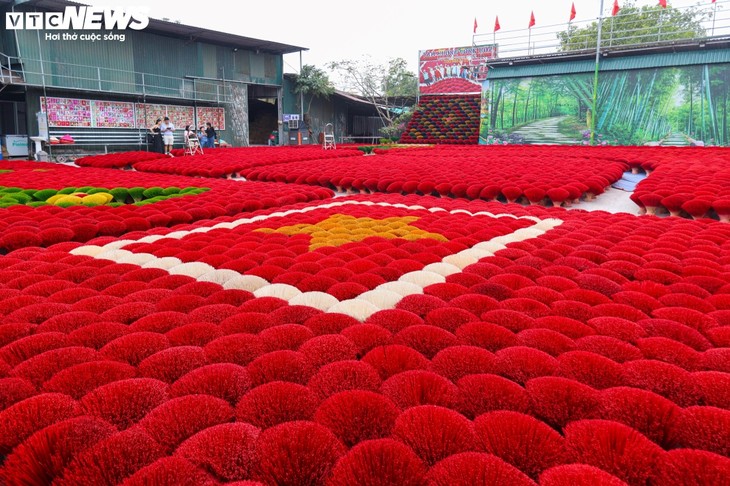 Quang Phu Cau incense-making village (Minh Duc/ VTC News) Quang Phu Cau incense-making village (Minh Duc/ VTC News) |
Leaving Binh Da, the route continues to Quang Phu Cau incense-making village, founded more than a century ago. When you enter the village, a scent of cinnamon, soapberry, and cajeput incense immediately gives you a warm, calm feeling. In people’s yards bright red incense sticks are drying in the sun.
Nguyen Dinh Dam, Director of the Tourism Service Cooperative of the village, said: “Quang Phu Cau Tourism Service Cooperative has arranged incense sticks in the shape of the map of Vietnam and other designs to promote our village to international visitors.”
Visitors to Phung Xa silk-making village enter a space filled with spinning wheels and handlooms.
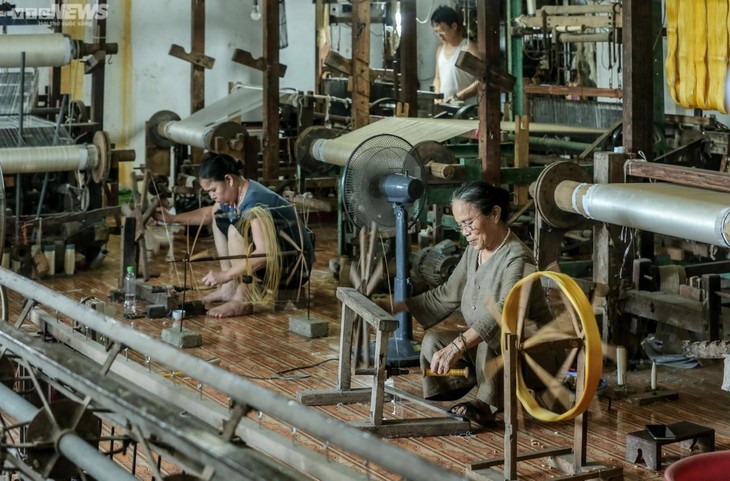 Phung Xa silk-making village (Photo: Ngo Nhung/ VTC News) Phung Xa silk-making village (Photo: Ngo Nhung/ VTC News) |
Spinning and weaving shimmering silk threads, Meritorious Artisan Phan Thi Thuan works diligently on her creations. She was the first artisan in Vietnam to produce lotus silk. “As an artisan, I want to introduce my craft to many people and ensure our products remain connected to agriculture, farmers, and rural life. I want to show them our most beautiful and valuable products,” said Thuan.
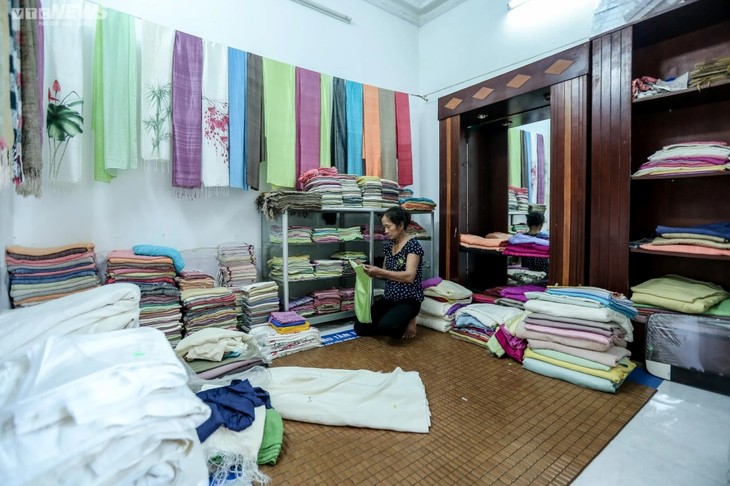 Phung Xa silk products (Photo: Ngo Nhung/ VTC News) Phung Xa silk products (Photo: Ngo Nhung/ VTC News) |
The Nam Thang Long Heritage Route, linking history, culture, and traditional crafts to tell a story about Vietnam and its people, runs from Ha Thai village, famous for hand-crafted lacquerware exported to France, Japan, and many other countries, to Cuu village, with its many Asian-European villas, to Phuc Am village, rich in spiritual folk culture.
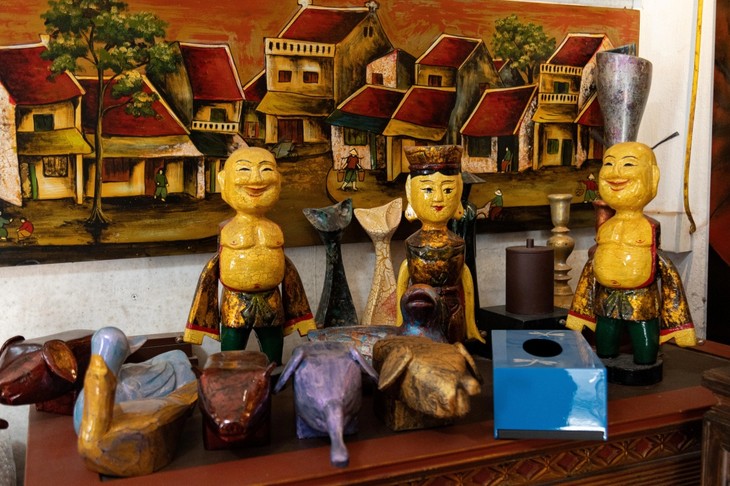 Hand-crafted lacque products of Ha Thai village (photo: Minh Duc/ VTC News) Hand-crafted lacque products of Ha Thai village (photo: Minh Duc/ VTC News) |
Tourism expert Phung Quang Thang said: “These craft villages have developed over centuries. The villagers have preserved their crafts and elevated them to the level of artistry. Visiting a craft village gives visitors a close-up look at Hanoi’s ancient craft tradition.”
The “Nam Thang Long Heritage Route” takes tourists through a number of destinations to explore their rich historical values and see how traditions are preserved and carried forward by generations of Hanoians.