(VOVWORLD) - Pickleball may be easy to pick up, but playing well from the first point to the last requires more than just skills. With the sport going viral and attracting players of all ages, knowing what to eat, when to eat, and how to stay properly hydrated has become increasingly important. In today’s Doctor at Home, we speak with Alice Nguyen, a sports nutritionist at Evolve Clinic in Ho Chi Minh City, about practical nutrition strategies that help pickleball players maintain energy, recover faster, and enjoy the game without burnout.
Reporter: Welcome, and thanks for joining us, Alice. Pickleball is physically demanding. From a nutrition perspective, how can players fuel their bodies to maintain steady energy throughout a match?
Alice: Pickleball may look lighthearted, but it’s actually a stop-and-go sport that demands quick reactions, repeated sprints, and strong focus. To maintain steady energy, players need a balance of carbohydrates for fuel, protein for muscle support, and enough fluids and electrolytes to stay hydrated. If you eat too little or choose the wrong foods before playing, it can lead to low energy and fatigue toward the end of the game. Our goal is to energize the body with healthy food options.
Reporter: So how should players plan their meals throughout the day to avoid feeling sluggish by game time, especially when many practice in the late afternoon or evening?
Alice: So the nutrition for the pickleball players can start earlier in the day. A solid breakfast and lunch can help prevent over snacking or heavy meals right before playing. So about two to three hours before the sessions, a balanced meal with carbohydrates and lean proteins work best. If it's closer to the game time, the lighter options like fruit, yogurt or the small sandwich can top off energy without weighing your body down.
Reporter: How do players know during a match that their bodies aren’t getting the fuel they need?
Alice: The common signs can include feeling consistently tired early on or even before the game starts, feeling dizzy, and poor concentration. Some people might experience muscle cramps in the middle of the game or simply they just suddenly drop in their performance. So for example, some players can notice that they become slower in the middle of the game in reacting to the ball. So these are often the signs of low energy availability, dehydration or basically just a consequence of inconsistent eating habits.
Reporter: I’ve noticed that some players prefer natural foods while others rely on packaged sports snacks. How can they choose wisely between the two?
Alice: Both natural food and packaged sports snacks can actually work the same. Natural foods like banana, dried fruit or toast are actually very good options and they are very easy to digest. Some other packaged sports snacks can be convenient, especially during the long sessions where you cannot go to the grocery store and buy some natural fruit. So the key here when you choose the ready-to-eat snack is to check the ingredients. You can look for the easy-to-digest carbs and minimal additives. Well, if it sits well in your stomach and supports your performance, it's always a good choice.
With over eight years of experience in sports nutrition, Alice Nguyen currently works as a sports nutrition consultant at Evolve Clinic in Ho Chi Minh City, supporting both active individuals and professional athletes. Her training includes a Master’s degree in Sport Nutrition from Liverpool John Moores University (UK) and a Bachelor’s degree in Nutrition from Hanoi Medical University, along with advanced certification from Barça Innovation Hub. She also holds ISAK Level 1 certification and a Certificate in the Science of Exercise, and has contributed to international research on nutrition and sports performance published in a leading sports medicine journal.
Reporter: So Alice, for players who train several times a week, how important is day-to-day consistency in their eating habits, not just what they eat on match day?
Alice: Yeah, definitely important. In fact, eating is actually the same as training. Let's say if you have a tournament any time next month, then you definitely have to train from now on. You cannot wait until like one or two days before the tournament to start training with your coach. So it's quite the same with nutrition. Consistency is very important and even how well you eat on the match day, it can make up for undereating and poor eating habits, lack of micronutrients, lack of macronutrients the rest of the week or even month before the game. So regular balanced meals can help you to support recovery for the sessions of training before the tournaments or before the match day. It helps to maintain the energy stores and also reduce injury risks over the period. So in my experience, the athletes who eat consistently tend to perform more reliably and feel better overall. I would probably start with regular meals and proper hydration.
Reporter: So for beginners, what’s the first simple nutrition change you’d recommend?
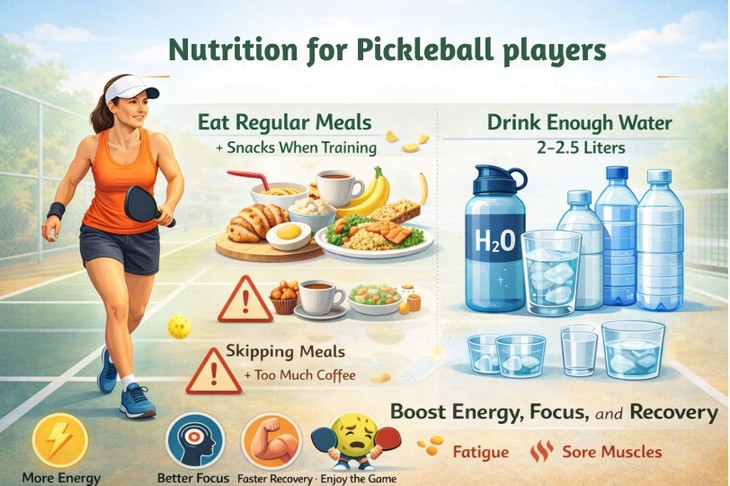
Alice: I’d suggest starting with regular meals and proper hydration. According to my observation with my friends who start doing sport, not just Pickleball, they usually undereat a lot and they rely on coffee to help them to be energized. And at the same time, they are not drinking enough water. So if you're not eating and providing water for your body, which is actually the basic need of the body, so your body will take a longer time to recover from the soreness from the previous sessions. You can very easily get tired on the court and some people might get sick after the hard day of training or training in high temperatures. So that is all the signs of under recovery and under eating and poor hydration when you start playing some sport. So my suggestion is quite simple. It's just eating three to four meals per day, including some snacks before the training, and drinking enough water, like two to two point five liters per day at least. So hydration and adequate filling can immediately improve your energy, focus, recovery and enjoyment of the game.
 |
Reporter: You’ve worked with professional athletes before. What lessons from their nutrition routines can regular pickleball players learn from?
Alice: So the biggest lessons are preparation and consistency. Professional players don't really wait until they get exhausted or hungry to eat. Everything is planned ahead. So they keep meals simple, repeat what works and prioritizes the recovery, especially for the athletes that have training every day. So for recreational players, even though you don't really need the extreme diet or training, adopting these habits can make a noticeable difference in performance and long term health.
Reporter: Good nutrition doesn’t have to be complicated, but it can make a real difference in how you feel and perform on the court. As we’ve heard today, simple habits like regular meals, smart snacks, and proper hydration can help pickleball players stay energized, recover better, and enjoy the game more.
Alice: Thank you so much, our lovely audience and the host. Hopefully you like the shows and if you have any requests in terms of any nutrition topics, let us know. Thank you.
Reporter: That’s all for today’s Doctor at Home. Thank you for listening. Until next time, take good care.