(VOVWORLD)- Every election of deputies to the National Assembly is a significant test of trust and cohesion between the Party, the State, and the people. As Vietnam enters a new stage of development with new opportunities and new challenges, social consensus – the core of national strength – has become more important than ever.
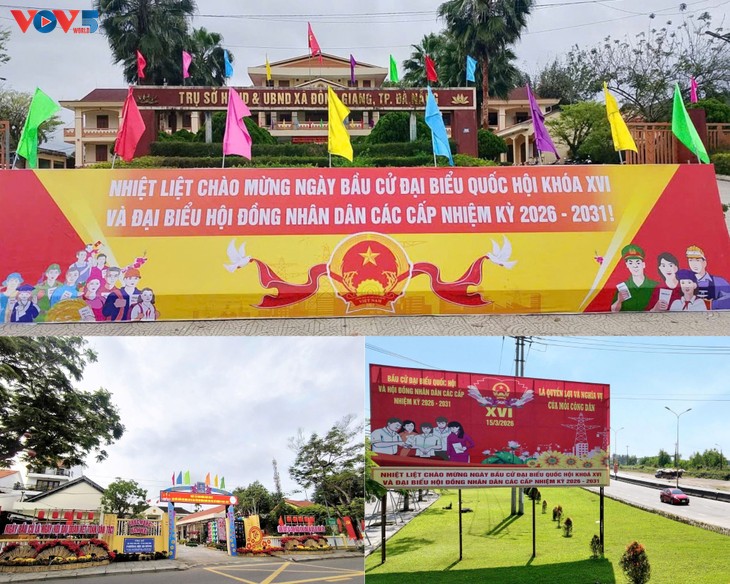 Decorations ahead of Election Day in Da Nang city (Photo: Long Phi, Thanh Ha/VOV) Decorations ahead of Election Day in Da Nang city (Photo: Long Phi, Thanh Ha/VOV) |
The election of the 16th National Assembly is particularly significant at a time when Vietnam needs to shift its development model.
Social consensus: the glue of unity and the foundation of stability
The election comes with Vietnam continuing to advance its renewal process and pursue long-term socio-economic development goals. Consensus has been evident at every stage of election preparation, directed toward the goal of selecting qualified representatives to serve in the State’s highest legislative body.
Such consensus does not come automatically. It’s the result of transparency and openness in providing information about the candidates. When voters clearly understand the qualifications required of National Assembly deputies and are well informed about candidates’ action programs, they are better able to exercise their voting rights. The National Election Council has announced an official list of 864 candidates for 500 deputy positions. The list reflects a rigorous selection process in which voters’ opinions played a decisive role.
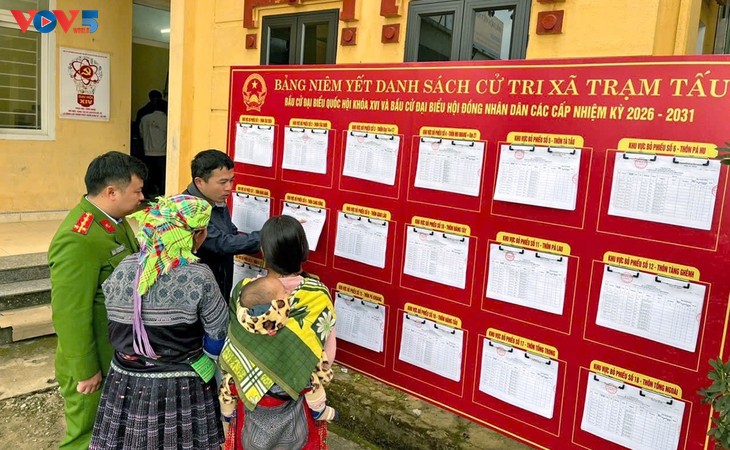 Voters are checking voter lists in Lao Cai province. (Photo: Thua Xuan/VOV) Voters are checking voter lists in Lao Cai province. (Photo: Thua Xuan/VOV) |
Voter-candidate meetings provided opportunities for citizens to express their views and offer feedback. Consensus has grown from these direct exchanges between candidates and voters.
The consensus has been fostered via technology application. Tools like the “Digital Election Information Map” implemented in Hanoi and several other places, and smartphone apps that allow voters to look up candidates’ biographies, have gotten a lot of use. Voters’ search for information demonstrates a growing political activism and a strong interest in this important political event, particularly among Gen Z voters who are casting their ballots for the first time.
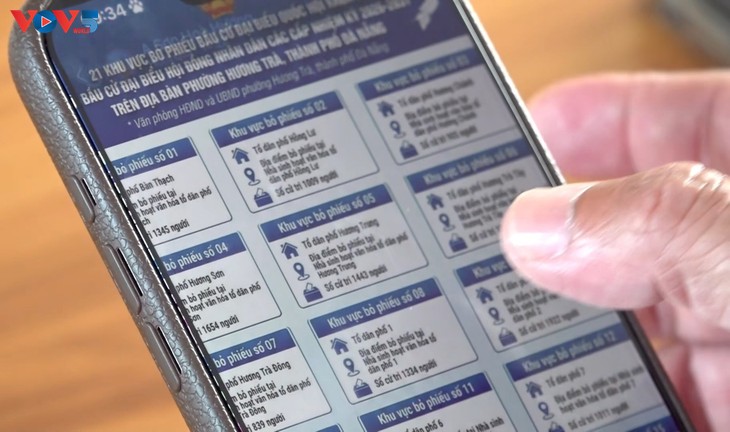 Election information is updated on digital applications. (Photo: Long Phi/VOV) Election information is updated on digital applications. (Photo: Long Phi/VOV) |
Throughout Vietnam, from mountains to lowlands and from mainland to islands, election preparations have drawn millions of grassroots volunteers, and voters are prepared to fully exercise their democratic rights.
Nguyen Anh Tri, a deputy in the 14th and 15th National Assemblies, said voters have great trust and expectations for the deputies of the 16th National Assembly and People’s Councils for the 2026-2031 term. Such trust, he said, is not based on personal feelings but on solid grounds.
Tri said: “Election preparations have been carried out carefully and promptly. Drawing from my personal experience as an independent candidate in the 14th and 15th National Assembly elections, I know that the process of nominating candidates is highly democratic and transparent. Meetings between candidates and voters have created strong engagement. Information about candidates has been integrated into the VNeID app, making it easier for voters to access biographies, action programs and detailed candidate lists by electoral unit.”
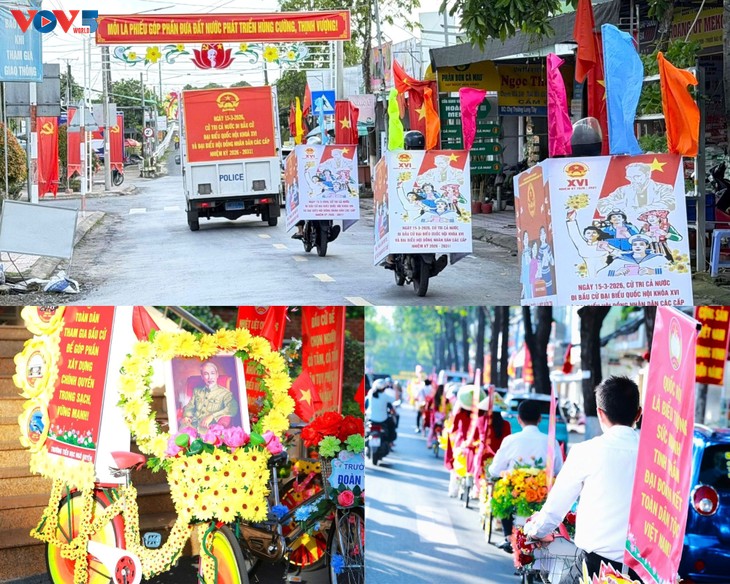 Election atmosphere in Can Tho city (Photo: Tran Hieu/VOV) Election atmosphere in Can Tho city (Photo: Tran Hieu/VOV) |
A positive social atmosphere
The support of voters for the election has drawn international attention. In an article titled “Ten Elections to Watch in 2026”, the Council on Foreign Relations of the United States listed Vietnam’s National Assembly and People’s Council elections among the notable political events of the year. The article said the election will reflect the will of the people and a high level of political consensus following the 14th National Congress of the Communist Party of Vietnam.
Foreign residents in Vietnam have noted that election preparations have been thorough and the atmosphere around the event has been very positive. Lattanaphone Phetphilanon, a Lao national pursuing a master’s degree in International Relations at the Diplomatic Academy of Vietnam, said she was impressed by the colorful public atmosphere and the disciplined organization of the election. Election day in Vietnam, she said, is an occasion for citizens to exercise their democratic rights while also demonstrating social unity. She added that information about the election is available on mainstream media and social networks. Voters can simply scan a QR code in their residential area to access the biographies and action programs of candidates. The integration of technology with political activities, she said, reflects a modern and open Vietnam.
The election of deputies to the 16th National Assembly and People’s Councils at all levels for the 2026-2031 term is not just a routine political event, it symbolizes the nation’s will, the people’s aspirations, the Party’s vision, and a social consensus that creates momentum for building an innovative, action-oriented National Assembly.