(VOVWORLD) - Tuesday national conference organized by the Politburo and Secretariat signaled a major shift in Vietnam’s mindset and approach to global engagement. International integration is now identified as a “critical and constant priority” and a “key driving force” propelling Vietnam into a new era.
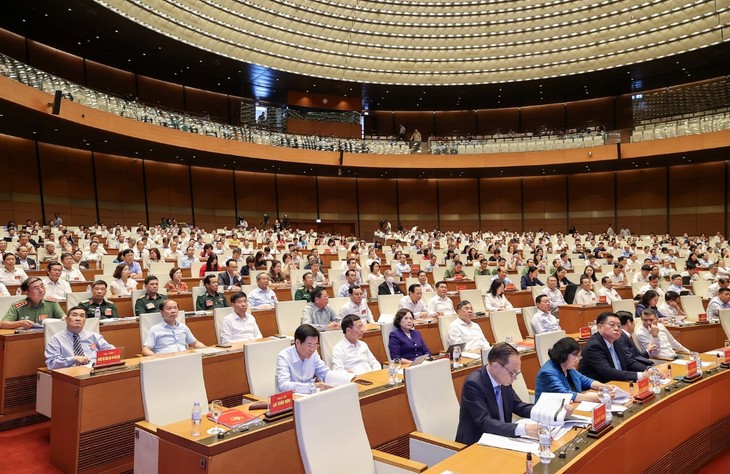 Delegates attend the National Conference to on the implementation of the four Resolutions of the Politburo. (Photo: VGP/Nhat Bac) Delegates attend the National Conference to on the implementation of the four Resolutions of the Politburo. (Photo: VGP/Nhat Bac) |
The world is undergoing epochal changes, which is a strategically important period for Vietnam’s revolution to step into a new era. The Politburo’s Resolution 59 underscores that national strength is the foundation for all integration strategies, requiring Vietnam to adhere to international standards and contribute to shaping them.
International integration for Vietnam no longer defines the country as a late comer and mere participant, but as a nation that “builds, shapes, and leads” cooperative frameworks aligned with its evolving conditions and capacities.
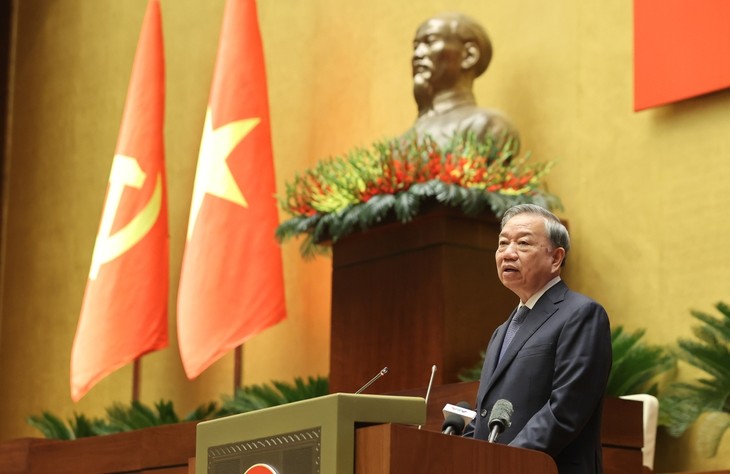 General Secretary To Lam speaks at the Conference. (Photo: VGP/Nhat Bac) General Secretary To Lam speaks at the Conference. (Photo: VGP/Nhat Bac) |
International integration as a strategic driver
Resolution 59 defines international integration as a strategic engine, with domestic strength playing a decisive role in enhancing internal capacity while leveraging external resources, closely linking integration with protecting national interests, and balancing cooperation and defense.
Party General Secretary To Lam said: “We must have a new mindset, new position, and new approach to international integration, moving from a mindset of merely receiving to one of contributing, from just participating to fully integrating, from being a latecomer to being a nation that advances and pioneers new fields.”
Vietnam pursues comprehensive, extensive, and coordinated international integration. Areas of integration are interconnected and complementary in an overall strategy that is selective, focused, and phased appropriately.
The General Secretary said: “Economic integration remains the core, and integration in other areas should facilitate economic engagement. Priorities include restructuring the economy, renewing the growth model, and accelerating digital transformation. Political, security, and defense integration must strengthen national capacity and position and safeguard the Fatherland. Science, technology, and innovation should align Vietnam’s standards and regulations with advanced international practices.”
Vietnam aims for comprehensive integration in culture, society, tourism, environment, education, training, and healthcare in order to showcase and promote the nation’s cultural heritage, enhance scientific cooperation in healthcare, raise education quality to regional and global standards, and develop the Vietnamese people intellectually and physically to stand alongside international peers.
Finetuning institutions, policies to realize international commitments
Vietnam recognizes the need to enhance implementation capacity and consolidate its institutions and policies, removing bottlenecks in fulfilling international commitments and agreements. Vietnam is accelerating the review and harmonization of domestic laws with international regulations to ensure full, consistent, and effective compliance. The country will leverage commitments and economic links, particularly next-generation free trade agreements, to diversify benefits and avoid overdependence on a few partners. Relevant agencies are finalizing a draft resolution on special mechanisms and policies to improve integration effectiveness, scheduled for submission to the National Assembly at the upcoming 10th session.
Efforts have been made to attract high-quality foreign direct investment, particularly from leading global corporations in information technology, telecommunications, semiconductors, and artificial intelligence. Priority is given to projects involving advanced, high-tech, clean technologies, modern management, and broad spillover effects—ranging from eco-smart industrial parks and innovation hubs to logistics and strategic infrastructure, including transportation networks. Vietnamese enterprises are being encouraged to invest and operate abroad, building internationally recognized national brands.
Vietnam’s international integration has passed many critical milestones. Vietnam is now ready to engage more proactively with the global political arena and global economy.