(VOVWORLD) - The Kho Mu ethnic minority people observe many annual rituals closely linked to the human life cycle and agricultural production. Ma Gro, their biggest festival of the year, prays for good fortune and blessings.
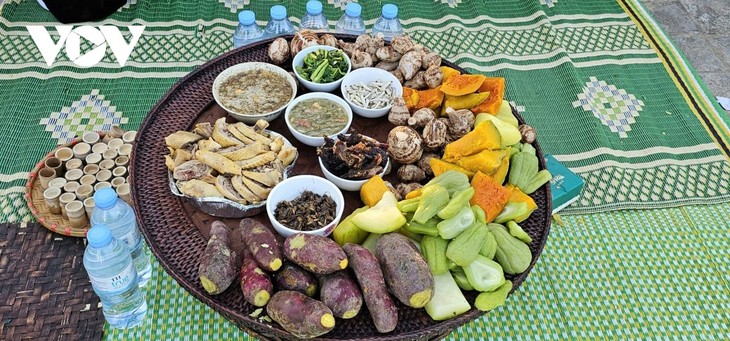 The offerings for the Ma Gro New Year Festival (Photo: Tong Duc Anh/VOV-Northwest Region) The offerings for the Ma Gro New Year Festival (Photo: Tong Duc Anh/VOV-Northwest Region) |
At the beginning of the new year, every Kho Mu family holds a worship ceremony to ask for their ancestors’ permission to sow seeds and to pray for a bountiful harvest. Each family chooses an auspicious day after the harvest, avoiding the death anniversaries of their parents, to organize the Ma Gro ritual, also known as the good-fortune and blessing ritual or the new rice celebration.
The descendants place offerings on their ancestral altar and invite their forebears to celebrate with the family and witness their offspring’s filial piety and gratitude.
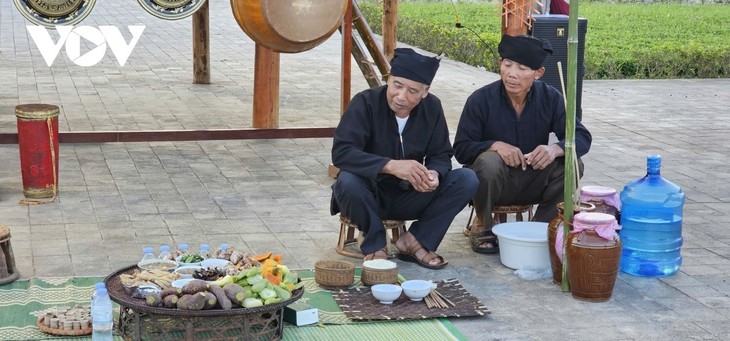 A shaman performs the Ma Gro Festival. (Photo: Tong Duc Anh/VOV-Northwest Region) A shaman performs the Ma Gro Festival. (Photo: Tong Duc Anh/VOV-Northwest Region) |
“The new rice celebration has been observed since the Kho Mu established villages. It’s held once a year to report our achievements and make offerings to our ancestors. We ask our ancestors to bless all family members with good health, chase away the old year’s misfortune, illness, and hardships, and welcome a new year filled with good things, lush crops, prosperous livelihoods, and a happy family,” said a Kho Mu man named Me Duy Chinh in Son La province.
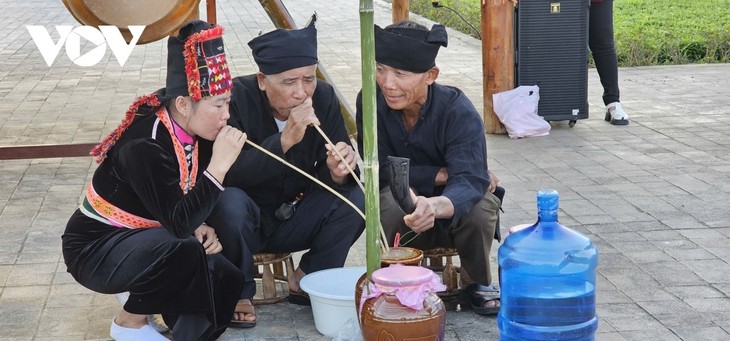 People drink liquor through long bamboo straws. (Photo: Tong Duc Anh/VOV-Northwest Region) People drink liquor through long bamboo straws. (Photo: Tong Duc Anh/VOV-Northwest Region) |
The ritual is held in each household attended by relatives and neighbors. The offerings consist of common agricultural products, prepared simply but carrying a deep symbolic meaning.
“The offering tray includes taro, edible insects such as crickets, mixed vegetables, smoked meat, chicken cooked in bamboo, taro-leaf soup with fish, and boiled chicken. In the past, life was difficult and food was not as abundant as today. The ingredients are mostly collected from the fields and forests,” said Chinh.
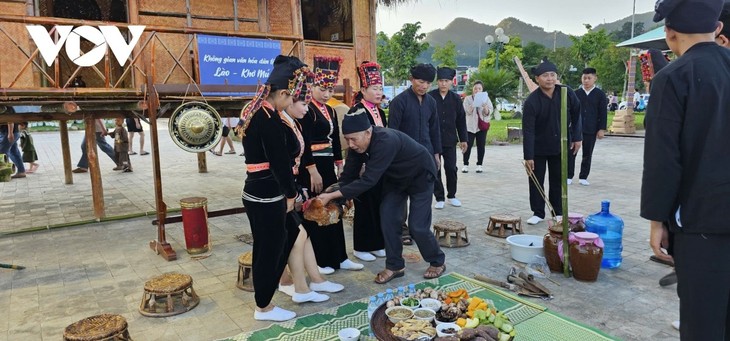 The chicken sacrifice ritual at the Ma Gro Festival (Photo: Tong Duc Anh/VOV-Northwest Region) The chicken sacrifice ritual at the Ma Gro Festival (Photo: Tong Duc Anh/VOV-Northwest Region)
|
The ritual begins with a prayer for good fortune and blessings for the family. The eldest son catches a rooster and hands a sharp knife to his father who sacrifices the rooster for the ritual. He prays to the ancestors and invites them to celebrate the New Year with the family. It is followed by a prayer for the souls and spirits of all family members.
“We all hope to attend the ceremony every year to thank the deities for favorable weather, abundant crops, and family reunion. We’ll continue to preserve this tradition,” Lu Thi Lan of Son La province said.
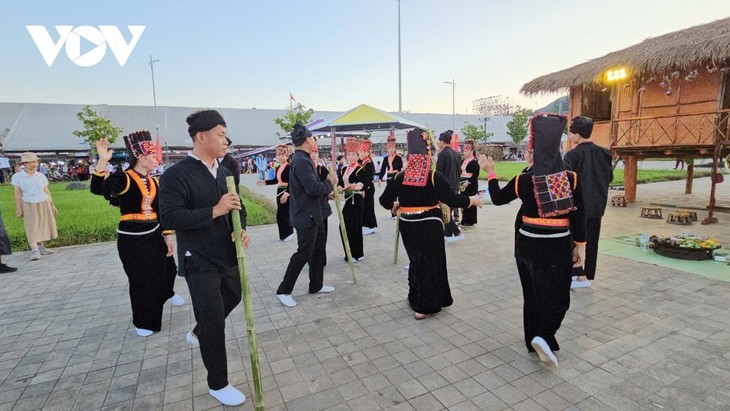 After the rituals, people join the traditional Kho Mu dance. (Photo: Tong Duc Anh/VOV-Northwest Region) After the rituals, people join the traditional Kho Mu dance. (Photo: Tong Duc Anh/VOV-Northwest Region) |
After the solemn ritual comes a joyful celebration around a vase of liquor accompanied by drums, gongs, and singing. The good-fortune and blessing ceremony is a community celebration where people gather, bond, and place hopes in the future.