(VOVWORLD) - In Royal Mile Whiskies, a crowded whisky store tucked away in the heart of the Royal Mile in the Old Town of Edinburgh, Scotland, the air is thick with the sweet, peaty scent of oak and history. Standing behind the counter, manager Mark Davidson, a native Scot with a warm smile, talks to VOV about the history of Scotch whisky and his own 27 years in the business.
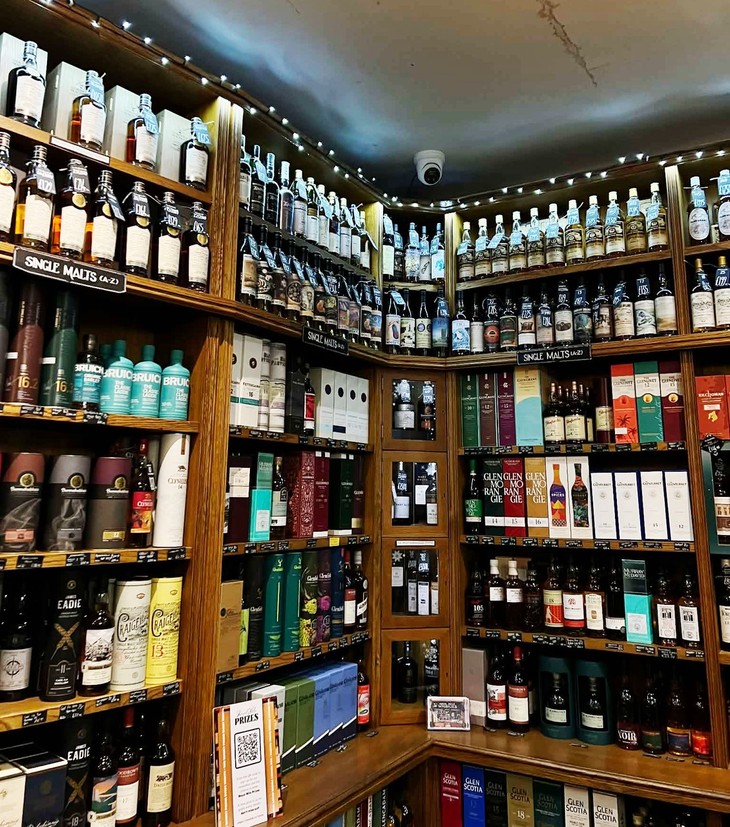 Royal Mile Whiskies, also known as RMW, is a go-to spot for whisky lovers in Edinburgh and beyond. (Photo: Bao Minh) Royal Mile Whiskies, also known as RMW, is a go-to spot for whisky lovers in Edinburgh and beyond. (Photo: Bao Minh) |
One of the first things people think of in connection with Scotland is whisky. Scotland has 6 whisky regions of Highlands, Speyside, Lowlands, Islay, Campbeltown, and the Islands, each offering unique flavors from light, floral malts to intensely smoky, peaty drams to distillations with a rich, fruity character. Islay whisky is famously smoky and peaty. The further south you go the lighter and gentler the whisky.
Whatever it’s said, Wandertooth, a travel blogger, said of Scotch whisky, “In case you're wondering how Scotch Whisky is different from Rye Whisky or Bourbon…well, to put it simply, they're all whiskies, but Scotch is made from malt barley grown in Scotland, distilled in Scotland, aged in Scotland, and diluted with water from Scotland. The most important thing for Scotch to be Scotch is that the product be distilled and aged in Scotland, due to the climate. Maturing in any other climate changes the flavor.”
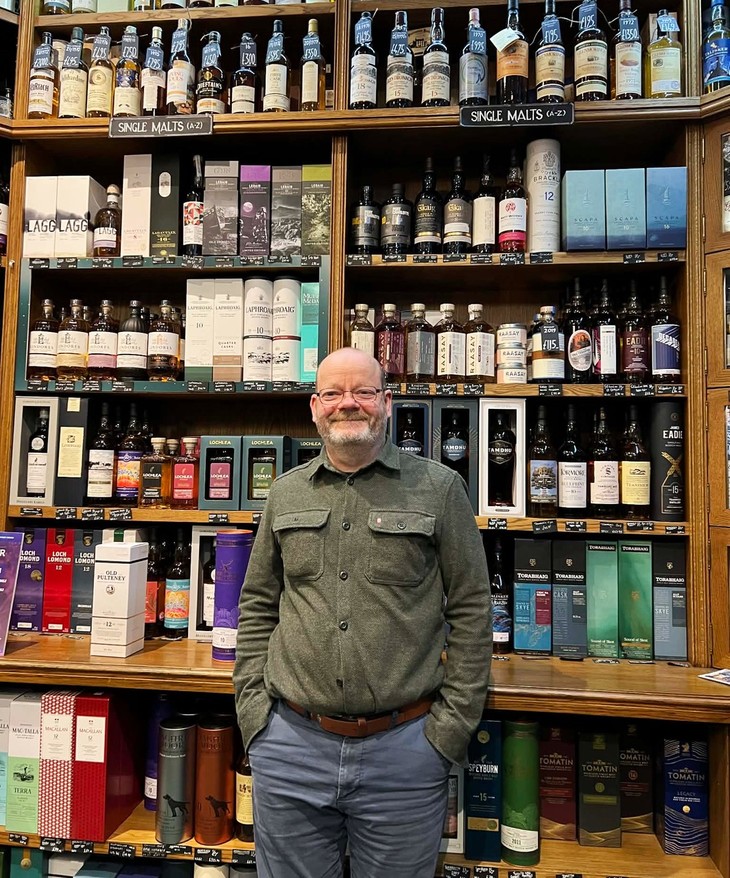 Mark Davidson, the RMW manager, has worked in whisky for 27 years. (Photo: Bao Minh) Mark Davidson, the RMW manager, has worked in whisky for 27 years. (Photo: Bao Minh) |
In the world of spirits, the word "authentic" is often passed around like a sacred relic, but Davidson has a different philosophy. For him, chasing an "authentic" or "traditional" taste is a bit like chasing a ghost. Science has brought massive leaps in efficiency, and Davidson acknowledges the shift.
"The help of science has brought efficiency and economy forward in great bounds. And the industry is still healthy, so the product hasn't failed, but maybe the flavor profile has changed," said Davidson.
Whether that change is for better or worse is entirely subjective. Davidson went on to say, " Who's to judge that? I've always thought that whisky is a matter of taste. It's very personal what works and what doesn't work. And the great thing about it, the great democracy of whisky, is that if I like it, it doesn't mean that you have to like it. You don't have to like it. So we can agree that this whisky is for me but not for you. It's not like mathematics."
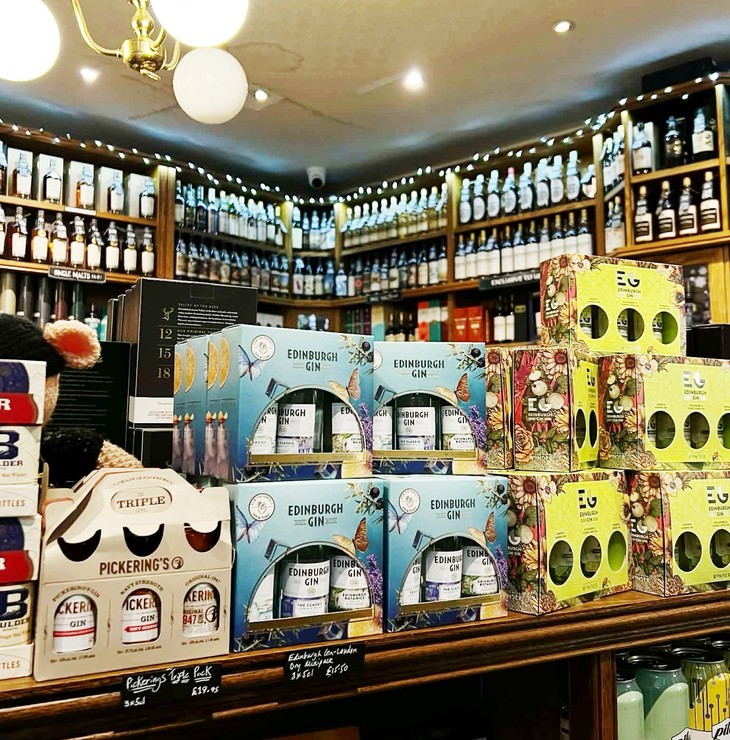 With an impressive selection of Scotch whiskies, including rare and limited editions, as well as a range of independent bottlings, RMW caters to both seasoned connoisseurs and curious newcomers. (Photo: Bao Minh) With an impressive selection of Scotch whiskies, including rare and limited editions, as well as a range of independent bottlings, RMW caters to both seasoned connoisseurs and curious newcomers. (Photo: Bao Minh) |
Surprisingly, for a man surrounded by world-class whiskies, Davidson doesn't believe whisky belongs at the dinner table next to Scotland's national dishes. Instead, he looks to Scotland's other great liquid export – beer.
“What I would drink with haggis, neeps, and tatties wouldn't be a spirit. I've always found it difficult for the intensity of a spirit to be harmonious with food. I think maybe a nice IPA – Indian Pale Ale – cooling and refreshing, might go well with haggis, neeps, and tatties.”
But as a true lover of whisky, Davidson admitted that the ritual of the night always returns to the cask.
"But I would certainly end my meal with a whisky, no question about that," Davidson admitted.
While global brands dominate the whisky industry, Davidson finds the true heart of the industry in the small-batch producers.
“The success of big brands, be the beers or Scottish whiskeys around the world, when things become popular, they tend to become even more popular, it's quite unstoppable. But there are very many small local companies with only a small local distribution because their capacity is reduced. And I'm happy to say that even in tough economic climates, some consumers who are driven by flavor are well provided by a huge number of breweries and distilleries that are caring about small output and high quality.”
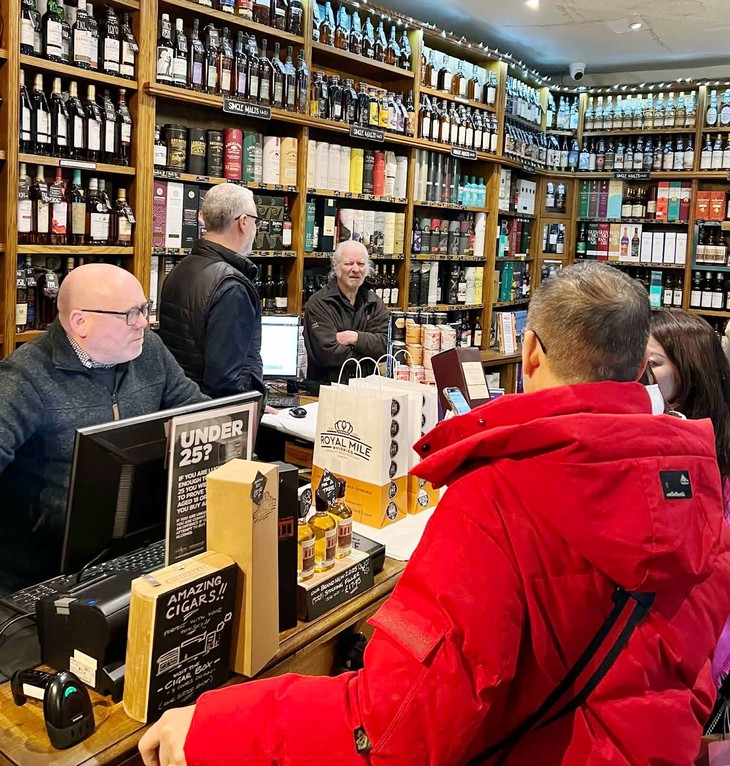 The RMW is always crowded with customers. (Photo: Bao Minh) The RMW is always crowded with customers. (Photo: Bao Minh) |
Being asked for some tips on the best whisky regions, breweries, and distilleries in Scotland, Davidson said it would be unfair of him to mention names, but everybody he was thinking of was focused on quality, not quantity.
He added that when you wander into a pub to escape the rain, for example, the best whisky to order isn't necessarily the most expensive one, but one that facilitates a good chat. The best whiskies, he said, are shared in a pub while discussing the trivialities of life, drams that facilitate personal connection, rather than dominating it.