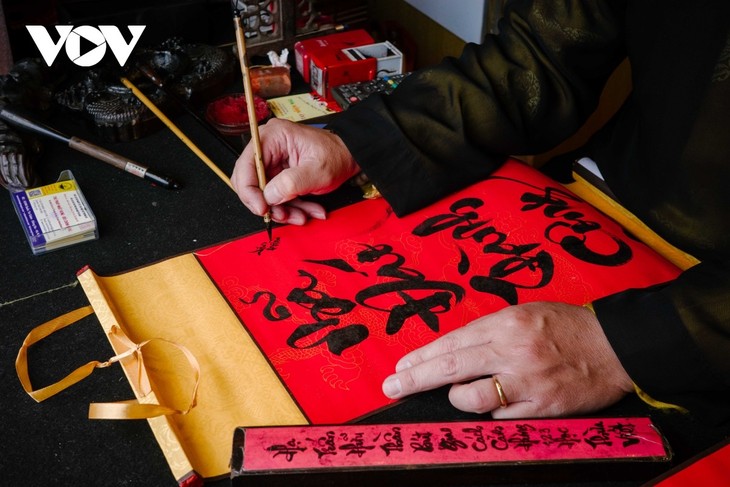
(VOVWORLD) - Vietnam’s custom of asking for calligraphy at the start of the Lunar New Year is a beautiful practice and a meaningful symbol, embodying the nation’s respect for learning, moral values, and the aspiration toward goodness.
 (Photo: VOV) (Photo: VOV) |
Since ancient times, for Vietnamese people, written characters are not just a means of communication, but also reflection of one’s education, character, and ethical standards. For Vietnamese people, learning is the path to self-improvement, spiritual cultivation, and building a strong foundation for society. Therefore, each spring, asking for calligraphy expresses reverence for knowledge while conveying hopes for nurturing enduring spiritual values in the year ahead and throughout one’s life journey.
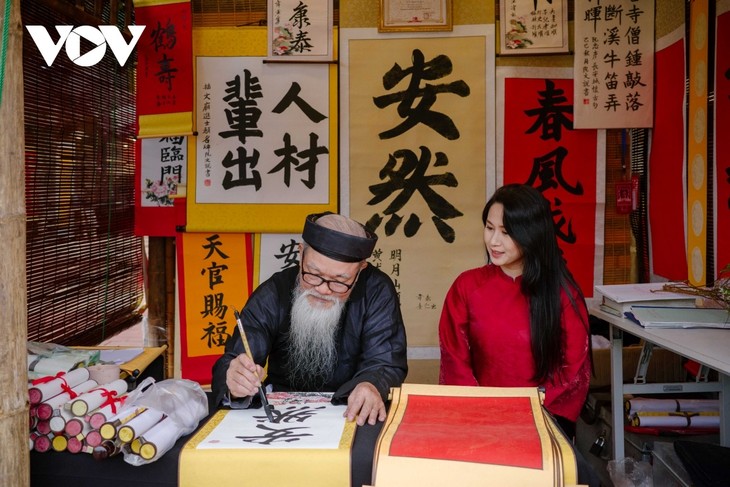
From a spiritual perspective, the custom reflects a desire to uphold positive values. Characters such as “Phuc” (Happiness), “Loc” (Prosperity), “Tho” (Longevity), and “An” (Peace) express aspirations for a fulfilled and tranquil life. Others, such as “Tri” (Wisdom), “Nhan” (Patience), “Tam” (Compassion), and “Hieu” (Filial Piety), embody life philosophies that remind individuals to preserve their character and sense of responsibility toward family and society. Each character thus becomes a moral message and a cultural symbol.
 (Photo: VOV) (Photo: VOV) |
Hoang Anh Diep, Vice President of the UNESCO Calligraphy Club in Hanoi, said: “Receiving calligraphy brings joy, peace, and good health to every family. Parents often ask for characters to remind their children of their responsibility to study diligently. Meanwhile, children or parents requesting calligraphy for elders usually choose characters related to health and longevity, wishing grandparents a long life together with their family.”
In contemporary life, this custom carries special significance. As society develops rapidly and daily life becomes increasingly fast-paced, people feel a stronger need to find moments of stillness to restore inner balance. Standing before a calligrapher, watching each graceful brushstroke, and sensing the faint fragrance of fresh ink in the spring air allows one to slow down and reflect inwardly. The exchange between the calligrapher and the recipient is not merely artistic but cultural—a quiet transmission of traditional values sustained naturally and enduringly. Each red sheet of paper displayed in the home is therefore not simply a Lunar New Year decoration, but a reminder of the responsibility to preserve tradition and nurture the soul.