(VOVWORLD) -The Cam Gia peach-growing region in Gia Sang ward, Thai Nguyen province, is nationally renowned for its ornamental and ancient bonsai peach trees. After enduring severe flooding over the past two years, residents living along the Cau River are working tirelessly to revive production, diversifying peach varieties and other flowers to serve the upcoming Lunar New Year or Tet.
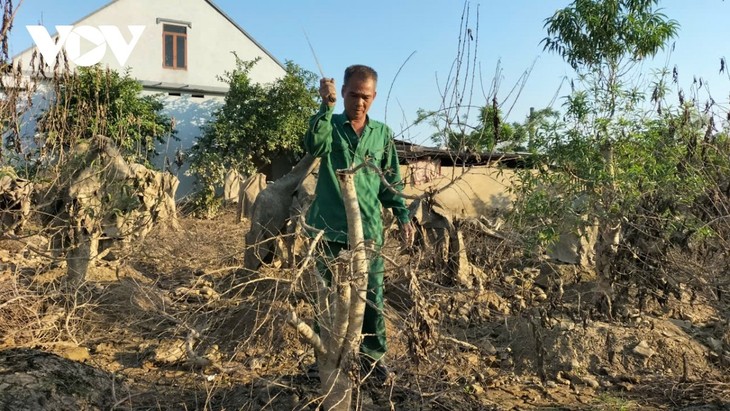 Hoang Van Doanh of Cam Gia Hamlet 4, Gia Sang Ward, cutting down peach trees that died due to flooding (Photo: Hoang Tu) Hoang Van Doanh of Cam Gia Hamlet 4, Gia Sang Ward, cutting down peach trees that died due to flooding (Photo: Hoang Tu) |
In the wake of Typhoon Yagi in September 2024 and Typhoon Matmo in October 2025, the once-lush Cam Gia peach gardens were left battered and desolate. Growers suffered heavy losses, with many families losing their entire crops. In total, 365 households cultivating 30 hectares of peaches—including many meticulously shaped, high-value ornamental and ancient trees—were affected.
However, with their passion for traditional crafts, the locals did not succumb to the devastating natural disaster. They quickly cleared debris, sanitized their fields, treated the soil, and brought in new seedlings.
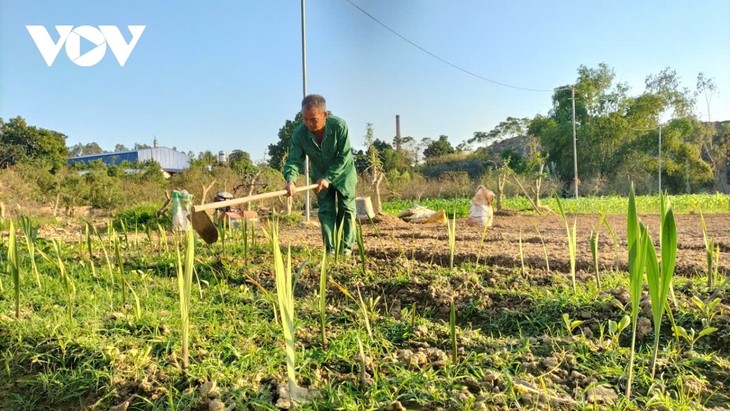 Doanh decides to plant lilies and gladiolus to compensate for the damage caused by the rain and floods. (Photo: Hoang Tu) Doanh decides to plant lilies and gladiolus to compensate for the damage caused by the rain and floods. (Photo: Hoang Tu) |
In Cam Gia Hamlet 4, Hoang Van Doanh, who owns a 5,000-square-meter garden, is carefully nursing his remaining peach stumps in preparation for Tet. “My family was only able to recover a few dozen peach stumps, mainly keeping them for next season. After the floods, we switched to planting fresh flowers like lilies and gladiolus to supply Tet in time and generate extra income for the family,” said Doanh.
Not far from Doanh’s garden, Nguyen Van Bang’s plot of land shows more promising signs. Bang—who has more than 20 years of experience—intensified disease prevention spraying, applied organic fertilizers, and pruned branches to accelerate recovery. Each peach tree is carefully tended and shaped to ensure timely blooming for the New Year, Bang said.
He noted, “Because of the heavy rains and floods, the trees were severely waterlogged. Peach roots are naturally very fragile. We relied on experience combined with technical care to revive them after the floods. Currently, the trees are healthy and meet market quality standards.”
 Nguyen Van Bang of Gia Sang Ward tending peach trees after the flooding (Photo: Hoang Tu) Nguyen Van Bang of Gia Sang Ward tending peach trees after the flooding (Photo: Hoang Tu) |
Working alongside farmers, the Gia Sang ward People’s Committee has instructed specialized officials to coordinate with the craft village and the local peach-growing association to document damage and help households register for provincial support policies. The Vietnam Bank for Social Policies has frozen debts and reduced interest rates on existing loans while providing new credit to help residents quickly restore the famous peach-growing village.
The Gia Sang ward Farmers’ Union has visited each garden to assess damage, offer technical guidance for recovery, and encourage growers to maintain production. The Union is also coordinating to source additional seedlings and assist with soil improvement to ensure more stable plant growth.
Nguyen Thi Thuy Nga, Deputy Chairwoman of the Gia Sang Farmers’ Union, said that for this year’s Tet, only about half of Cam Gia’s peach-growing area will be harvestable. “Local authorities and the Gia Sang ward Farmers’ Union have encouraged people to salvage and care for the remaining areas to restore income. We have also proposed that several banks reduce interest rates for peach-growing households, giving them better conditions to resume production,” said Nga.
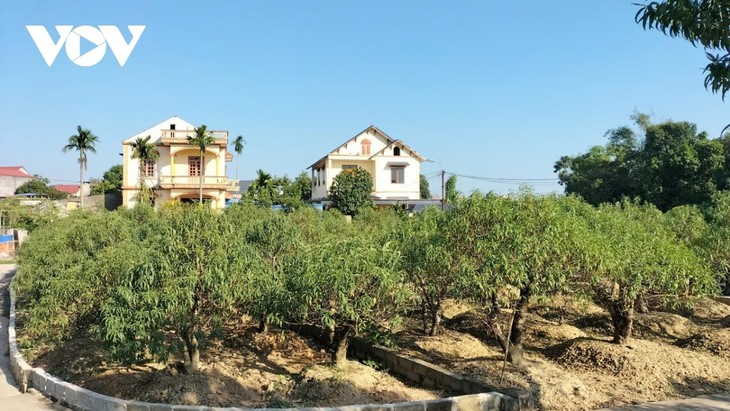 The peach gardens on higher ground are safer after the flood. (Photo: Hoang Tu) The peach gardens on higher ground are safer after the flood. (Photo: Hoang Tu) |
Natural disasters may have swept away years of labor and valuable property, but they have not extinguished the determination of the local people. Green shoots are gradually returning to the fields of Cam Gia. Peach stumps are taking root and budding once more, alongside lush rows of lilies and chrysanthemums, all promising to bloom in time for the coming Lunar New Year.