(VOVWORLD) - For ethnic Central Highlanders, folk dance is not only an art form but also a reflection of their community life and spiritual values. In Dak Lak Province, the cultural sector, together with local residents, particularly young people, is making concerted efforts to revive traditional dances.
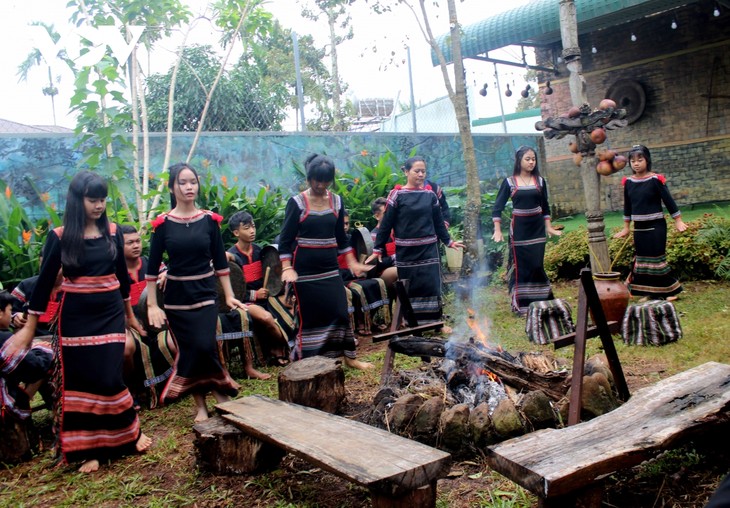 Young Ede women perform a folk dance to the rhythms of gongs. (Photo: H Xiu/VOV correspondent in the Central Highlands) Young Ede women perform a folk dance to the rhythms of gongs. (Photo: H Xiu/VOV correspondent in the Central Highlands) |
In the yard of the community house in Ky hamlet, dozens of young Ede men and women are practicing the “Gru bird” dance. In the Ede language, “Gru” means “eagle”, a symbol of strength and dominion over the sky. This dance is usually performed during major festivals, rituals to worship deities, or the grave-leaving ceremony, which bids farewell to the soul of the deceased.
While the men play the gongs, the young women perform dance movements that mimic the image of an eagle soaring through the sky. Each hand gesture and graceful, rhythmic step conveys both strength and softness.
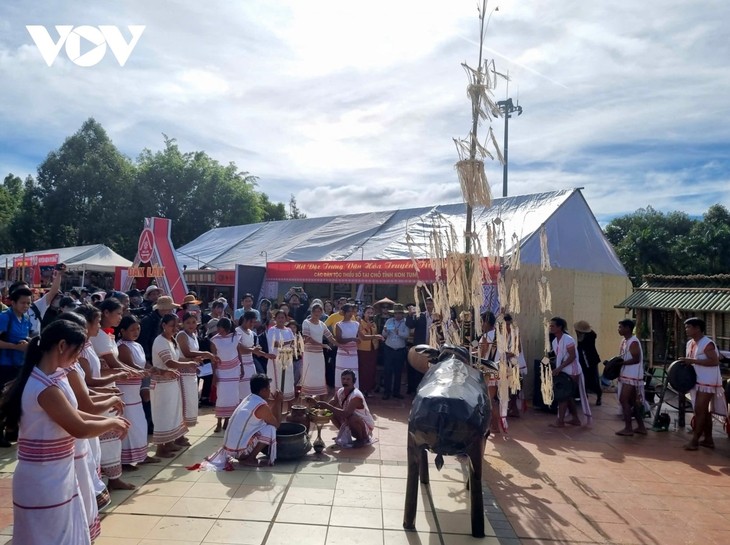 A traditional dance performed by the Ro Mam during a ritual to open the rice granary (Photo: H Xiu/ VOV correspondent in the Central Highlands) A traditional dance performed by the Ro Mam during a ritual to open the rice granary (Photo: H Xiu/ VOV correspondent in the Central Highlands) |
“In the ‘Gru bird’ dance, the most difficult part is the hand movements. If done incorrectly, your arms will quickly become tired. All the movements must be synchronized for the dance to look beautiful. When practicing, we start with the footwork, count the rhythm, and then move on to the hand movements. Each dancer has to shape their arms to resemble the wings of the Gru bird,” local resident H’Wanna Ktul said.
Along with the Ede, other ethnic groups in the Central Highlands also have their own traditional dances, which are closely associated with festivals, the sound of gongs, and the flavor of fermented rice liquor. Ba Na’s Xoang dance is gentle and slow, the Ede’s Xoang dance is supple and lively, while M’nong gong dance is powerful and vigorous.
Dr. Luong Thanh Son, former Director of the Dak Lak Museum, said that each dance carries meanings such as greeting deities, celebrating abundant harvests, or expressing joy during community gatherings. At the same time, these dances reflect the harmony between humans and nature, labor, and belief.
“The dances of ethnic groups in the Central Highlands often recreate daily production activities and everyday life. In addition, there are dance movements that express emotions and deep affection for the homeland, for hills and mountains, plants, rivers, and streams,” Son said.
According to Meritorious Artist Vu Lan, Head of the Dak Lak Branch of the Vietnam Folklore Association, folk dance is closely linked to the spiritual beliefs of each ethnic group. “These dances are highly distinctive, with each movement carefully crafted and rich in meaning, reflecting the spiritual beliefs of ethnic communities.”
As many ancient dances are gradually disappearing, the younger generation has fewer opportunities to learn and to appreciate the subtle beauty of traditional arts. In response, the Dak Lak cultural sector has organized numerous competitions and festivals to popularize traditional dances in the community.
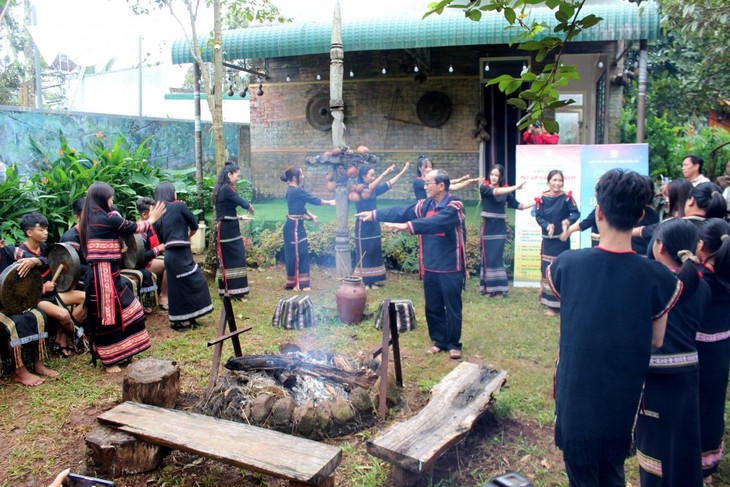 (Photo: H Xiu/ VOV correspondent in the Central Highlands) (Photo: H Xiu/ VOV correspondent in the Central Highlands) |
Recently, the Dak Lak Provincial Literature and Arts Association has opened a Central Highlands folk dance class, drawing a lot of people including H’Huyen Mlo.
“For me, the two most important elements of ethnic cultural identity are folk songs and folk dances. I feel a strong sense of responsibility to preserve these traditions,” said H’Huyen Mlo.
In the fast pace of modern life, as many traditional values gradually fade, the revival and promotion of folk dance is not only about preserving an art form, but also about ensuring that the rhythms of gongs and the xoang dance circles continue to echo through generations.