(VOVWORLD) - 2025 is seen as a “breakthrough year” for Vietnam’s infrastructure, marked by the inauguration of numerous major works and the accelerated rollout of strategic projects. Infrastructure has become the “signature identity” of a Vietnam moving faster and more confidently on its development path.
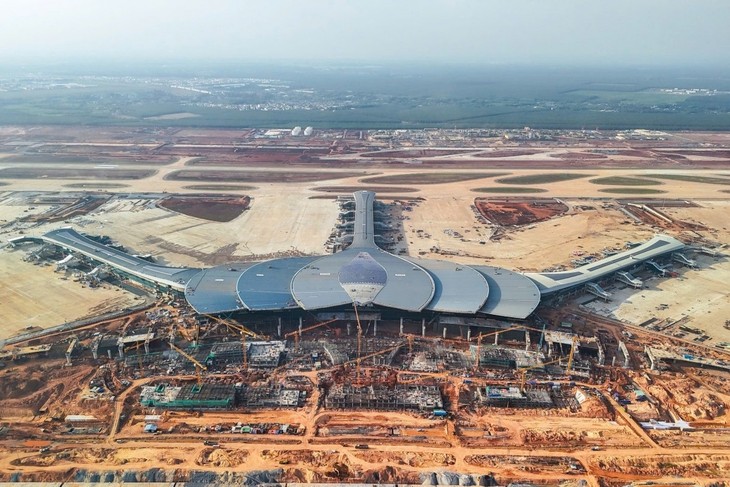 Long Thanh Airport is designed to serve up to 100 million passengers and 25 million tons of cargo annually, becoming the largest airport in Vietnam. Long Thanh Airport is designed to serve up to 100 million passengers and 25 million tons of cargo annually, becoming the largest airport in Vietnam. |
In 2025, a total of 564 key projects and works were launched, with 140 major projects completed and put into operation—significantly higher than in previous years.
“All these projects are of great political, economic, security, and defense significance, opening up new prospects and creating new spaces for development and international integration. Once completed, they contribute substantially to improving the quality of life for the people, ensuring social security, and narrowing development gaps between regions,” Minister of Construction Tran Hong Minh said.
The North–South Expressway is completing the nation’s transport “backbone,” alongside routes connecting the northern midlands and mountains, the central coastal axis, roads through the central highlands and the south, major urban belt roads, Long Thanh International Airport, large-scale logistics centers, and integrated industrial, urban, and service zones.
More than 3,500 km of expressways have been inaugurated or technically opened to traffic, laying the groundwork for achieving the target of 5,000 km of expressways by 2030. These developments offer new opportunities for growth, attract investment, and generate strong regional economic spillover effects.
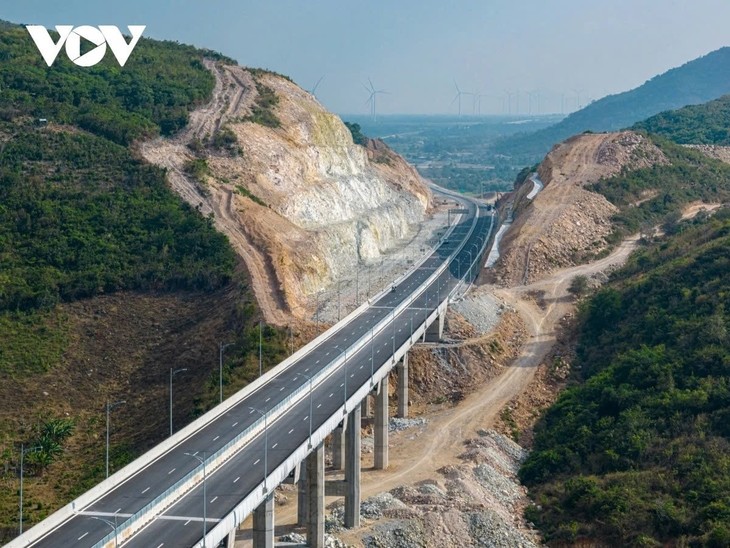 Never before has Vietnam’s transportation infrastructure system been invested in with such large scale, rapid pace, and high determination as in the recent period. Never before has Vietnam’s transportation infrastructure system been invested in with such large scale, rapid pace, and high determination as in the recent period. |
Strategic power transmission projects—particularly the large-circuit 500 kV North–South line—have completed all main circuits after an unprecedentedly fast construction period, making an important contribution to national energy security. This inspiring project sets an example for other infrastructure breakthroughs, said economist Dr. Le Duy Binh.
“The spirit of ‘focusing on action and avoiding retreat’ set by the Prime Minister is highly decisive and can be applied to key transport works,” said Binh, adding, “It strengthens a sense of responsibility, encourages risk acceptance, and promotes practical solutions that align with the law and on-the-ground realities during project implementation.”
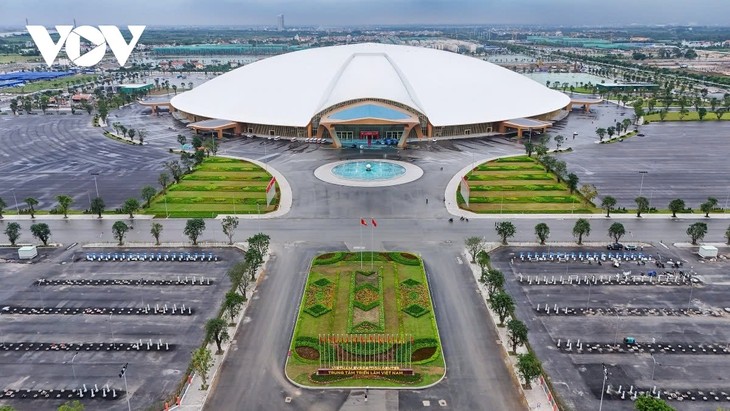 The Vietnam Exposition Centre in Dong Anh commune covers 90 hectares. The Vietnam Exposition Centre in Dong Anh commune covers 90 hectares. |
Looking ahead to 2026 and beyond, Vietnam has set a target of striving for double-digit growth, with infrastructure development continuing to be identified as one of the three strategic breakthroughs. This includes further mobilizing social resources and improving investment efficiency.
Hoang Van Cuong, a member of the National Assembly’s Economic and Financial Committee, told VOV that in the past, Vietnam mainly focused on attracting investment in transport infrastructure. “Now, this approach should be expanded across all sectors. Public–Private Partnership (PPP) models need to be promoted in areas such as healthcare, education, culture, and sports infrastructure to unlock new development resources,” said Cuong.
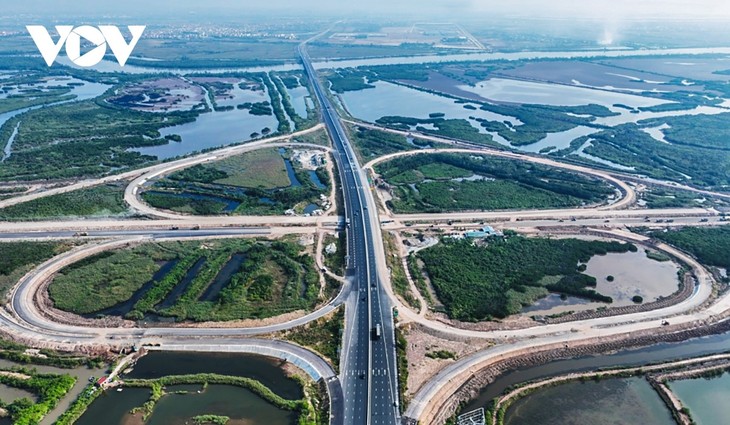 The Dam Nha Mac Interchange is a key project in Quang Ninh province. The Dam Nha Mac Interchange is a key project in Quang Ninh province. |
The Government has reaffirmed its commitment to acting as a creative hub—accompanying projects and creating the most favorable conditions for effective implementation.
Prime Minister Pham Minh Chinh said, “Clear institutions, smooth infrastructure, smart governance, shared practices, and mutual understanding are needed. Priority must be given to securing resources, materials, progress, and quality, improving capital efficiency, and ensuring that wherever investment goes, efficiency follows—bringing tangible benefits to the people and promoting rapid, sustainable socio-economic development.”
The infrastructure breakthroughs of 2025 have paved the way for a new era of national acceleration.