(VOVWORLD) - Chieng An ward in Son La province is emerging as a major hub for high-quality Arabica coffee cultivation. Coffee groves spread across hillsides have opened a new path to prosperity, helping many farming households in Chieng An escape poverty and become well-off. In 2025, Chieng An introduced high-yield Arabica varieties, modern farming techniques, and cooperative economic models.
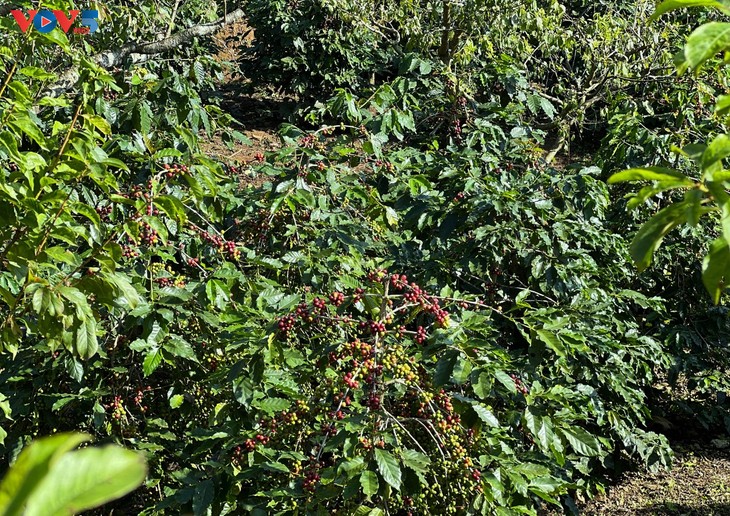 Arabica coffee groves in Chieng An ward, Son La province (Photo: The Hung) Arabica coffee groves in Chieng An ward, Son La province (Photo: The Hung)
|
Just a few minutes’ drive from Son La city center, the Arabica coffee groves in Chieng An appear lush and green, with branches heavily laden with fruit. At an ideal altitude of about 900 meters and with a year-round cool climate, the Arabica beans grown here have a distinct aroma and mild acidity, making them highly sought after by businesses for processing into specialty coffee lines.
Chieng An ward has 350 hectares of coffee, more than 80% of which are high-yield Arabica varieties. Average output is 15 to 18 tons of fresh cherries per hectare, up 10-12% from the 2020–2023 period. This growth demonstrates the effectiveness of intensive farming and a shift in thinking, said Nghiem Van Tuan, Chairman of the Chieng An ward People’s Committee.
“We have identified Arabica coffee as the key driver of local economic development. We are planning organic coffee production and gradually replacing aging varieties with new ones to improve quality. With good yields and favorable prices like those seen this year, the local economy will thrive,” said Tuan.
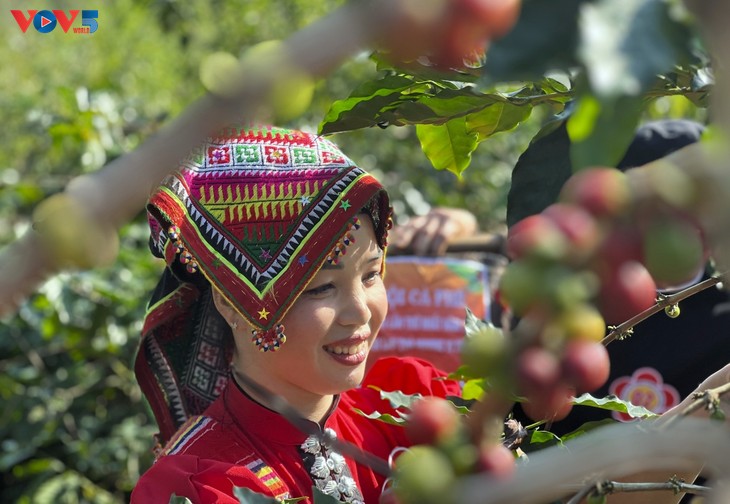 Arabica coffee growers harvest coffee (Photo: The Hung) Arabica coffee growers harvest coffee (Photo: The Hung) |
At the coffee farm of Ms. Ca Thi Thuong, head of Tam Quynh hamlet in Chieng An ward and one of the pioneers of high-yield Arabica varieties, clusters of ripe red coffee cherries signal a successful harvest this year.
Ms. Thuong said, “Tam Quynh hamlet covers 772 hectares. On average, each hectare produces about 8 tons of Arabica coffee. We have a bumper crop this year, so villagers are getting richer. Each household may earn 3,800 USD or more, and the most successful family is likely to earn as much as 38,000 USD.”
More than 700 households in Chieng An depend on coffee cultivation. Average annual income from Arabica coffee is 4,600 to 5,700 USD per household, a major contribution to the economic growth of Chieng An ward and Son La province.
Son La is currently Vietnam’s Arabica coffee capital. Its 20,000 hectares account for 60% of Vietnam’s total Arabica coffee area. Through specialty coffee competitions, “Son La Arabica” has become a national brand.
According to Vuong Van Hai, Chairman of the Son La Coffee Association, “Son La focuses on developing high-quality specialty coffee. Since Son La coffee received its geographical indication, the Association and its members have worked to cultivate and develop coffee in line with this indication, ensuring that production and processing meet quality standards without negatively affecting the environment.”
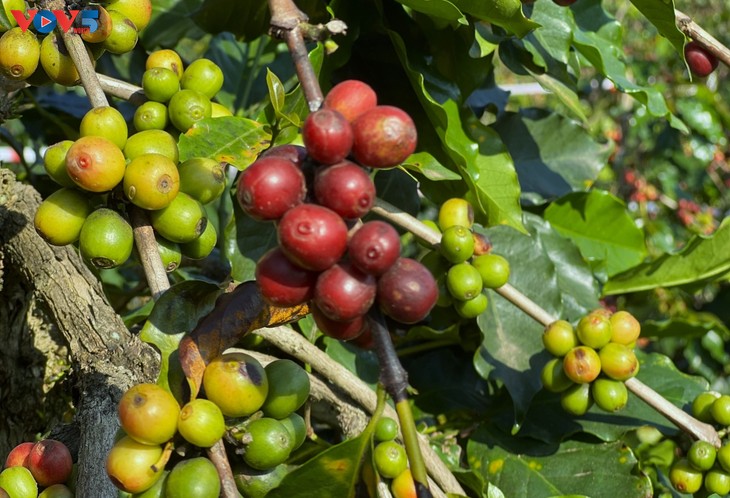 High-quality, heavy Arabica coffee clusters in Chieng An ward, Son La province. (Photo: The Hung) High-quality, heavy Arabica coffee clusters in Chieng An ward, Son La province. (Photo: The Hung) |
Coffee cultivation not only generates income, it spins off related services like preliminary and deep processing, trade, and agrotourism, creating more jobs for local workers. Chieng An is moving toward a closed-chain “coffee economy” model linked to environmental protection and sustainable development.
One of the highlights of 2025 is the application of technology to cultivation. Smart drip irrigation systems, organic microbial fertilizers, and selective harvesting are widely adopted, resulting in more uniform quality, higher sugar content, and a more consistent flavor.