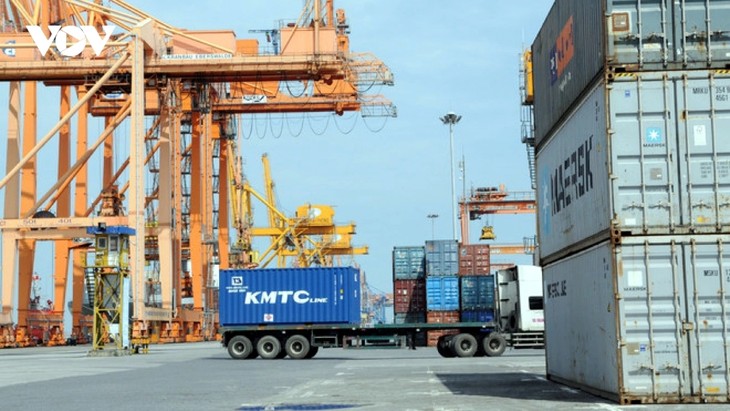
(VOVWORLD) - Vietnam’s export sector is embarking on a new journey in 2026 — one that goes beyond expanding turnover to reshaping the very foundation of growth. With the Government targeting export growth of 15 to 16% this year, equivalent to 546 to 550 billion USD, the challenge is no longer finding markets, but ensuring quality, autonomy, and economic resilience.
 (VOV illustration) (VOV illustration) |
Since 2016, Vietnam has had 10 consecutive years of trade surplus. The number of markets with turnover exceeding 1 billion USD has risen sharply. Free Trade Agreements, particularly new-generation deals like CPTPP, EVFTA, and RCEP, have opened doors to high-standard, high-value markets.
But a prolonged trade surplus doesn’t automatically translate into strong internal capacity. The domestic value-added ratio in many key export sectors remains modest. Heavy reliance on Foreign Direct Investment and imported raw materials leaves the economy exposed to global supply chain disruptions.
So the new growth milestone of 2026 is structural transformation – more technology content, higher localization rates, strengthened domestic enterprises, and, crucially, more diversified markets.
Tran Thanh Hai, Deputy Director of the Import-Export Department at the Ministry of Industry and Trade, said that diversifying import and export markets is a policy aimed at reducing risks associated with excessive reliance on any single export or import market. “Once a market is secured, the next step is trade promotion, which includes brand building and using measures such as traceability or origin verification. These measures will significantly improve the effectiveness of our trade promotion efforts,” Hai noted.
In an era of rising protectionism, diversification means more than just finding new markets. It means upgrading products to simultaneously meet multiple layers of standards. Traceability requirements, labor and environmental standards, and particularly cross-border carbon adjustment mechanisms are forming a new generation of technical barriers.
If businesses fail to pivot toward greener production in time, the traditional advantage of low costs will quickly erode. Conversely, by taking the lead in supply chain transparency and clean technologies, Vietnamese firms can transform compliance pressures into competitive advantages. According to Le Xuan Vy, Deputy Director General of TNG Investment and Trading Company, said technology adoption and value enhancement are strategies increasingly embraced by Vietnamese enterprises.
“We’re focusing on technological innovation to improve productivity, product quality, and competitiveness against other businesses and export lines. Applying new technology helps the company improve designs, product quality, and better meet the increasingly stringent requirements of customers. We’ve identified investment in technology and human resources as our core strategy,” said Vy, adding, “These are the two key factors enabling the business to strengthen competitiveness, maintain growth, and ensure sustainable development in the current period.”
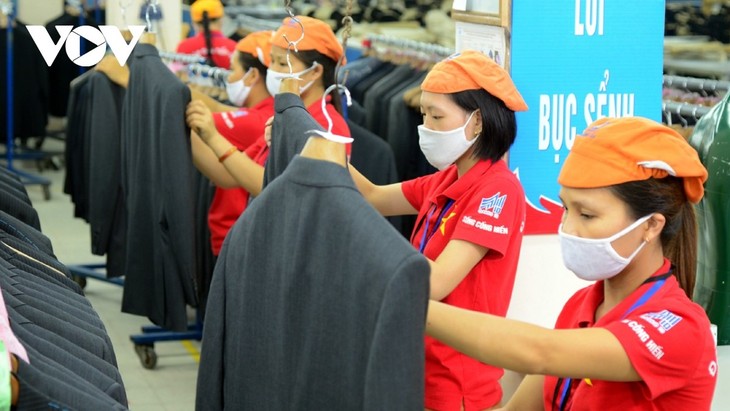 The garment and textile sector aims to earn 50 billion USD from exports in 2026. The garment and textile sector aims to earn 50 billion USD from exports in 2026. |
Amid intensifying global technological competition, Vietnam is accelerating service exports from IT and logistics to finance, tourism, and education. Expanding services helps diversify foreign currency sources, improve profit margins, and reduce reliance on natural resources.
Beyond traditional export staples, businesses are developing innovative products with strong international potential. According to Phan Duc Hieu, permanent member of the National Assembly’s Economic Committee, in the digital era, a creative product or digital platform can become an export commodity if properly supported.
“The export strategy must encompass services, seize every opportunity and make full use of every product. All businesses, including small and medium-sized enterprises, can have export potential if they possess a viable product. The new strategy must be more comprehensive and inclusive,” said Hieu.
2026, a pivotal year in a new growth cycle, marks a shift in mindset from pursuing volume to creating value. The new growth milestone, therefore, is not figures, but substantive competitiveness, strategic autonomy, and deep integration without dependence. When growth is anchored in quality, green transformation, and innovation, Vietnam’s exports will drive sustainable long-term development.