(VOVWORLD) -Community-based tourism is becoming a sustainable development pathway for Dak Lak Province in its international integration. In villages inhabited by Ede ethnic people, tourism goes beyond sightseeing to encompass living everyday life with locals. Traditional stilt houses, the sound of gongs, farming practices, and the central role of family and community are carefully preserved and transformed into authentic experiences.
In the gentle sunshine at the beginning of the Central Highlands’ dry season, riding aboard a rattling farm tractor along a red basalt dirt road from the village to the fields, Mercler Olivier, a French visitor, said it was an unforgettable experience to join local people on their way to work and witness their daily life firsthand.
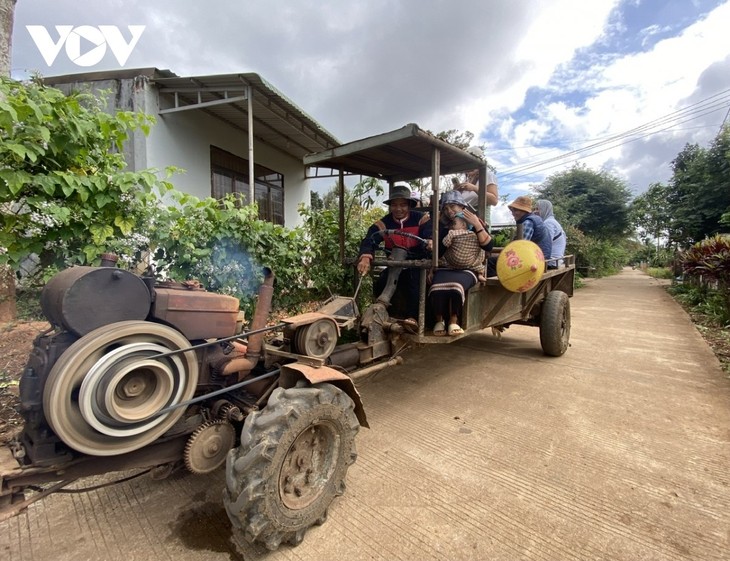 Riding a farm tractor to the fields is an exciting experience for many international visitors when they come to villages in Dak Lak (Photo: Cong Bac/ VOV correspondent in the Central Highlands) Riding a farm tractor to the fields is an exciting experience for many international visitors when they come to villages in Dak Lak (Photo: Cong Bac/ VOV correspondent in the Central Highlands) |
“It’s wonderful. We’ve been able to experience and learn more about the local culture, cuisine, and everyday life here,” said Oliver.
Mercler Claire, another French tourist, said she was particularly impressed by the Ede matriarchy. “The women play a very important role in Ede culture. This is quite different, there are not many cultures where women hold such an important position. I think it is a very good position for women.”
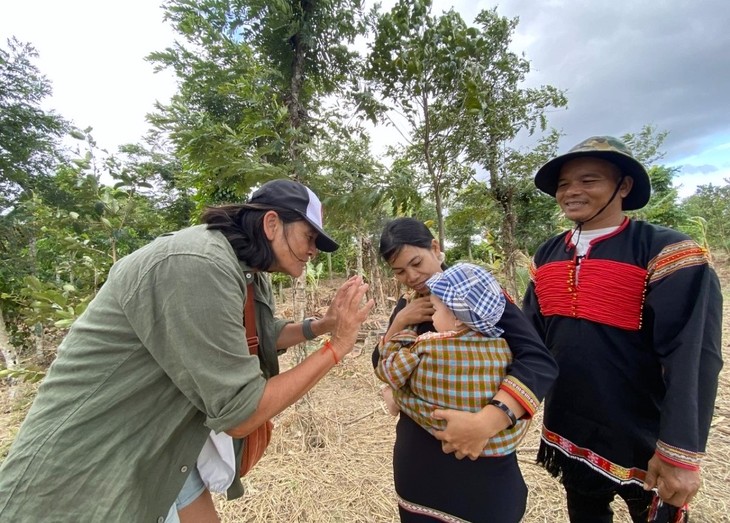 The image of an Ede woman carrying her child while working leaves a strong impression on international visitors (Photo: Cong Bac/ VOV correspondent in the Central Highlands) The image of an Ede woman carrying her child while working leaves a strong impression on international visitors (Photo: Cong Bac/ VOV correspondent in the Central Highlands) |
In Vietnam’s ethnic communities, strong community bonds, family, and a harmony with nature have been preserved across generations. Y Tien Nie Kdam, an Ede tour guide, said visitors are welcomed with open arms. “When foreign tourists come to experience village life, our people feel very excited and proud. We welcome them with sincerity, and over time we become more confident and more open,” said Y Tien Nie Kdam.
The family of Ms. H’Dor Enuol in Chuah village, Krong Ana commune, now regularly welcomes foreign visitors into their traditional stilt house. She said international tourists come mainly in search of authentic, real-life experiences.
Ms. H’Dor Enuol said, “At first, I thought hosting foreign guests would be difficult, but little by little I became accustomed to it. Visitors enjoy experiencing our everyday work and daily life in a genuine way, and over time I’ve grown more confident in communicating with them.”
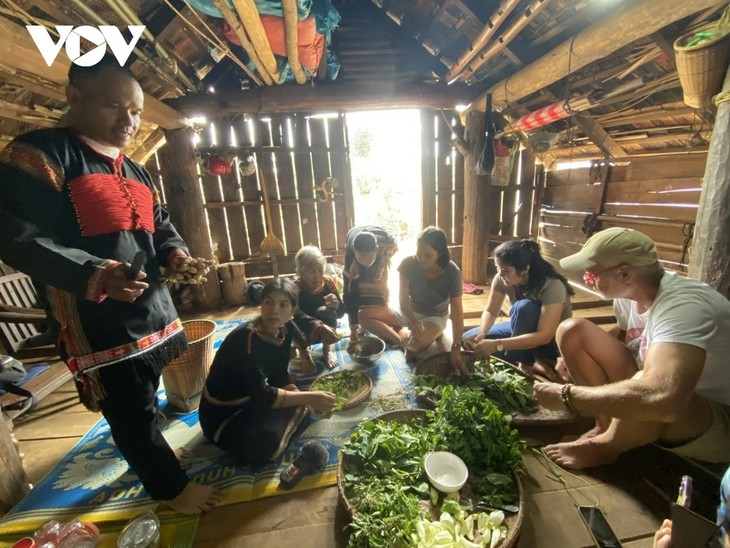 The community and family life in stilt houses is a close-to-life experiences to visitors (Photo: Cong Bac/ VOV correspondent in the Central Highlands) The community and family life in stilt houses is a close-to-life experiences to visitors (Photo: Cong Bac/ VOV correspondent in the Central Highlands) |
In Buon Tuor, Hoa Phu commune, Ms. H’Belly Eban and her husband have built a traditional stilt house that functions both as their family home and as a homestay for visitors. H’Belly said community-based tourism helps local people better preserve their cultural identity and the positive values of their ethnic culture.
“To develop community-based tourism, villages need stronger connections and a more professional approach. However, the most important thing is that each family and each village must preserve traditional cultural values, because visitors are eager to explore the culture and listen to the stories of the village,” said H’Belly Eban.
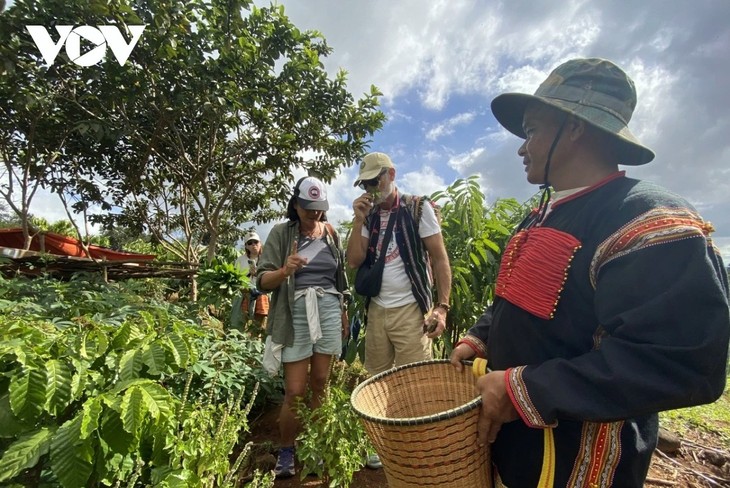 Community-based tourism also serves as a solution to preserving Ede cultural space in the process of integration (Photo: Cong Bac/ VOV correspondent in the Central Highlands) Community-based tourism also serves as a solution to preserving Ede cultural space in the process of integration (Photo: Cong Bac/ VOV correspondent in the Central Highlands) |
Tran Hong Tien, Director of the Dak Lak Department of Culture, Sports and Tourism, outlined ways to promote ethnic cultural identities in Dak Lak province through community-based tourism. “We will make use of heritage spaces, together with state investment and national target programs, to support ethnic minority communities in promoting and preserving cultural values associated with community-based tourism development,” he said.
Through community-based tourism, central highlanders are introducing their uniqueness to international visitors.