(VOVWORLD) - Typhoon Yagi made landfall in the Van Don special zone last September, sweeping away the livelihood of hundreds of local fishermen. Within just a year, aquaculture activities here have returned to normal.
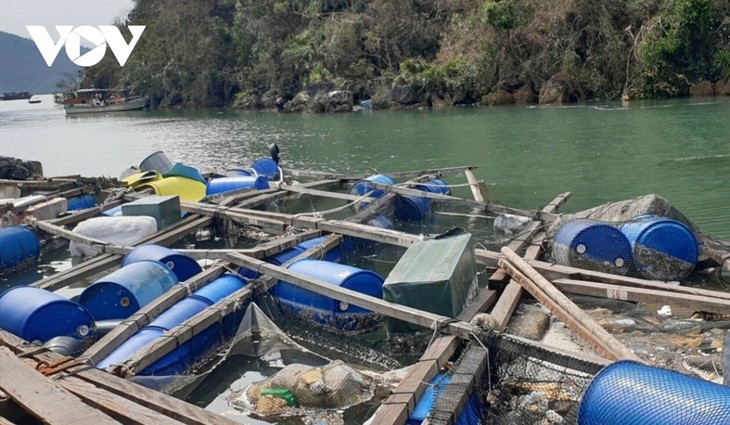 Several coastal areas in Quang Ninh province are in shambles after the historic storms. (Photo: VOV) Several coastal areas in Quang Ninh province are in shambles after the historic storms. (Photo: VOV) |
When typhoon Yagi arrived, bringing along with waves at over 10 meters high swept away fish cages and the seaweed cultivation system of STP Group offshore farm. Thanks to surveillance cameras, the farm's technicians managed to quickly locate the fish cages and re-assemble the system, saving hundreds of thousands of dollars the company thought they would lost in damage.
STP Group CEO, Nguyen Thi Hai Binh, said: “It was impossible for us to go around to find the swept-way cages at sea. Thanks to trackers installed on the cages, once the Internet connection was restored, we easily located our fish cages. We believe that technical and scientific solutions are the keys to protecting our people’s properties.”
In the past, Quang Ninh locals floated their fish cages with Styrofoam buoys and bamboo or wooden frames, which are cheap and widely available, but fragile against storms. Foam blocks break apart easily, which means cages sink and fishes escape out to the sea every storm season.
This practice not only cost seafood producers their properties, but also left behind tons of pollutants in the ocean.
After the historic typhoon Yagi, Mr. Duong Van Quyet of Ha Long commune, Van Don special zone, replaced his entire cultivation system with composite materials. The glossy, black plastic beams he used proved to be far more durable and resilient against strong winds and impacts.
He said: “Composite rafts are lighter than wooden ones. They float well without cracking or breaking, even when the waves rise high, which would have destroyed wooden rafts of the same size. My composite rafts are anchored into a separate cluster.”
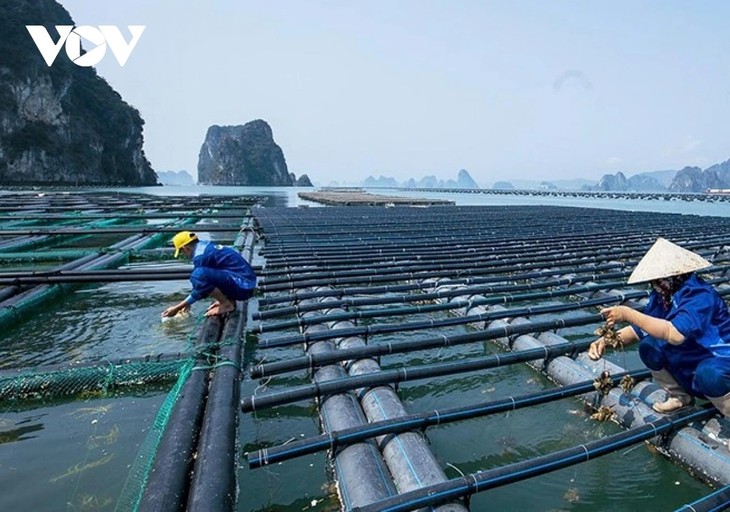 HDPE materials allow aquaculture farms in Quang Ninh to withstand storms much better. (Photo: VOV) HDPE materials allow aquaculture farms in Quang Ninh to withstand storms much better. (Photo: VOV) |
Adapting to natural disaster risks in aquaculture production is no longer a recommendation but an urgent requirement. Quang Ninh province has implemented a number of coordinated measures to build a modern aquaculture sector that is safe and highly resilient to climate change, and in line with environmental protection standards.
These measures include standardizing floating materials, improving cage designs, adopting better aquaculture production practices, and implementing automated monitoring systems, said Head of the Sub-Department of Fisheries and Fisheries Surveillance, Do Dinh Minh.
He said: “Locals previously used styrofoam to float fishing cages, which was not environmentally friendly. When storms hit, the styrofoam crumbled and became pollutants. Quang Ninh province has studied and issued a set of standards for floating materials. Only certified materials can be used.”
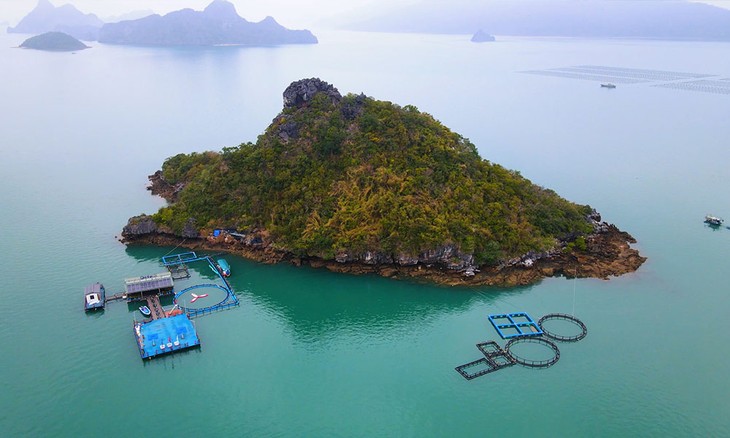 A high-tech, HDPE-based aquaculture farm in Van Don (Photo: stpgroup.com.vn) A high-tech, HDPE-based aquaculture farm in Van Don (Photo: stpgroup.com.vn) |
In recent years, multiple natural disasters have caused major losses for aquaculture production in coastal regions. Suitable aquaculture zoning and investments in key infrastructures like dykes, pumping stations, power and water supplies and drainage systems are the keys for coastal localities to achieve a sustainable and effective aquaculture sector.
Director General of the Department of Fisheries, Tran Dinh Luan, said: "Localities must review damages to existing aquaculture zones, especially after this year’s storms, and learn from these lessons to adopt production guides and recommendations on selecting and stocking the appropriate species for each season and scheduling harvests. We must also adopt cost-saving and environmentally friendly models to help locals increase their profits.
Natural disasters remain a challenge for aquaculture production in coastal regions. Better aquaculture techniques, cage and raft materials; adoption of monitoring and cultivation technologies, and proactive production management will help Quang Ninh minimize losses, protect locals’ livelihoods, and contribute to economic growth.
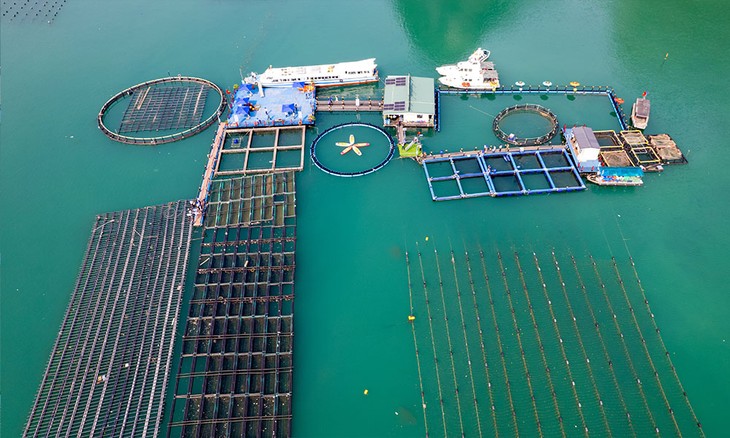 Each species in the farm get their own zones, and is raised sustainably. (Photo: stpgroup.com.vn) Each species in the farm get their own zones, and is raised sustainably. (Photo: stpgroup.com.vn) |