





 Vietnamese
 中文
中文
 日本語
日本語
 한국어
한국어
 Français
 Русский
 Deutsch
 Español
 Bahasa Indonesia
 ไทย
ไทย
 ພາສາລາວ
 ខ្មែរ
ខ្មែរ


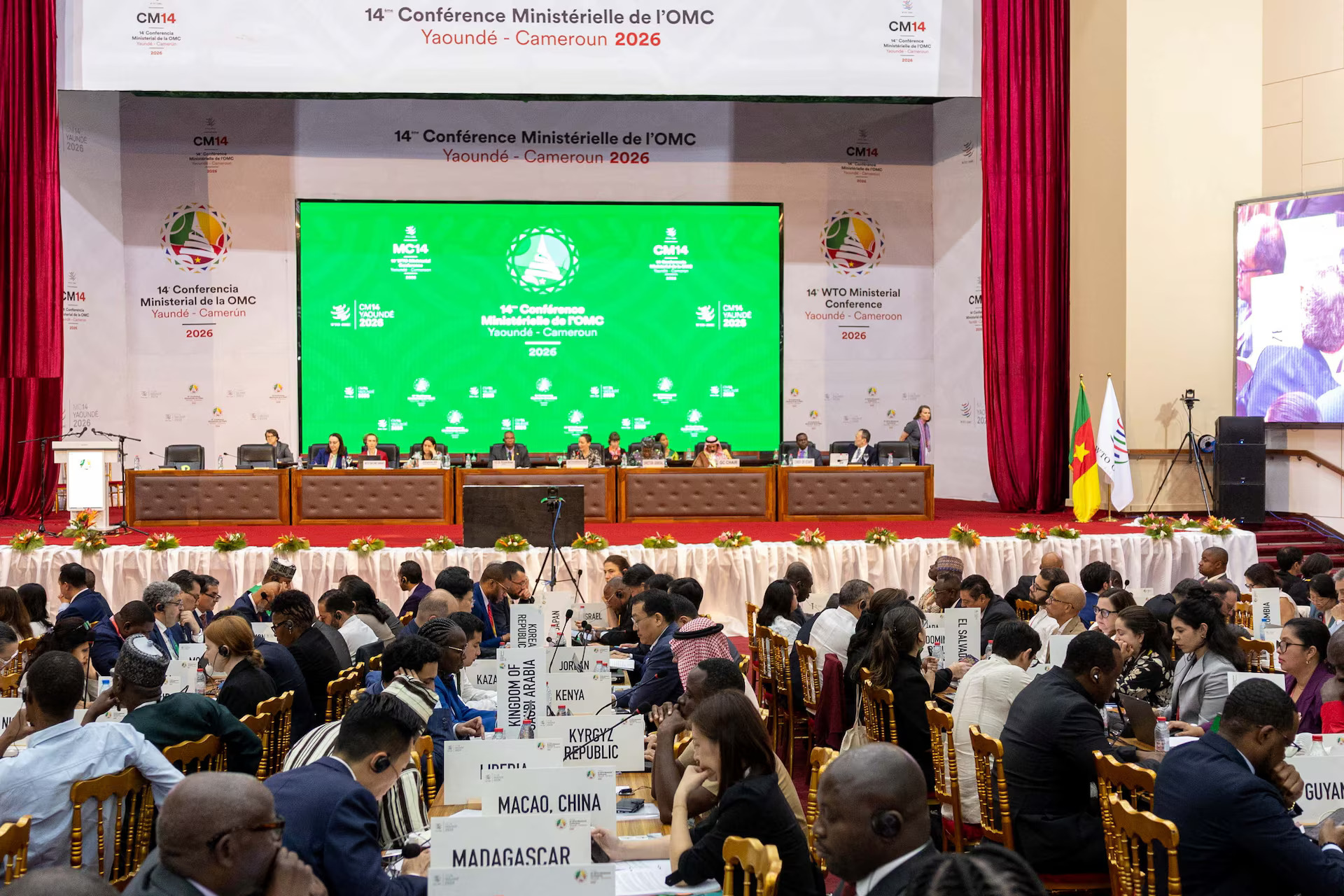 The 14th WTO Ministerial Conference (MC14) takes place in Yaounde, Cameroon on March 28. (WTO/Handout via REUTERS) The 14th WTO Ministerial Conference (MC14) takes place in Yaounde, Cameroon on March 28. (WTO/Handout via REUTERS) |
Limited outcomes
The 14th WTO Ministerial Conference (MC14) took place in Yaounde, Cameroon, late last week, the first meeting of the WTO’s highest decision-making body since President Donald Trump returned to the White House last year. Trump’s reciprocal tariffs have disrupted global trade, and the WTO is under intense pressure to reform to adapt to the new context.
Key reform priorities include revising the WTO’s decision-making mechanism, which now requires consensus among all 166 members, amending rules on special and differential treatment (S&D) for developing countries; and restoring the dispute settlement mechanism, which has been paralyzed for years.
Also high on the agenda were addressing countries’ concerns over unfair competition and excess capacity and reviewing the continued application of the “most-favored-nation” principle, which prohibits discrimination between trading partners, requiring members to extend any trade benefit (such as lower tariffs) immediately and unconditionally to all other WTO members.
Another urgent issue for the WTO was to extend a moratorium on customs duties for digital downloads and other electronic transmissions. Ministers had been trying to extend the moratorium, which is due to expire this month, by 4 years, plus an additional buffer year to 2031. But the WTO talks ended deadlocked due to disagreement between the US and several other major economies, including Brazil, Turkey, and India.
While the US insisted on a permanent extension, other countries favored a phased extension or sought to leverage the issue in negotiations on other topics, such as agriculture. The failure to reach consensus has raised concerns over disruptions to digital trade flows, a key driver of global trade growth in recent years.
John Denton, Secretary General of the International Chamber of Commerce, said, “We're actually experiencing potentially the worst industrial shock in living memory. And if you think about it, what's happening in Hormuz and the interruption and basically the destruction of capacity, these are all around supply chains, around movement of goods and services across borders, about predictability, about transparency, all these sorts of issues, which is actually what the WTO is supposed to be trying to anchor and support because that's actually what business wants. We are trying a new way of working.”
To ease concerns, the WTO said it will continue discussions in May in Geneva to restore the e-commerce moratorium. MC14 Chair, Cameroon’s Trade Minister Luc Magloire Mbarga Atangana, said negotiations have touched on final details, and only a few issues remain. Overall, the WTO believes the agreement could be restored as early as this summer.
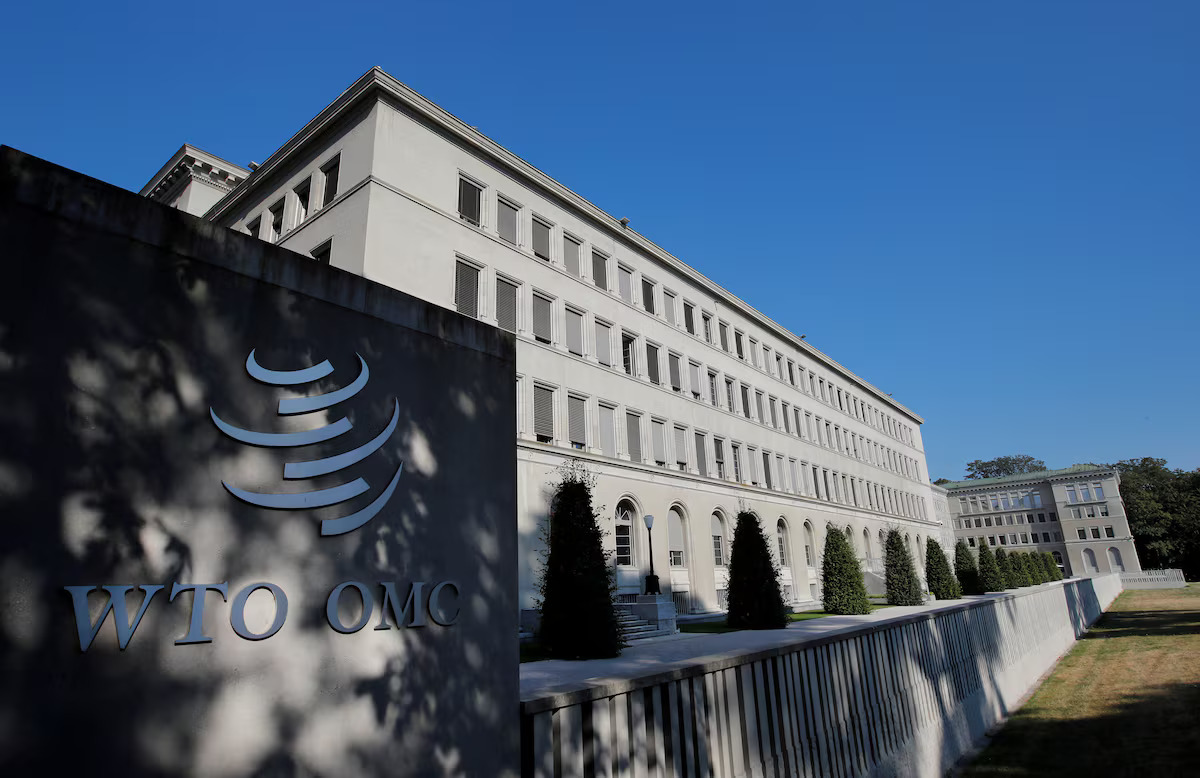 WTO headquarters in Geneva (Photo: REUTERS/Denis Balibouse) WTO headquarters in Geneva (Photo: REUTERS/Denis Balibouse) |
The e-commerce agreement is considered the key to maintaining US support for the WTO. Washington has shown signs of stepping back from global institutions. The outcome of MC14 could negatively impact the WTO’s role at a time when the organization is already facing challenges in resolving global trade disputes. One pessimistic view is that the prolonged deadlock since MC13 in Abu Dhabi in 2024 could erode members’ confidence in the WTO’s ability to adapt to new challenges.
WTO Director-General Ngozi Okonjo-Iweala said member states are more aware than ever of the need to reform the multilateral trading system to reflect global geopolitical and geoeconomic changes, and at MC14 countries showed a strong determination to comprehensively reform.
“We are trying to model the reforms that we are looking at. We work more swiftly, nimbly. We didn't spend time negotiating an outcome document like ministers normally would have done because we wanted ministers to spend time debating reforms and talking about the recent developments in trade. We are having a turbulent time in global trade and they spend time talking to each other about this and about the reforms,” said the WTO Director-General.
Pamela Coke-Hamilton, Executive Director of the International Trade Center, said stakeholders must recognize that the WTO is facing unprecedented challenges. Reform should be pursued in a constructive spirit that reinforces the WTO’s role as a pillar of the multilateral trading system, she said. “This reset is going to be critical and I think that is what Dr. Ngozi is trying to get, to bring us all to the table, bring all the players to the table and have a reset that in a sense not necessarily solves the problem but at least creates a roadmap for how we move forward as a multilateral institution.”
Economists say that, although expectations weren’t fully met, the Cameroon conference made some progress, including a new draft of a reform roadmap to improve decision making in a system that has long been stymied by a few countries.
