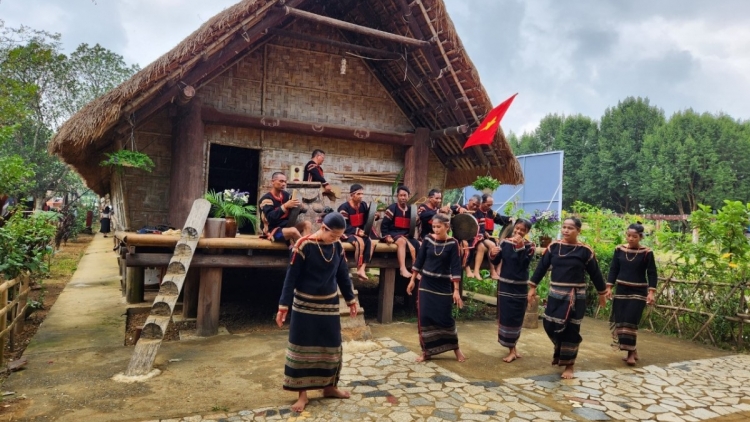




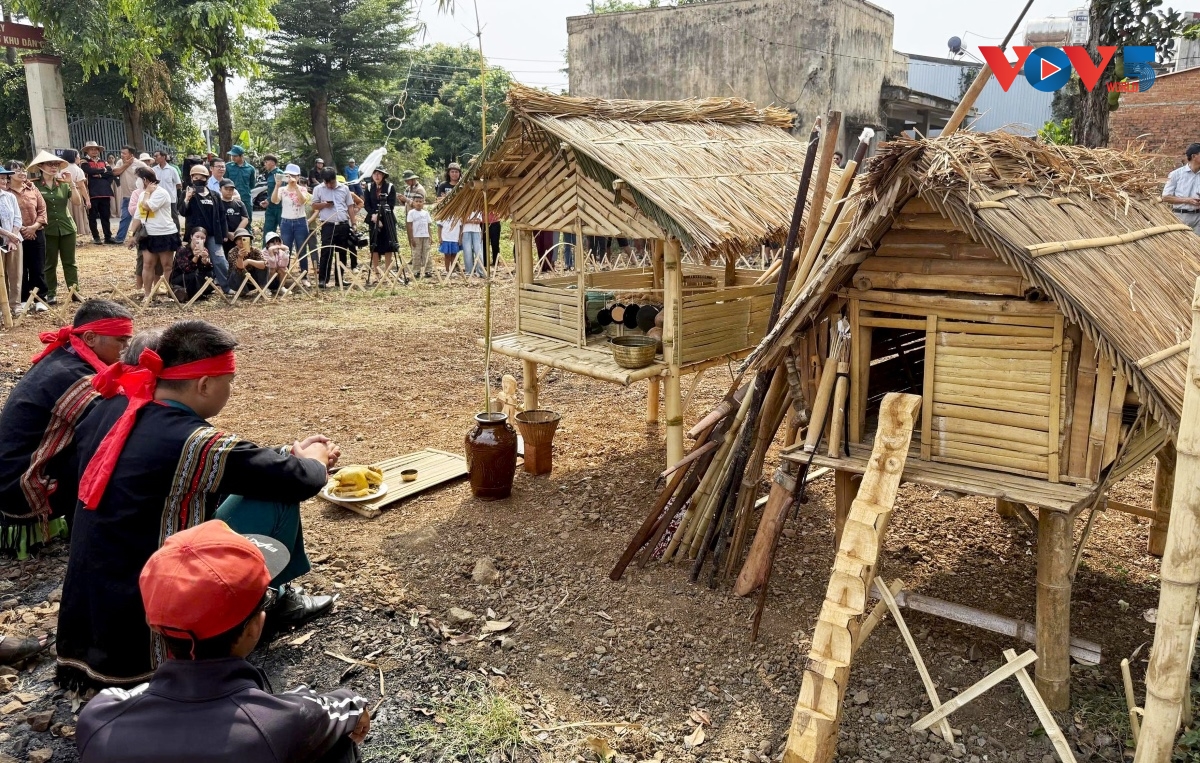
Early in the morning, villagers gather for the rain-praying ceremony. Some prepare offerings, some tidy the ground for the ritual, while others rehearse gong rhythms and xoang dances.
The sound of gongs signals the beginning of the ceremony. The ritual consists of two parts: praying for rain and praying for health for the village elder. The shaman performs the rites and reads the prayers, asking the deities for rain and abundant crops.
Village elder Y Bang Bya, who receives the health blessing at the ceremony, said, “It’s a blessing for me. I want to have good health so I can continue organizing traditional ceremonies and serving the community.”
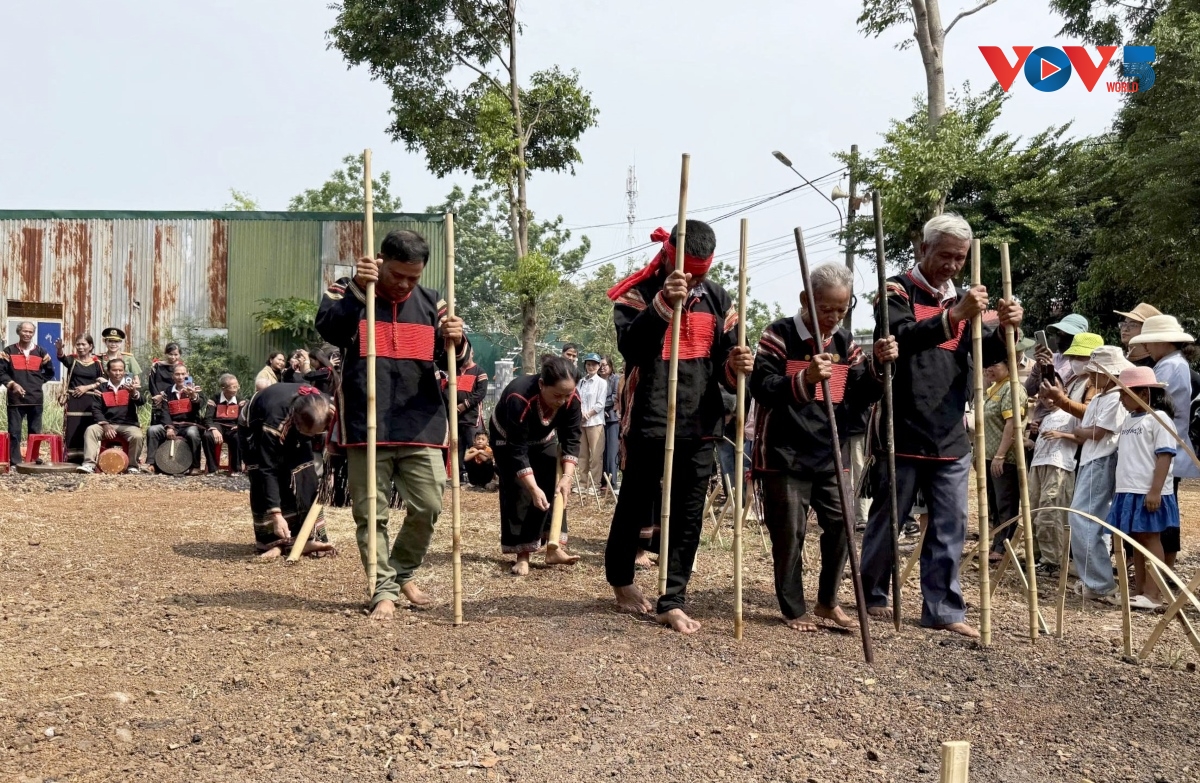
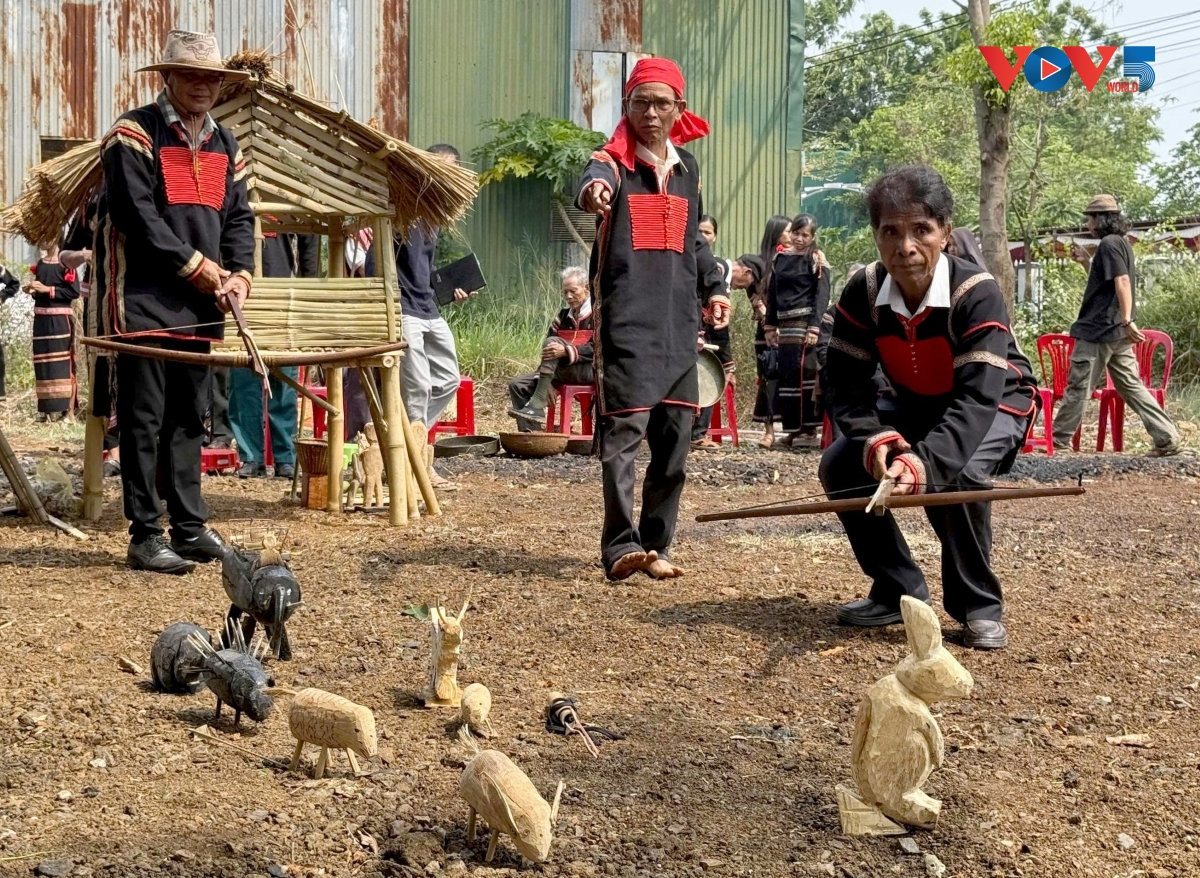
After the ritual, reenactments of agricultural activities such as rice planting and hunting take place. A symbolic performance depicting rain expresses the wish for favorable weather and bountiful harvests in the coming season. People then sing and dance, drink rice liquor, and enjoy a communal meal.
“Today is a joyful occasion, with villagers gathering together, dancing to the sound of gongs. In today’s era of technological development and new music trends, we need to preserve the traditions of the E Dê people for future generations,” said villager H Ze Na.
The ritual provides visitors an opportunity to gain a deeper understanding of E De culture.
“It’s a great ceremony, very beautiful. I found many good songs, good music. Every people is amazing and very nice. I love the E De people,” said French tourist Antoine, who attended the rain-praying ceremony in Ky village by chance.
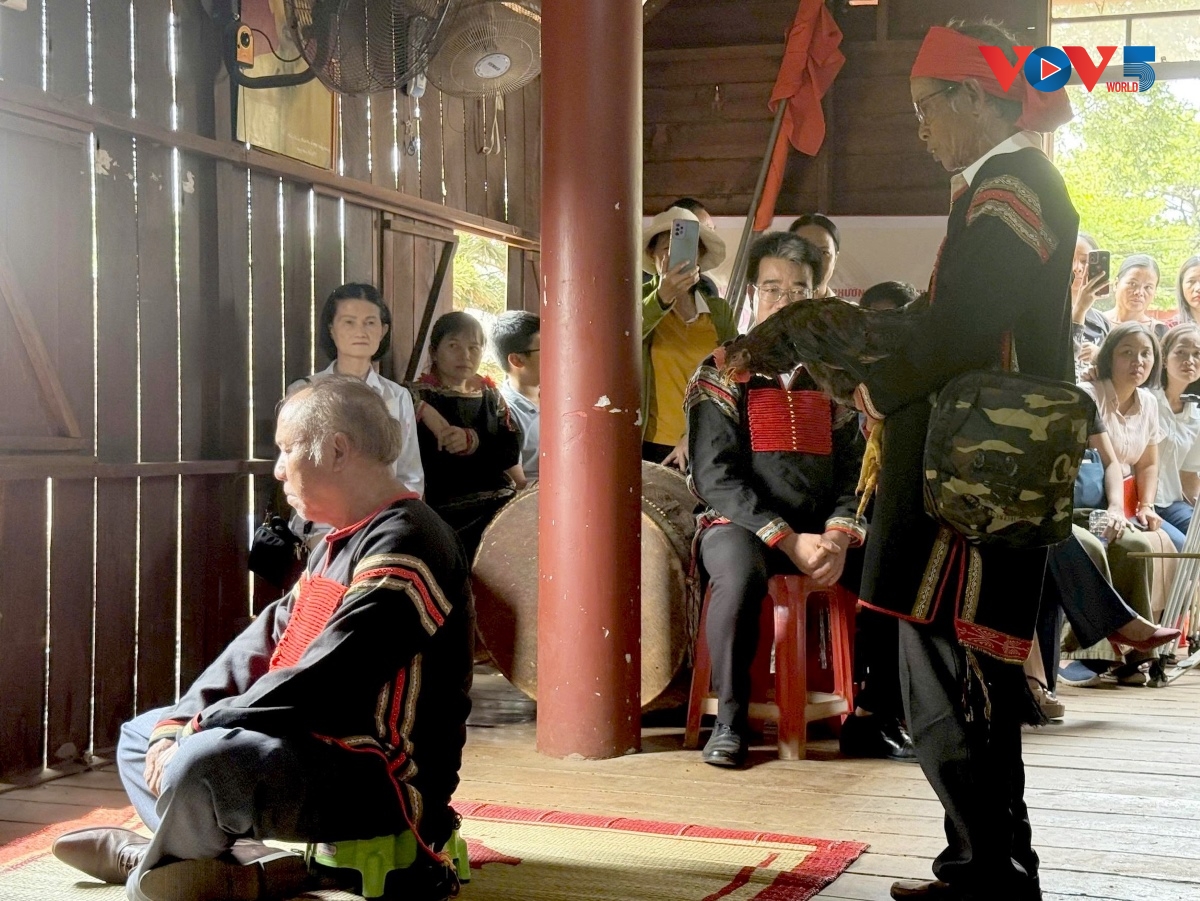
For nearly a decade, the rain-praying ceremony has been organized annually in Ky village in March or April.
“We have a long-term plan to organize festivals and rituals regularly to preserve cultural values and promote tourism,” Nguyen Dinh Tam, Chairman of the People’s Committee of Thanh Nhat ward, said.