






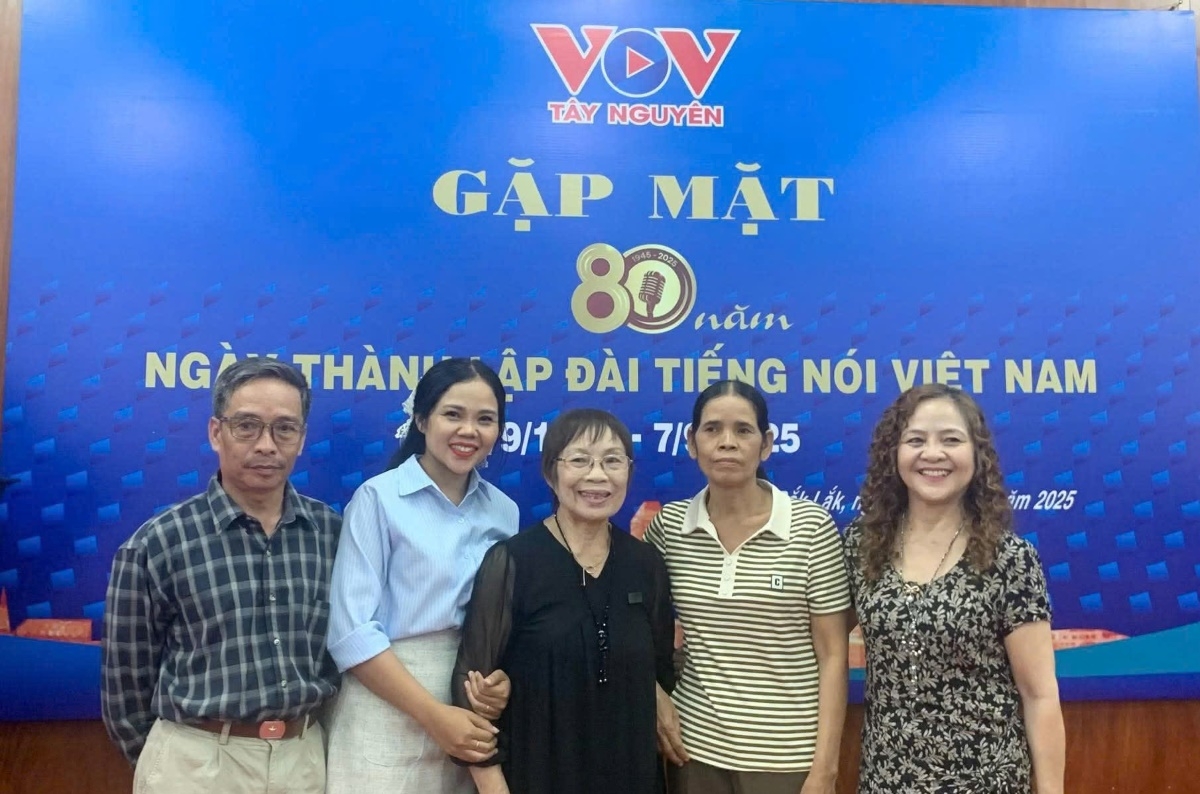
For the past 33 years, this signature tune has been woven into the everyday lives of ethnic communities in the Central Highlands, accompanying them at work and on their journeys.
Editor Nay Jet, who helped produce VOV’s Jarai language program in its early days, said that while Jarai contained words and expressions for everyday things, it was very difficult to talk about education, healthcare, science, and government policies. Many concepts had seldom appeared in the lives of local people.
"Even the names of government agencies at the central and local levels were a challenge in those days. If we translated them literally, nearly 60% of the broadcast would still be in Vietnamese. So we sought help from village elders, educated community members, and Kinh people who spoke Jarai. Every time we came across a suitable term, we carefully wrote it down in our notebooks. We compiled the names of heads of state from more than 180 countries, along with government titles and official positions, to build a foundation for our work," Nay Jet said.
The written languages of the ethnic groups in the Central Highlands also presented a challenge for radio broadcasters, as some of the characters were missing from standard computer keyboards. This was not a problem when scripts were written by hand, but the difficulty became apparent with the shift to computers and digital production, particularly when programs began to be posted on VOV websites. To address this issue, between 2003 and 2005 Nay Jet and engineer Vo Ngoc Hiep researched and developed TaynguyenKey, a keyboard input system for the written languages of the Central Highlands ethnic groups.
"At the time, our only concern was finding a way to type the characters correctly for radio production. TaynguyenKey has made it much easier for us to write the languages of the local ethnic groups when preparing scripts," Nay Jet said.
Whenever VOV reporters travel to local communities, they encourage villagers to give interviews in their mother tongue. Many people prefer to respond in Vietnamese, however, as their native language doesn’t have words for certain concepts. For more than 30 years, Central Highlands broadcasters have quietly searched for equivalent words and expressions in the ethnic languages spoken in the region.
Editor Nhat Lisa of the Se Dang group said an ethnic-language radio program needs to preserve the language and convey the voice, rhythm of life, and cultural identity of the ethnic community it serves.
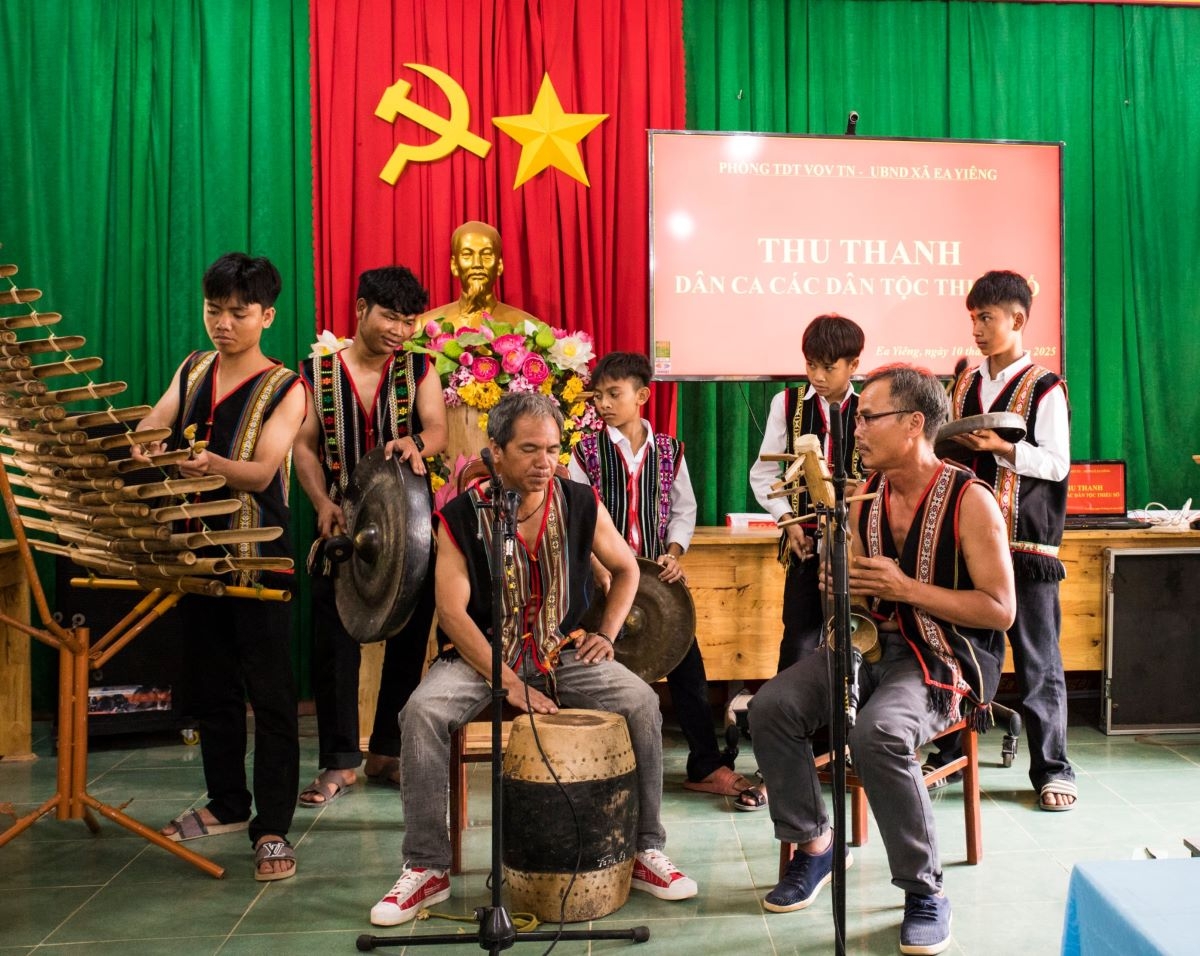
"Folk songs and the sound of gongs are indispensable in the cultural life of the Central Highlands communities. That’s why, in ethnic language broadcasting, music does more than enhance a program, it helps information reach and resonate with listeners," said Lisa.
To record authentic sounds, Nhat Lisa often walks dozens of kilometers to reach a village where folk singers and musicians live. "Preserving the songs, gong sounds, and language of the Se Dang people takes sincerity, patience, and genuine respect for the community. You have to be like a son or brother returning home, working in the fields alongside the local people, and listening to their stories. That’s when they’ll open their hearts and share their songs.”
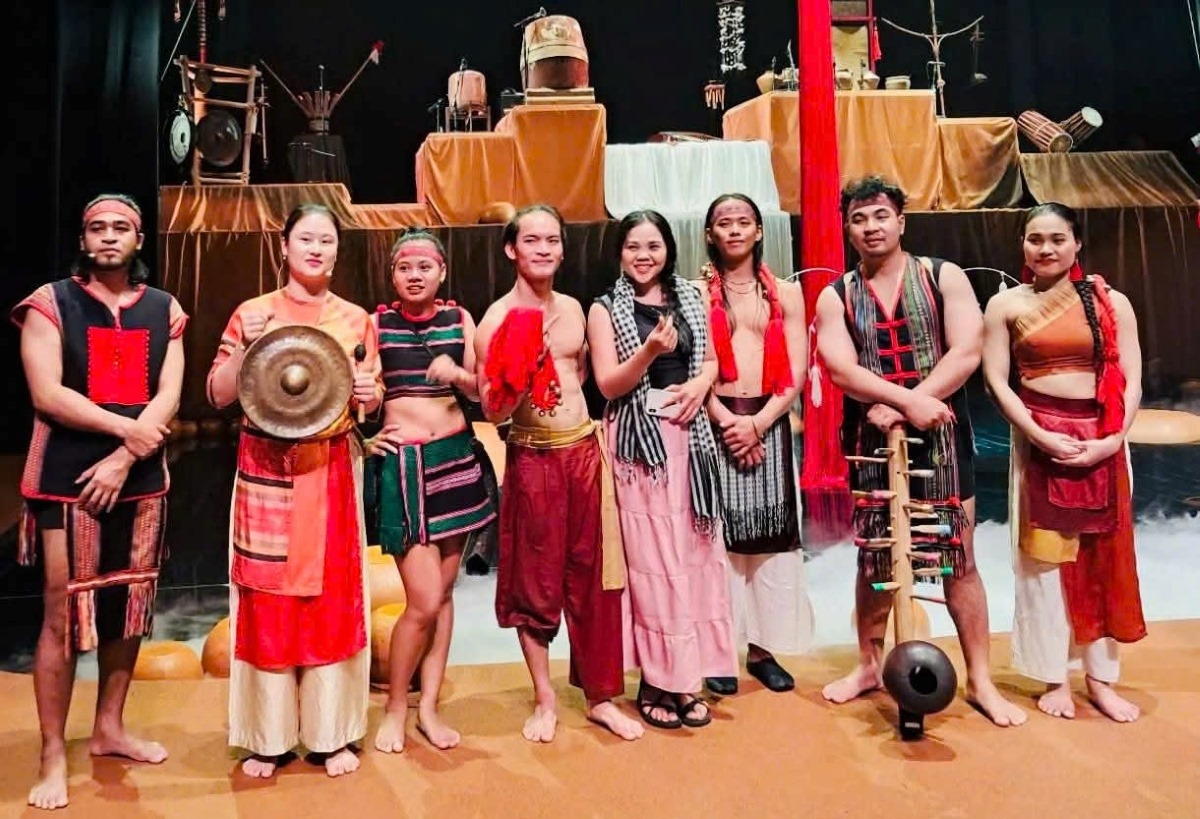
Today, ethnic language broadcasting in the Central Highlands is being passed on to a new generation of broadcasters who are expanding their work into the digital space. H’Zawut, an editor of VOV’s E De language programming, says she also compiles bilingual E De language books and organizes classes and summer activities for children. Her primary concern is encouraging young E De people to use and preserve their mother tongue.
"An ethnic language broadcaster is responsible not just for preserving a language, but for helping it remain relevant and accessible. I hope to use my profession and all the knowledge I have to help people connect with the E De language. I believe that if the younger generation doesn’t nurture it today, there may come a time when it exists only in memory," said H’Zawut.


