







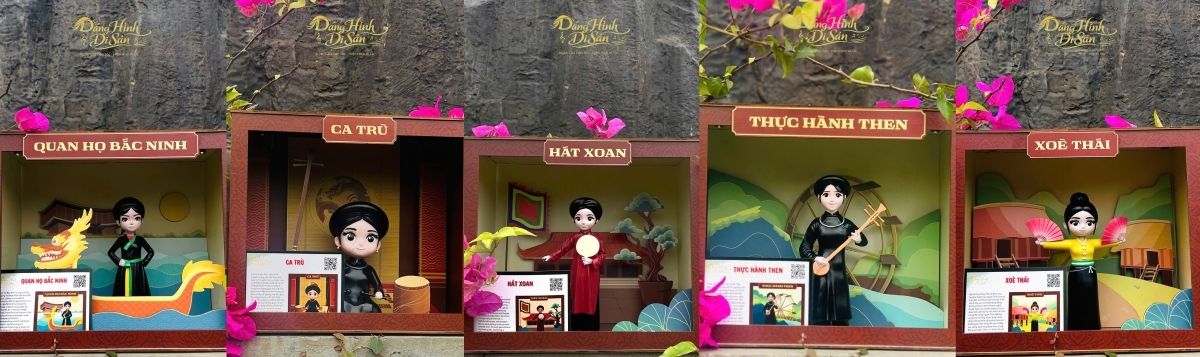
The project is a graduation thesis by Digital Marketing students at FPT University in Hanoi. It consists of five “heritage boxes,” each recreating a UNESCO-recognized form of Vietnam’s intangible cultural heritage - Quan Ho singing, Ca tru (ceremonial singing), Xoan singing, Thai Xoe dance, and Then singing - through the application of artificial intelligence (AI) and digital technology.
“The ‘Shapes of Heritages’ project is inspired by Vietnamese cultural and artistic forms recognized by UNESCO. Our team hopes to bring these cultural heritages closer to today’s young people, at a time when many traditions are gradually fading and attracting less interest from the younger generation. Our project also aims to promote Vietnamese culture to the world,” Phung Phuong Anh, one of five project members, said.
The project offers a fresh perspective, recreating each heritage form with both visuals and sound within its traditional performance setting.
“We have incorporated five traditional Vietnamese art forms into our heritage boxes. Thai Xoe is a traditional dance of the Thai ethnic group in the Northwest, symbolizing community spirit and joy. In the Thai Xoe box, we recreated its distinctive costumes along with the mountainous landscape of the Northwest. In the Xoan singing box, we depict a Xoan artist performing in front of a communal house, with two festival flags placed beside them,” Le Hoang Trung, another project member, said.
From a small box, a journey of exploring Vietnam’s cultural heritage unfolds. 3D-printed figures recreate iconic scenes: Xoan singers from Phu Tho province performing beside ancient communal houses and temples; Quan Ho singers from Bac Ninh province exchanging gentle melodies on a dragon boat; Then practitioners playing the Tinh musical instrument alongside Thai Xoe dancers in the Northwest setting; and the refined, rhythmic sounds of the castanet and percussion in the art of Ca tru.
“The highlight of each heritage box is that it is not only a finely crafted 3D model that vividly recreates characters and cultural settings, but also integrates QR codes that allow users to access digital content such as AI-generated videos and cultural stories, creating a unique interactive experience. In addition, all products are developed through careful research and verification to ensure accuracy and respect for traditional values,” said Ta Thi Thu Huong, another project member.
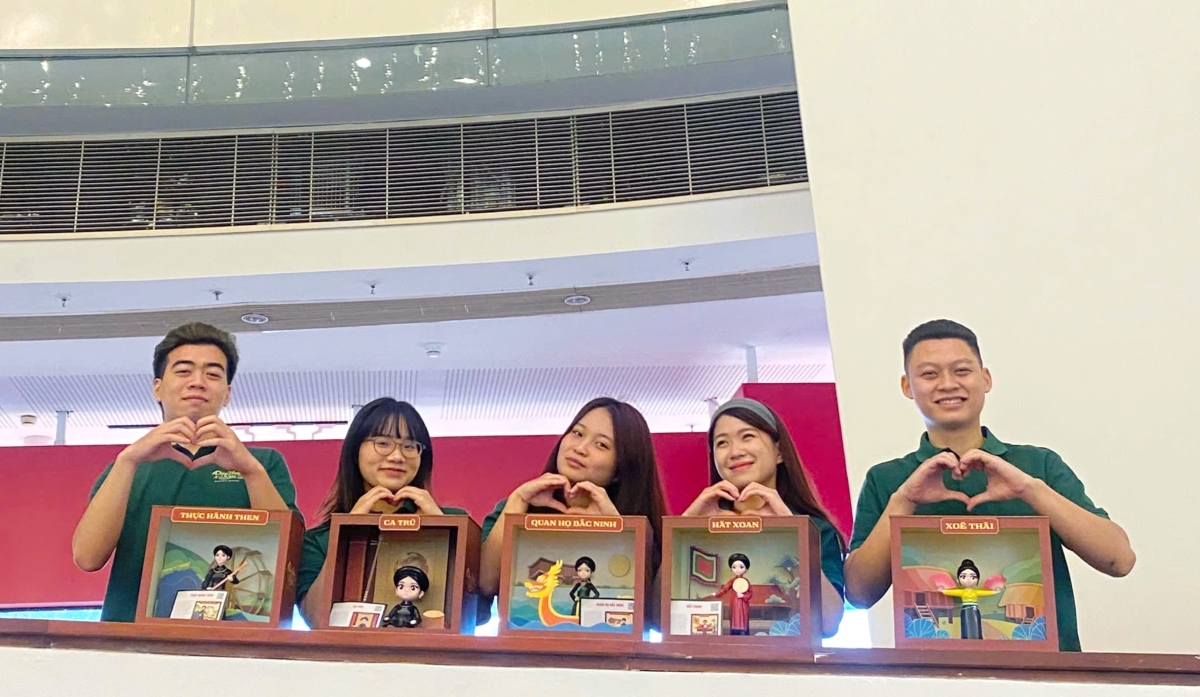
Although still in its early stages, the project demonstrates that today’s young generation values, preserves, and promotes national cultural identity. This fresh approach, using visual technology and creative ideas, helps make heritage more present and relatable in everyday life.
“We plan to expand its scope and introduce more intangible cultural heritages across Vietnam. Beyond the Northern region, we aim to develop products featuring distinctive heritage from the Southern and Central regions, such as Don ca tai tu (amateur singing), Vi-Dam folk songs, Hue royal court music, and the gong culture. This expansion will provide a valuable opportunity to promote Vietnam’s cultural identity to international visitors in a creative and accessible way, helping make heritage a living part of modern life,” said Phuong Anh.


