







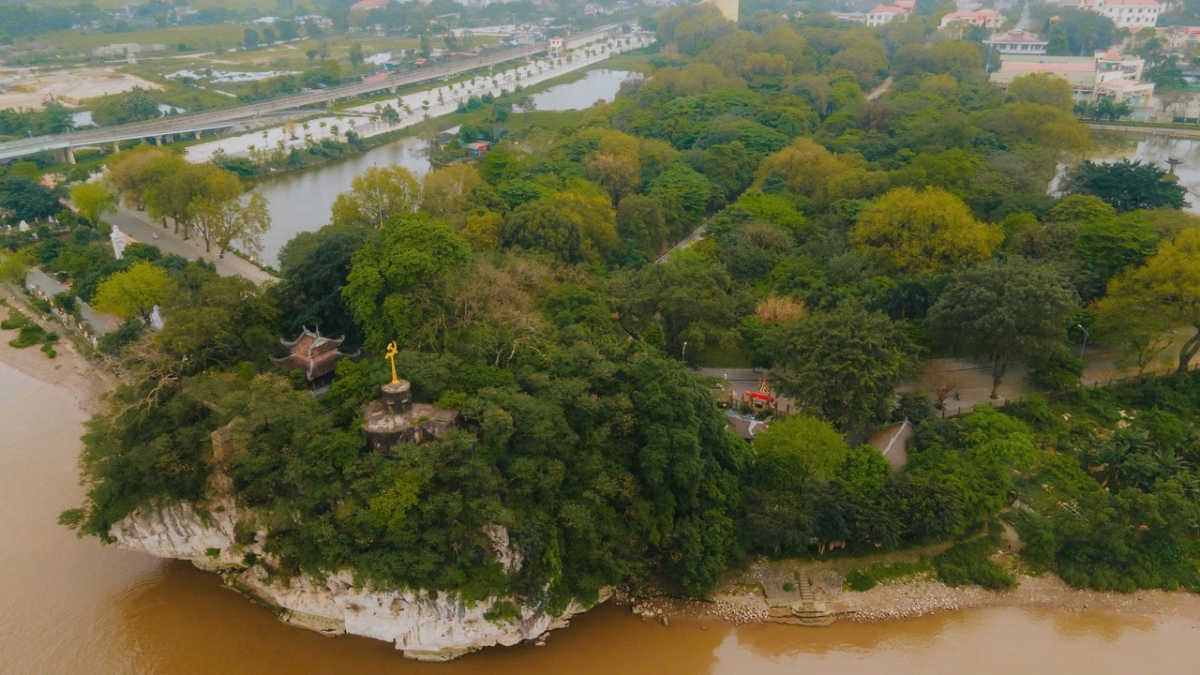
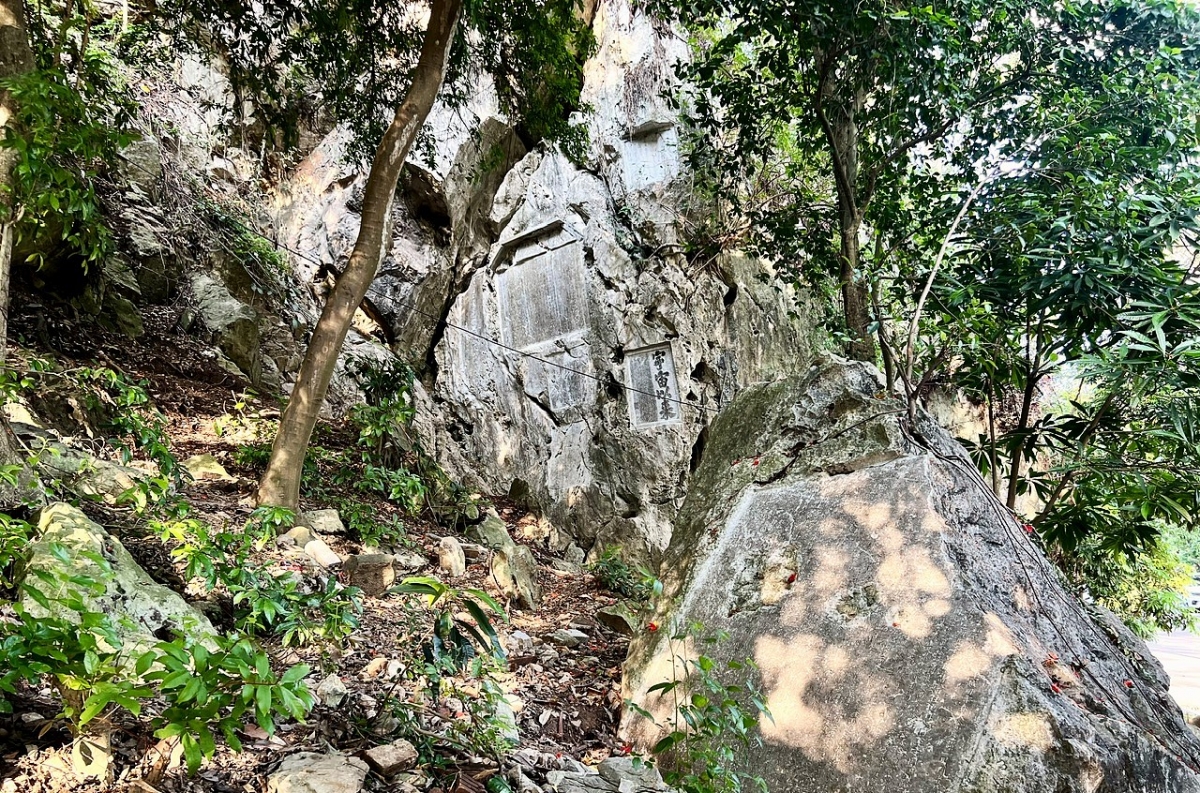
Non Nuoc mountain (also known as Duc Thuy Son) is described as a museum of poetry, with ma nhai inscriptions stretching from its foot to its summit. In Vietnamese, “ma” means “to grind or polish,” and “nhai” means “cliff.” The surface of the stone was polished before characters were engraved.
Today, 43 ma nhai inscriptions remain on Non Nuoc mountain. They span 7 centuries and 5 dynasties, beginning in the Tran Dynasty in the 14th century and continuing through the end of the Nguyen Dynasty in the middle of the 20th century.
“Ma nhai inscriptions are indicating the voices of Vietnam over the past 700 years. These inscriptions are only merely the texts or writings on the stones, but it carries with its history, culture, and literary traditions of Vietnam over different dynasties,”Mr. Nasir Uddin, Counsellor of the Embassy of Bangladesh in Vietnam, said.
“We can learn how people of Vietnam had nicely thought, lived, and expressed themselves over the past centuries. These inscriptions are important cultural documentaries and can be a source of knowledge, research, and tourism not only for Vietnam but also for the international community.”
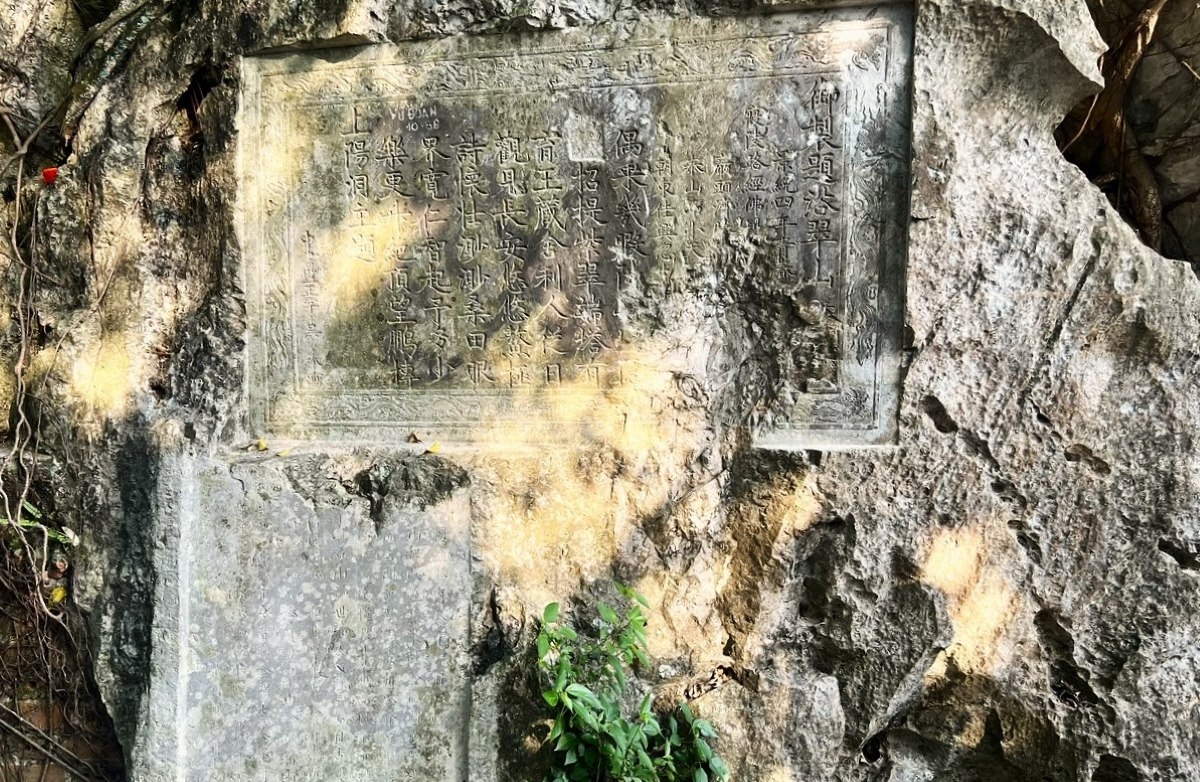
The ma nhai calligraphic characters are adorned with decorative motifs that bear the distinctive cultural imprint of the Vietnamese people. The inscriptions provide a valuable historical record of the cultural exchange between East Asia and Southeast Asia, involving Confucianism, Buddhism, Taoism, and the indigenous Mother Goddess Worship of the Three Realms.
The ma nhai inscriptions also provide insights into the land ownership system, traditional medical practices, and social welfare activities. They record the names of several noblewomen who made significant contributions to local communities, an uncommon recognition in Vietnam’s feudal society.
“Non Nuoc preserves a remarkable tradition of scholars and cultural figures, expressing their reflections in poetry and sharing them with future generations. The value of Non Nuoc lies not only in the texts carved into stone, but also in the very process through which generations of people have continued to write a cultural epic on the same mountain,” said Mr. Truong Dinh Tuong, Chairman of the Ninh Binh Historical Science Association.
The ma nhai inscriptions on Non Nuoc mountain show the evolution of early Vietnamese scripts and language. Of the 43 surviving inscriptions, 37 are written in Sino-Nom characters, while 6 are in the modern Vietnamese alphabet. The site has been an important resource for linguistic and historical research, attracting scholars from around the world.
In 1912, French scholar Henri Maspero used the Non Nuoc ma nhai inscriptions to study the historical phonology of the Vietnamese language, publishing his findings in the journal of the French School of the Far East. Nearly a century later, a Japanese researcher conducted extensive fieldwork at the site, producing an in-depth study of Nom script, an old script of Vietnam, and identifying additional taboo characters used during the Tran Dynasty.
“That’s an extremely valuable piece of research. This Vietnamese heritage was first studied by a French scholar and later supplemented, updated, and refined by a Japanese professor. There could be no more convincing evidence of the international significance of the ma nhai inscriptions on Non Nuoc mountain from the perspective of heritage researchers,” Associate Professor Dr. Nguyen Tuan Cuong, former Director of the Institute of Sino-Nom Studies, said.
Recognizing its outstanding and enduring value, a nomination dossier for the Non Nuoc inscriptions has been submitted to the Asia-Pacific Regional Committee of UNESCO’s Memory of the World Programme for consideration as a documentary heritage. At the same time, Ninh Binh province has developed long-term plans to preserve and promote the heritage for future generations.
“For nearly 700 years, the inscriptions carved into the cliffs of Non Nuoc mountain have preserved historical memories, human wisdom, literary beauty, and the spirit of Vietnamese culture. The journey to achieve UNESCO recognition for the ma nhai inscriptions is also a journey to transform a local cultural treasure into a shared asset of the international community,” Ms. Vu Thanh Lich, Deputy Director of the Ninh Binh Department of Culture and Sports, said.
“We are committed to preserving the authenticity and integrity of the heritage, expanding digitalization efforts, and developing open-access databases to facilitate research cooperation both within Vietnam and internationally.”


