







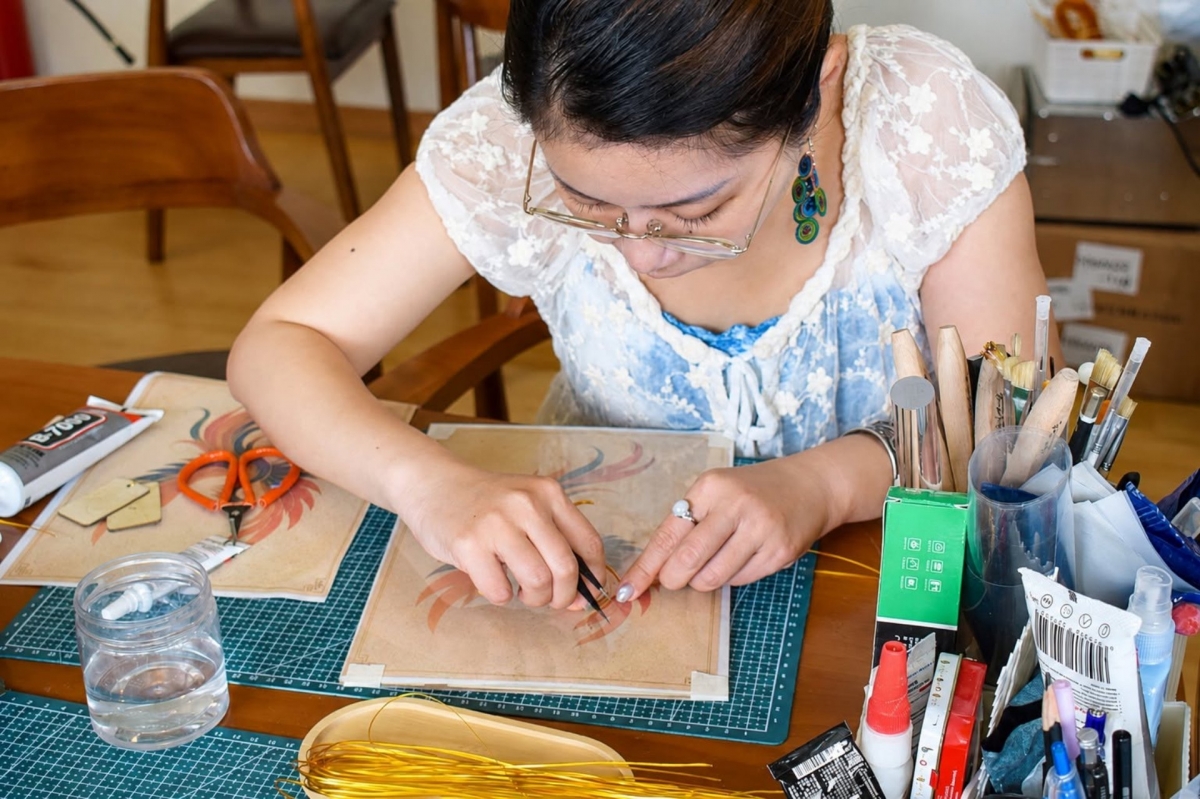
Phap lam is a traditional Vietnamese metal-enameling art in which vibrant mineral pigments are applied to metal, typically copper or bronze, and fired at high temperatures to create durable, glossy pieces with intricate patterns.
During the Nguyen Dynasty, from the early 19th to the first half of the 20th century, Phap Lam was closely associated with the imperial court. Its elaborate craftsmanship combined metalworking and enameling with vibrant colors and intricate decorative patterns.
Today, artisans are adapting Phap Lam-inspired designs for contemporary life, experimenting with new materials and colors and applying them to everyday objects. Despite these changes, traditional Vietnamese motifs and cultural influences remain at the heart of the work, bringing together the old and the new.
At Mac Space, a painting studio on Nguyen Khoai Street in Hanoi, artists are reimagining Phap Lam through contemporary crafts.
Studio owner Dao Anh Thu explained, “Traditional Phap Lam involves using fired enamel and copper bases to create objects such as vases and plates. In the past, these products were mainly reserved for the imperial court due to their high production costs. At Mac Space, we take a more contemporary approach. Instead of fired enamel, we use colored sand to create our designs. This makes the art form more accessible and appealing to younger generations. It also allows us to apply Phap Lam techniques to a wider range of everyday objects without relying on the specially crafted metal bases required in traditional Phap Lam.”
Creating a Phap Lam-inspired piece involves several intricate steps. From bending copper wires and shaping patterns to adding color and finishing the surface, each stage calls for patience and precision. Even the smallest decorative details can take considerable time.
“The process includes selecting a base, bending copper wires, sketching designs, arranging the copper wires along the patterns, choosing colors, and filling the spaces between the copper outlines with colored sand. We then make final adjustments and apply a layer of resin to seal the sand in place, creating a finished Phap Lam artwork. We use this technique to decorate a wide variety of products, including coasters, souvenirs, paintings, cups, hanging ornaments, and lamps,” said Thu.
At Mac Space, artisans explore new designs inspired by traditional motifs such as fans, cranes, lotus flowers, clouds, and the moon. They experiment with colors and decorative elements to create a range of products while retaining the distinctive appeal of Phap Lam.
“At Mac Space, we place greater emphasis on creating engaging experiences for young people. Our designs are becoming more diverse and contemporary, drawing inspiration from Hanoi's cultural heritage, famous landmarks and scenic attractions across Vietnam, as well as traditional folk paintings,” said Thu.
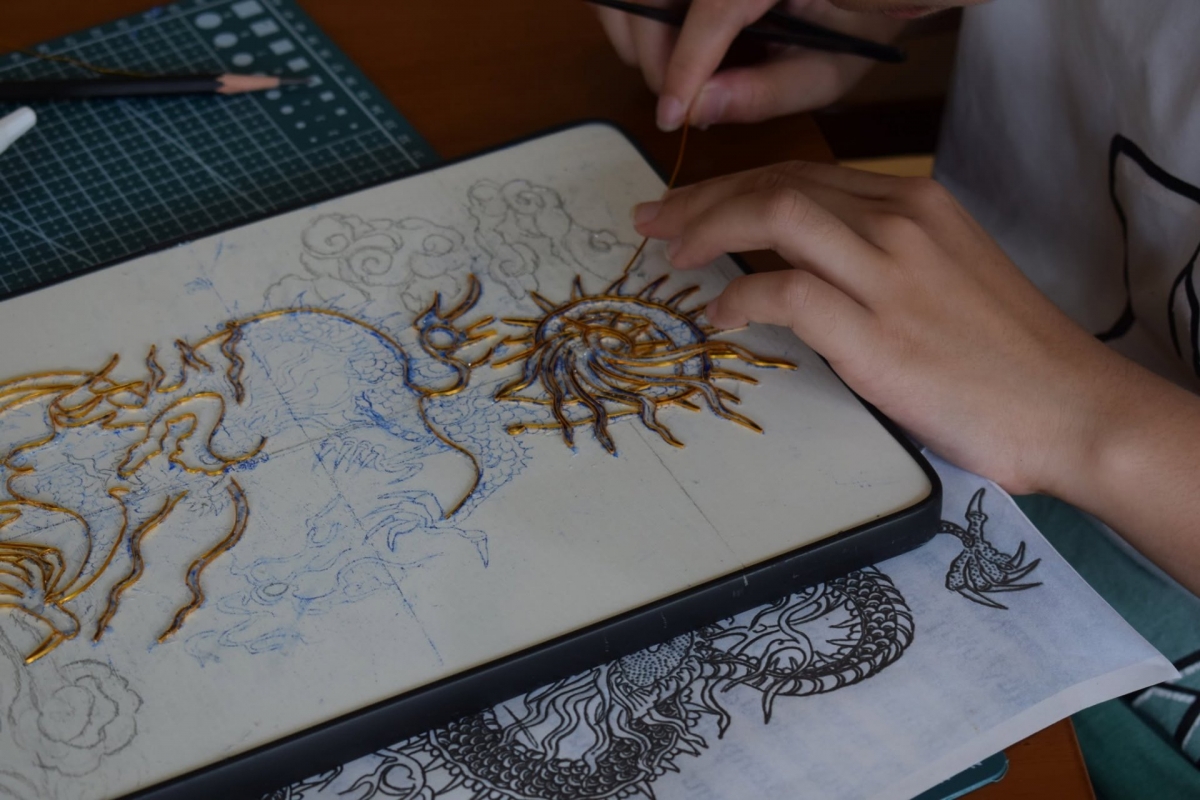
These Phap Lam-inspired creations blend classical elegance with a modern touch. Each piece reflects the care and dedication of its maker.
“This art form is new to me and requires patience and attention to detail. At first, the process seemed quite complicated because of the many steps involved. But once I got started, I found that taking my time and working carefully made it easier. It feels wonderful to create something with my own hands. The finished piece is beautiful, with the colored sand and copper outlines shimmering in the light. It looks particularly striking when the sunlight catches it,” said a visitor.
Another visitor added, “While making Phap Lam, I feel calmer and more at ease. The more I work on it, the more relaxed I become, gradually getting absorbed in the artwork. When I finish a piece, I feel very happy knowing that I've gone through so many steps to achieve the final result. The most challenging part is arranging the copper wires, as I have to work slowly and carefully to make sure the lines are taut and beautifully shaped.”
Beyond its visual appeal, Phap Lam also offers a connection to Vietnam’s cultural traditions, said Mac Space owner Anh Thu.
“I've noticed that young people today are very interested in history, culture, and traditional art forms, especially through hands-on experiences. I wanted to create a space where they could learn more about Vietnamese culture while trying their hand at making traditional handicrafts. Through these activities, they can not only enjoy the creative process but also gain a deeper understanding of Vietnam's history, culture, and lesser-known traditional art forms,” she noted.


