







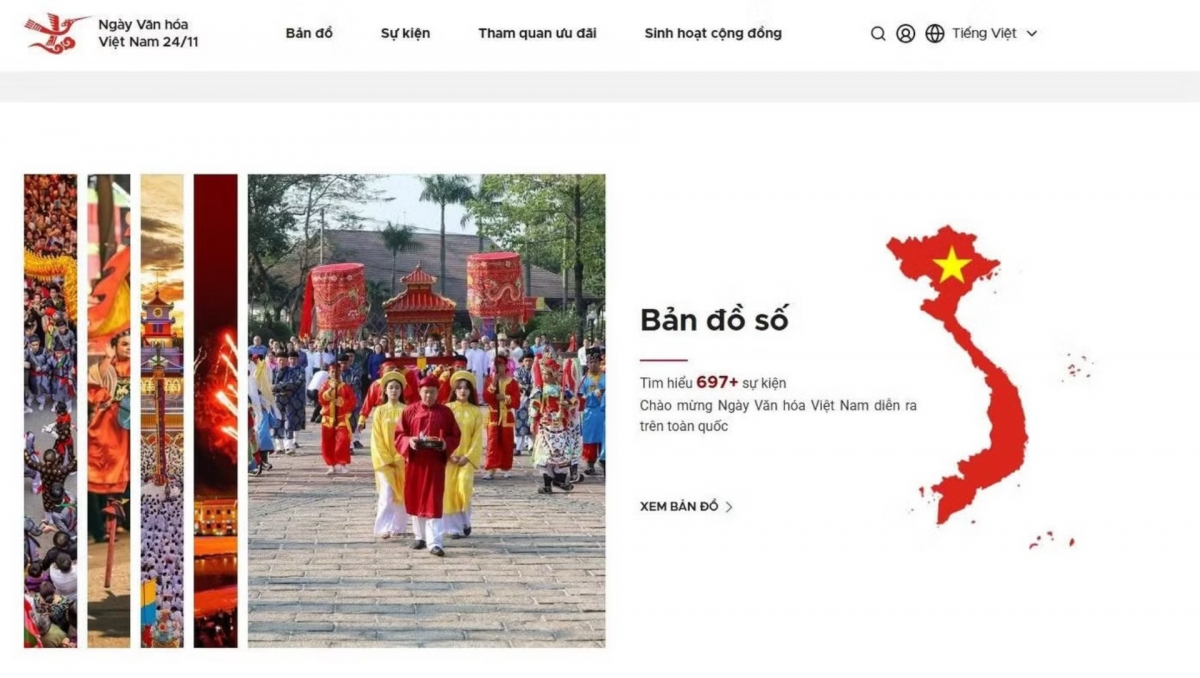
Built around five tiers - Foundation, Data, Content, Market, and Cultural Industry - the platform not only helps theaters and performing arts groups reach audiences but also new opportunities for businesses.
“The digital map’s long-term objective is to provide an interactive mechanism connecting the State, citizens, and businesses to advance the cultural industry. Ahead of Vietnam Cultural Day on November 24, citizens can track event locations, ticketing status, and essential details, with the pilot run slated for November 1 for ongoing refinement,” Cao Le Tuan Anh, Chief of Office and Spokesperson for the Ministry of Culture, Sports and Tourism, said.
On September 30, Prime Minister Le Minh Hung issued a directive on the organisation of Vietnamese Culture Day, which says each locality must select at least one distinctive cultural activity, product, story, or space to promote tourism and develop cultural industries. Each commune and ward must also maintain at least one cultural activity or initiative beyond the celebrations, encouraging ongoing engagement among artists, the public, and creative businesses.
Vietnam’s Digital Cultural Map is expected to make it easier for people to learn about these activities, explore their options, and attend events. Available on computers and smartphones, the platform will also help authorities better understand demand for cultural experiences and develop market indicators to encourage investment in the sector.
“We need to change our approach and transform our governance model if we want to unlock the economic value of culture,” said Dr. Nguyen Thi Thanh Hoa, Deputy Head of the Cultural Research Department at the Vietnam Institute of Culture, Arts, Sports and Tourism.
The Ministry of Culture, Sports and Tourism is calling on local authorities to regularly provide and update information on cultural, sports, and tourism events on the map.
“When people select Hanoi on the digital map, they will be able to see how many events are taking place, where they are being held and at which venues. By clicking on an event, they can access links, including Google Maps, along with essential details such as the event’s name, significance, scale, date and time, and whether admission is free or paid. Similarly, people can select Da Nang, Ho Chi Minh City, Quang Ninh or any other locality to find information about events in those areas. That is our primary goal,” Mr. Tuan Anh explained.
Over time, the platform is expected to strengthen connections among stakeholders and support the growth of Vietnam’s cultural industries in the digital age.


