






Dong Nai city covers more than 12,700 square kilometers and has a population of nearly five million people. It comprises 95 commune-level administrative units, including 33 wards and 62 communes. The city borders Ho Chi Minh City, Lam Dong province, Tay Ninh province, and Cambodia.
Dong Nai plays a strategic role as a direct gateway linking Vietnam’s largest economic hub, Ho Chi Minh City, with the Central Highlands, the South Central Coast, and the Mekong Delta. With increasingly modern and coordinated socio-economic infrastructure, particularly in transportation, industry, services, and logistics, along with the rapidly progressing construction of Long Thanh International Airport, Dong Nai has all the conditions necessary to become a major multi-center, multifunctional urban area with strong spillover effects in southern Vietnam and nationwide.
The city is expected to become a model of dynamic, modern, and sophisticated urban development, helping shape a new development space for the Southeast region in line with the Politburo’s strategic orientation.
Local people are excited with the upgrade to city status and hope for stronger socio-economic growth in the years ahead.
Nguyen Van Luan, a resident of Trang Bom Ward, said: “I’m excited and very happy with the upgrade, a truly historic event for Dong Nai. We hope infrastructure such as schools, hospitals, and roads will continue to develop strongly, worthy of a centrally governed city.”
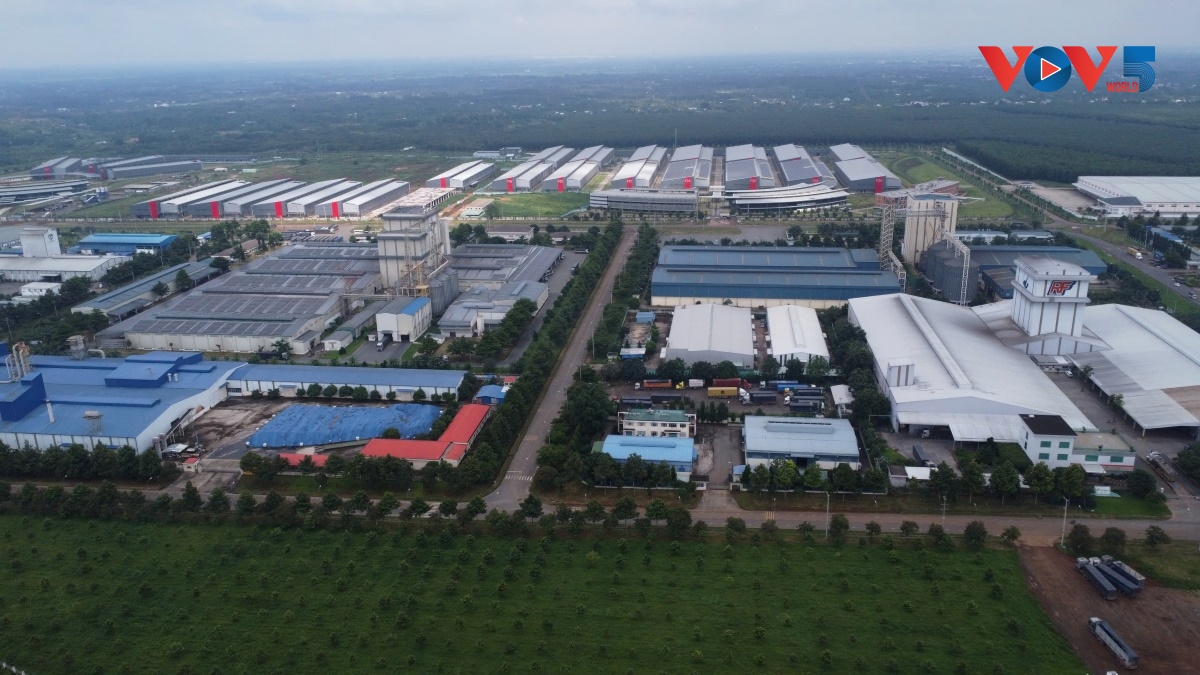
Thanks to its strategic geographical location and effective investment attraction policies, Dong Nai has quickly developed a large-scale industrial park network, drawing substantial domestic and foreign investment flows. Its economic structure has shifted markedly toward industrialization and modernization, with industry and construction playing a leading role and accounting for a significant share of GRDP.
To date, Dong Nai has established 58 industrial parks covering more than 14,000 hectares, attracting over 2,200 foreign direct investment projects from 51 countries and territories, with total registered capital exceeding 43 billion USD.
The city is also one of Vietnam’s key agricultural centers as well as a major hub for rubber and cashew production.
By 2050, green growth and the circular economy are expected to become the city’s main pillars as Dong Nai works toward achieving its net-zero emissions target.


