




This year’s summit, from Monday to Wednesday, in the resort town of Evian-les-Bains in eastern France, is themed “Addressing Global Imbalances”.
Donald Trump factor
On Sunday, just ahead of the Summit’s opening, the US and Iran announced that they had reached an agreement to end their conflict.
The conflict, including Israeli military actions in Lebanon, and Iran’s closure of the Strait of Hormuz, was expected to be one of the most contentious topics at this year’s summit.
According to Sylvie Matelly, an international relations expert and Director of the Jacques Delors Institute in France, the agreement, despite the absence of details, will ease pressure on discussions in Evian. The other G7 members have some degree of disagreement with the Trump administration over its conduct of the conflict. France, Germany, the UK, Canada, Italy, and Japan have all been frustrated by Washington’s decision, in coordination with Israel, to launch military strikes against Iran on February 28 without prior consultation. Those countries have refused to get directly involved in the conflict despite repeated calls from President Trump for their support.
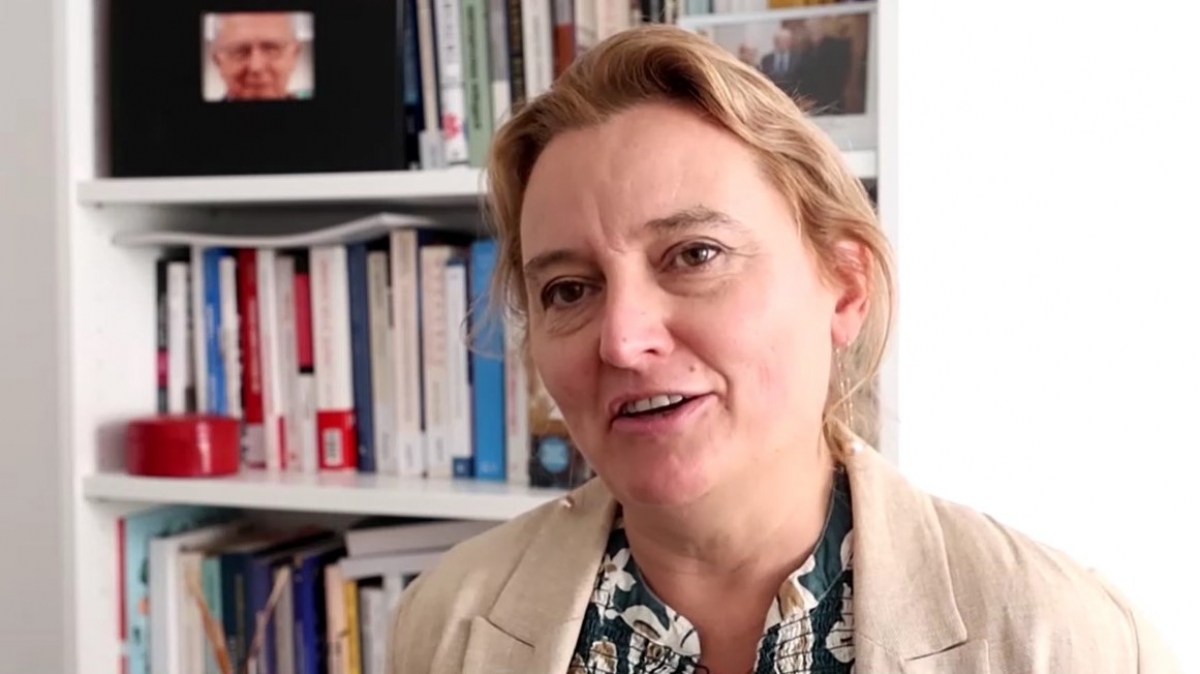
Progress toward resolving the crisis could reduce tensions between the US and its G7 partners. Reaching an agreement with Iran might also be touted as a diplomatic victory for President Trump, putting him in a more constructive mood when he arrives in Evian and making him somewhat less erratic.
Matelly argues that this point is particularly important. Recent G7 summits have repeatedly demonstrated President Trump’s disruptive unpredictability.
Matelly said: "We have become familiar with President Trump’s unpredictability, and I think we need to be prepared for it. Being familiar with it also means knowing how to manage it. We know how to choose our words carefully so as not to provoke him. However, we are never immune to external events that could disrupt discussions or make him even more unpredictable. The real challenge for Europeans is how to manage that when he is sitting at the negotiating table. I believe Europe has handled that challenge fairly well over the past few months."
Expressing a similar view, Cédric Dupont, Professor of International Relations at the Graduate Institute of Geneva, said that, with President Trump appearing less interested now in traditional frameworks governing relations between the US and its allies, including the G7, the other members will need to navigate discussions with Washington carefully to preserve a degree of consensus within the group and maintain US commitments on key priorities such as Ukraine and trade relations.
Reducing global imbalances
In addition to managing relations with the United States, host nation France has outlined several priorities for this year’s summit, built around two main pillars.
The first is reducing global macroeconomic imbalances by strengthening coordination among major economies to address high debt levels, inflation, and growing financial fragmentation.
The second is rethinking the global development framework through the creation of fairer and more mutually beneficial partnerships, while reforming international solidarity mechanisms and the global financial system.
Specifically, leaders will focus on finance, development, diplomacy, crisis management, trade, digital affairs, domestic policy, the environment, and energy.
Professor Dupont said: "The hidden agenda is to find a way to govern the world short of China. Sothey're concerned about security issues in the Middle East, the Horn of Africa, Russia, and Ukraine. They’re concerned about the technology race, AI, critical minerals, and they're really concerned about the environment and how to move from the brown economy to the green economy.”
Building on commitments made at last year’s G7 Summit in Canada, AI is expected to be another major priority this year.
Leaders and technology experts will focus on developing international regulations to manage AI-related risks, strengthen trusted AI capabilities and digital infrastructure in allied economies, and promote a human-centered approach to using technology to enhance national security and economic performance.
AI discussions could, however, expose new divisions between the US and other G7 members. Citing national security concerns, the US administration last Friday suspended access for all foreign nationals to Anthropic’s two new advanced AI models, Fable 5 and Mythos 5, including foreigners residing in the US – even Anthropic employees.
The decision has drawn criticism from several US allies in Europe, who view the move as a form of technological segregation that could undermine international cooperation in the development and governance of artificial intelligence.