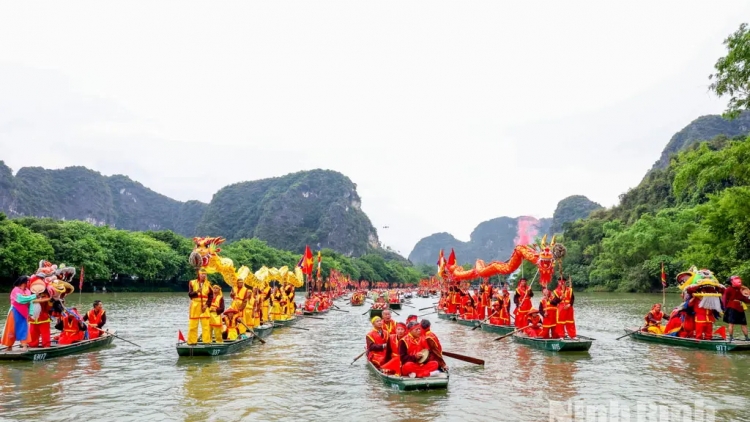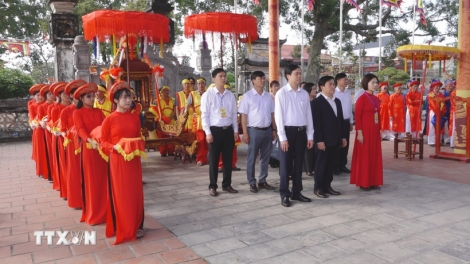




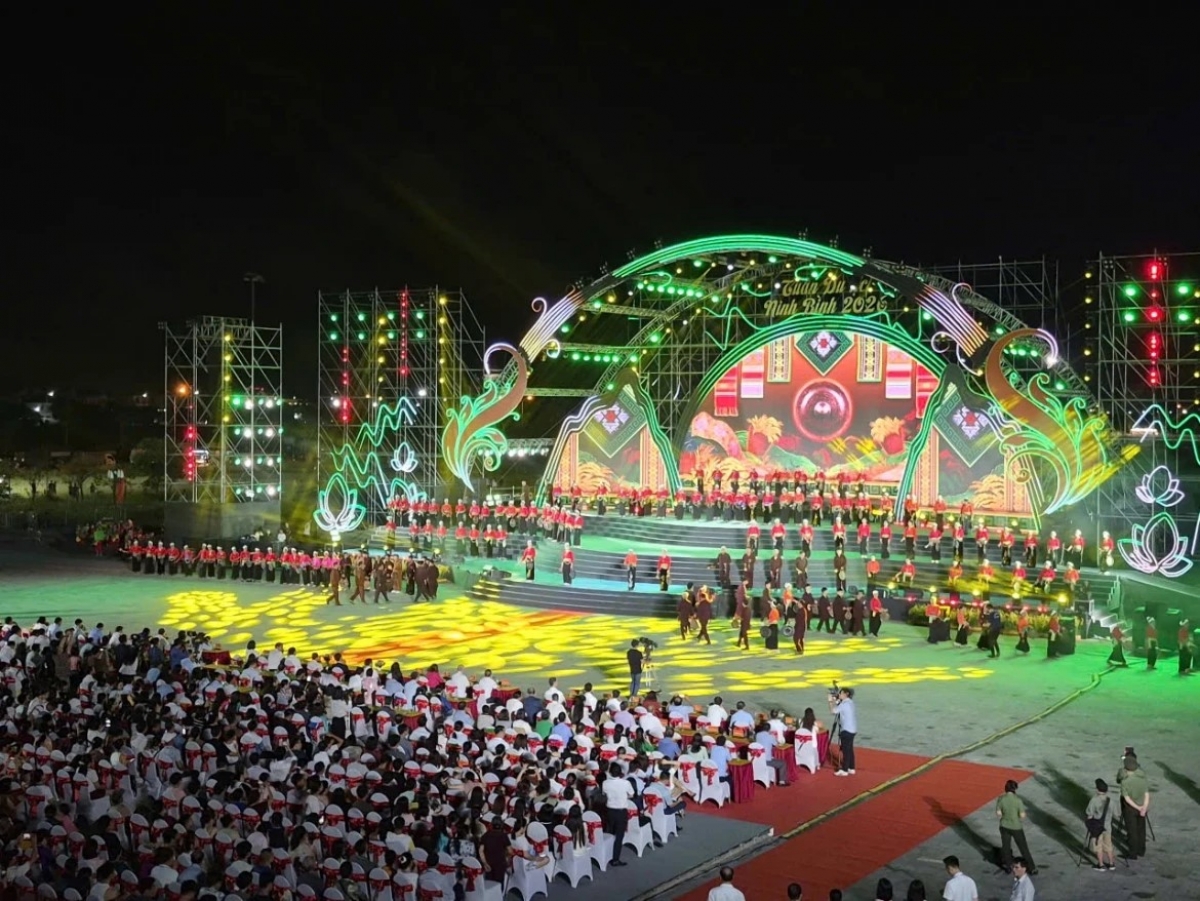
Ninh Bình Tourism Week 2026 is part of the province’s strategy to become a leading center for heritage, ecological, cultural, and spiritual tourism and a venue for major national and international events.
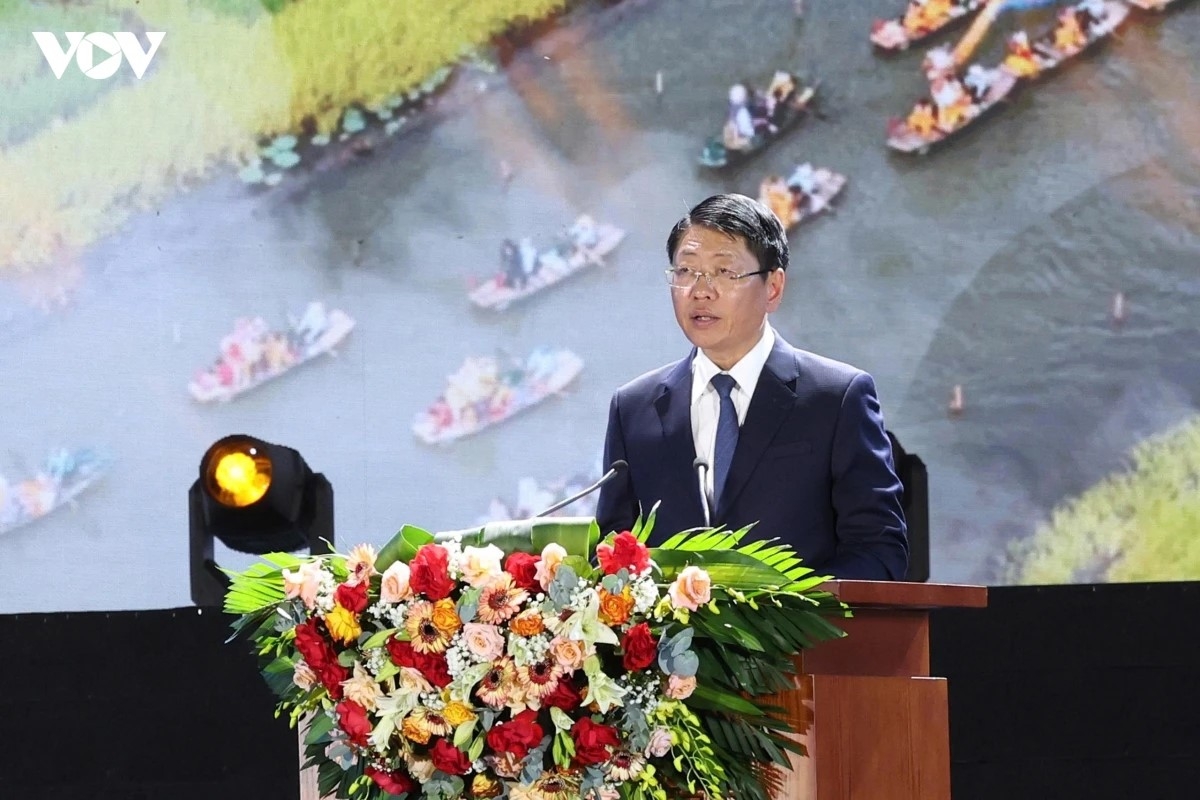
At the opening ceremony last Saturday, Vice Chairman of the Ninh Bình provincial People’s Committee Tran Song Tung said this annual cultural and tourism event is held during the most beautiful season of the year, when the Tam Cốc rice fields enter the harvest season.
Mr. Tung said: “Culture and art activities, including the Tam Coc-Trang An Golden Season Festival, the Trang An Creative Music Festival, the Vietnam Yosakoi Festival 2026, offer visitors a colorful and immersive experience where tradition and modernity blend harmoniously, and where heritage is preserved through creativity and innovation.”
Ninh Binh has more than 5,000 historical and cultural relics, including the ancient capital of Hoa Lu, Doi Son pagoda, Tran temple-Pho Minh pagoda, and Phu Day temple. The province also boasts a rich and diverse ecosystem, featuring majestic mountain landscapes, the Trang An Scenic Landscape Complex, recognized as a UNESCO World Cultural and Natural Heritage Site, Cuc Phuong National Park, Xuân Thủy National Park, Vietnam’s first Ramsar wetland site, the Tam Chuc Complex, and the Van Long Wetland Nature Reserve.
In addition, the province preserves a rich treasury of spiritual and folk cultural traditions linked to more than 600 traditional festivals, alongside a diverse and distinctive culinary culture.
Vice Chairman Tung says Ninh Bình Tourism Week 2026 aims to introduce the province’s entire heritage ecosystem: “Processions of local products, reenactments of agricultural life, and folk art performances reflect the continuation and revitalization of ancient agricultural rituals. These activities express gratitude to nature, ancestors, and agricultural deities while also conveying a broader message about the harmonious relationship between humanity and nature, national unity, and the enduring aspiration to preserve Vietnam’s agricultural civilization for future generations.”