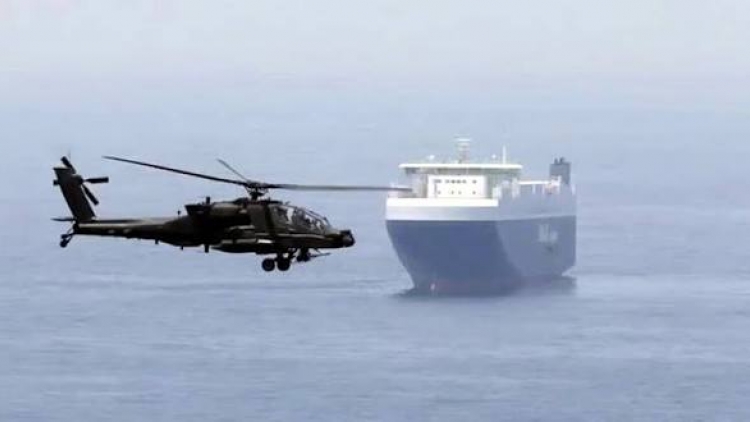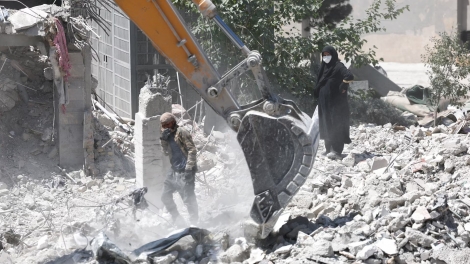




The United States launched military strikes against multiple Iranian targets on Wednesday in response to the downing of a military helicopter in the Strait of Hormuz a day earlier. In retaliation, Iran attacked a US military base in the region.
Repeated violations
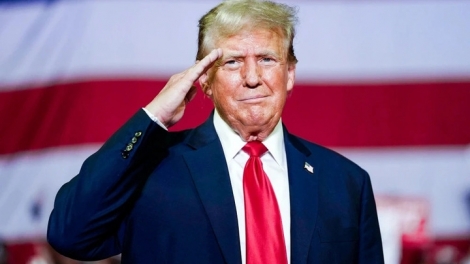
In a statement on the early-morning strikes on Wednesday, the US Central Command (CENTCOM) said the attacks were carried out in self-defense at the order of President Donald Trump, following allegations that Iran had shot down a US Army Apache helicopter over the Strait of Hormuz on Tuesday. Tehran, however, denied the accusation.
The targets included Iranian radar and air defense systems around the Strait of Hormuz and several facilities in eastern Hormozgan province in southern Iran and Qeshm Island in the Strait of Hormuz.
Iran responded with unmanned aerial vehicle attacks on the US Fifth Fleet base in Bahrain.
These attacks are the latest in a series of ceasefire violations that have escalated over the past two weeks. Since the US and Iran agreed to a ceasefire on April 8 and began negotiations on reopening the Strait of Hormuz and addressing Iran’s nuclear program, the two sides have exchanged at least 4 attacks. Each time, they described their actions as “measured” and “limited”, while emphasizing the importance of maintaining the ceasefire.
Yossi Mekelberg, Professor of International Relations and consultant at Chatham House, said: “Ceasefires don't have to be long-lasting. Ceasefires should be interim. They should lead to permanent solution. The term 'ceasefire' means that the root causes of the conflict are not addressed. All ceasefires are fragile by definition because they're just cease the fire to allow the sides to negotiate a more permanent solution."
On Sunday, Iran launched missiles at Israel in response to Israeli strikes on Beirut’s southern suburbs in Lebanon. Israel immediately launched airstrikes against Iran. This was the first direct exchange of fire between the two countries since the ceasefire was signed. Most analysts viewed the incident as far more serious than previous US-Iran exchanges, given the hardline stance of Israeli Prime Minister Benjamin Netanyahu’s government toward Iran. Israel has repeatedly said it’s ready to resume military operations against Iran at any time, which contrasts with the US’s emphasis on a diplomatic solution.
Pressure to reach a deal
President Trump has repeatedly claimed that a long-term agreement with Iran is just around the corner, one which would allow the Strait of Hormuz to reopen and pave the way for renewed nuclear negotiations. However, after weeks of such statements, there is still no resolution.
Observers say US-Iran negotiations are entering a particularly sensitive phase. Earlier this week, the New York Times reported that negotiations had been narrowed down to 4 specific demands that Iran suspend uranium enrichment for at least 15 years; cooperate with the International Atomic Energy Agency (IAEA) to dilute its stockpile of enriched uranium; dismantle its nuclear facilities at Natanz, Fordow, and Isfahan; and allow international nuclear watchdogs to conduct snap inspections in Iran.
President Trump said last week that, although they are close to a deal, these would be the final diplomatic efforts. Jared Mondschein, Director of Research at the United States Studies Centre, said the US House of Representatives’ June 3 resolution limiting President Trump’s war powers reflects growing domestic pressure to resolve the conflict with Iran quickly.
“I think at the end of the day, it doesn't look like there is any clear, easy, and quick way out of this situation between the US and Iran. This will very likely stay with the Trump administration for many months to come. Because when the Trump administration has made what many deem to be progress in any sort of agreement with Iran, many of Donald Trump's own party members were against it. Because they said that's exactly what the Obama administration's deal with Iran was," said Mondschein.
Iranian Foreign Minister Abbas Araghchi said Tuesday that Tehran continues to prioritize diplomacy but its armed forces have demonstrated their ability to respond to any security challenge. As the Strait of Hormuz is not entirely an international waterway but a shared maritime area between Iran and Oman, Araghchi said, foreign forces should leave in order to reduce the risk.