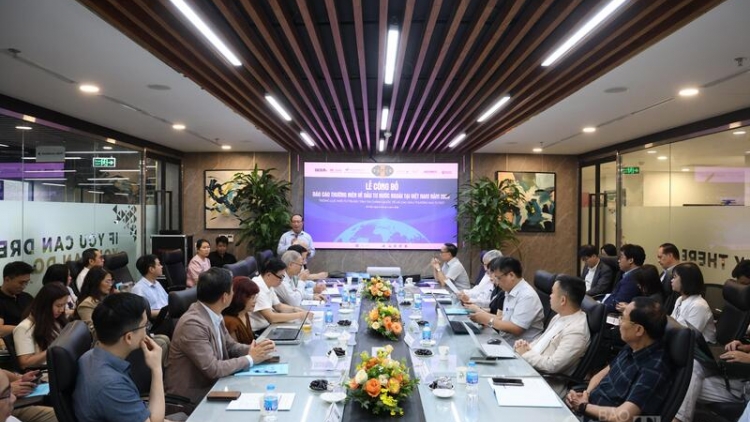



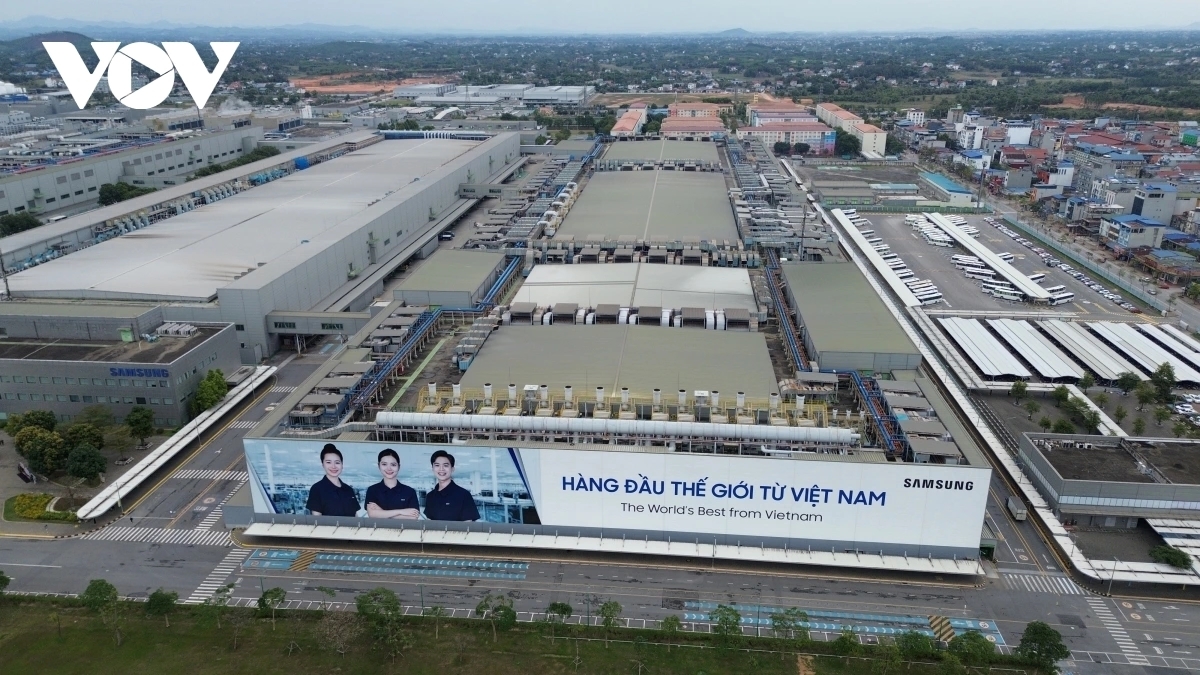
Newly registered FDI in Vietnam has surged, and disbursement has been on schedule. Vietnam is attracting more FDI because of improving technology, workforce quality, and policy stability.
Participating more in high-value-added links
From January to April, realized FDI in Vietnam was an estimated 7.4 billion USD, up 9.8% year on year. This was the highest realized FDI level for that period in the past five years. And figures show that FDI projects are being implemented quite effectively.
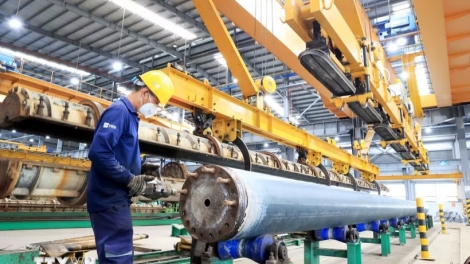
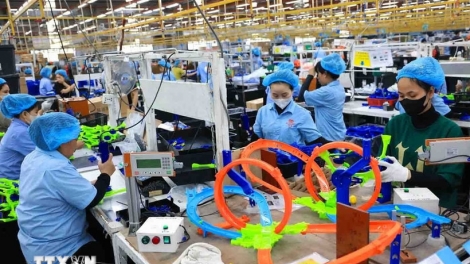
Processing and manufacturing continue to attract the largest share – 83% of all realized FDI. While FDI previously focused on labor-intensive sectors and simple assembly, it is now shifting strongly toward more technological sectors, such as electronic components, semiconductors, precision equipment, data centers, and digital technology, with a number of multi-billion-dollar projects.
Major projects in the first quarter include Samsung Electro-Mechanics’ 1.2-billion-USD circuit board production project in Thai Nguyen province and an LNG power project worth 2.2 billion USD in Nghe An province. These projects demonstrate Vietnam’s growing participation in high-value-added global supply chains. They reflect a trend toward higher-quality FDI inflows and more selective investment projects, with priority given to advanced technologies that generate high added value and spillover effects for domestic enterprises.
Andre de Jong, CEO of Bosch Vietnam, said: “Vietnam is not anymore a dot on a map. Vietnam is becoming a known and trusted partner in the eyes of European companies and also European investors. Why was this confidence returning so strongly? Because in the world of uncertainty you look for something that is more stable which is predictable. Vietnam, with the one party system and a clear and steady government policy, is basically the confidence that you look for as an investor. If you want to invest in something that is unpredictable, high risk maybe high return but also high loss. European companies like the predictability. We like to invest in stability. Having all these 17 free trade agreements and 15 comprehensive strategic partnerships provides opportunities and the stability in the stormy sea. It's a kind of a strategic anchor.”
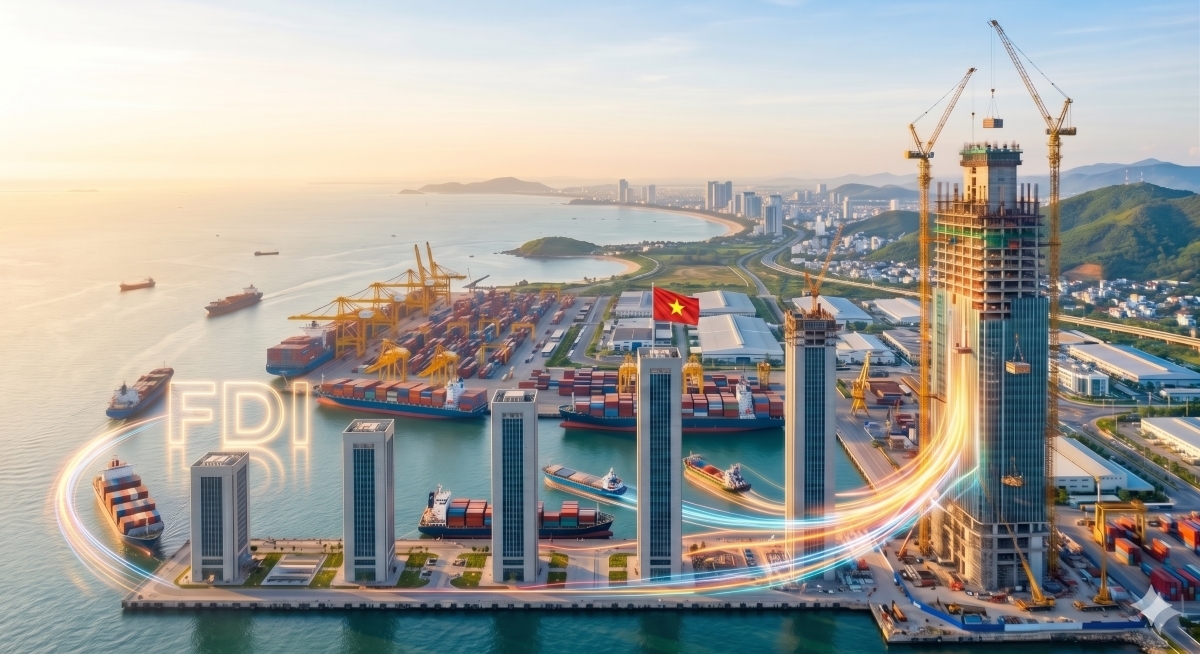
Taking advantage of investment shifts
International organizations like the World Bank and the Asian Development Bank predict that global FDI flows will continue to face high interest rates, geopolitical tensions, and economic fragmentation. Vietnam’s prospects for FDI attraction this year and the following years will depend on its ability to reform and adapt.
If Vietnam continues to maintain macroeconomic stability, improve infrastructure quality, enhance labor skills, and accelerate institutional reforms, it can capitalize on waves of investment relocation to achieve breakthroughs. Vietnam needs to develop a coordinated foreign investment ecosystem, to shift from simply attracting capital to developing a national investment strategy and building an ecosystem connecting FDI and domestic enterprises.
Tran Toan Thang, head of the International Integration Policy Department of the Institute for Strategy and Policy on Economy and Finance, said: “Foreign investment will focus on sectors that Vietnam prioritizes, such as R&D, electronics, artificial intelligence, and other high-tech industries. This year is the right time for Vietnam to make more substantive progress in transforming strategic orientations into concrete institutions in order to attract global FDI flows.”
Relevant authorities are preparing to submit to the Politburo a resolution on the development of the foreign-invested economic sector in the new period.