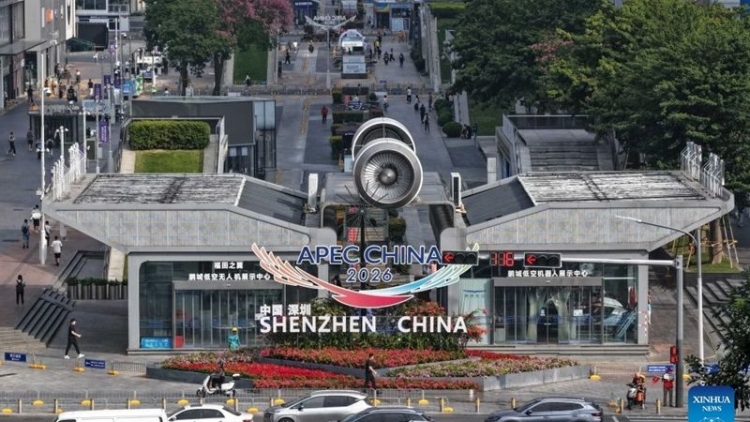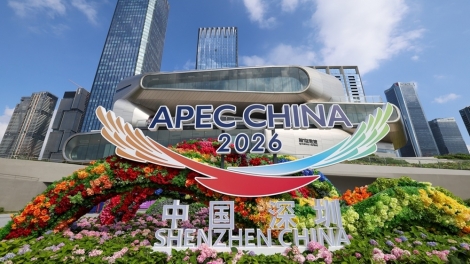




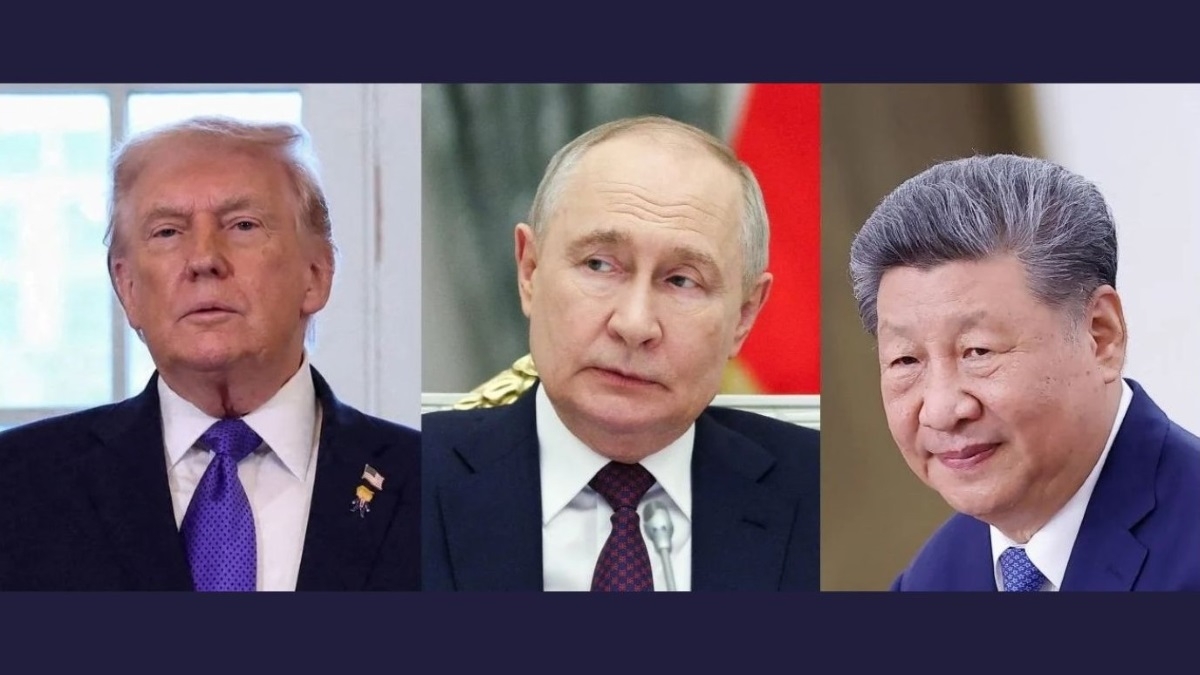
Chinese President Xi Jinping, US President Donald Trump, and Russian President Vladimir Putin will meet on the sidelines of the 33rd APEC Economic Leaders’ Week in Shenzhen.
A historic meeting
The first-ever face-to-face trilateral meeting was initiated by President Trump two months ago and was quickly accepted by Beijing and Moscow. The meeting of the three global powers has attracted close worldwide attention.
China's Foreign Ministry says the three heads of state will exchange views on world peace and the stability of major-country relations, adding this event is of "groundbreaking significance".
Some analysts are comparing the Shenzhen summit with the 1945 Yalta Conference, where the leaders of the US, the former Soviet Union, and the UK met to plan the end of World War II and the post-war world order. Many others, however, say the Shenzhen summit is unlikely to have the same far-reaching impact as Yalta, given today’s different global context and balance of power.
This week’s trilateral meeting will highlight China’s international standing and approach to global affairs.
Chim Lee, a senior analyst specializing in China's energy, artificial intelligence, and macroeconomic issues at the Economist Intelligence Unit in the UK, said: “This is quite an unusual meeting from China's perspective. China has been quite happy dealing with Russia and the US separately, but not together. But it has seen that there is a strong desire from the US and Russia to engage in this dialogue, so China has agreed to it because it will provide a spectacle and will help to stabilize ties with Russia and the US.”
Jonathan Czin, a Chinese expert at the Brookings Institution, said President Trump has sent a clear message that he is prioritizing his foreign policy legacy during the final two years of his term, rather than focusing on relations with allies.
“I think what will be more important than the substance of this meeting is going to be the subtext, and I think the subtext for a lot of US allies and partners, especially in East Asia and in Europe, will be that the Trump administration is focused on conciliating the other two leaders. I think that's going to be the main takeaway,” said Czin.
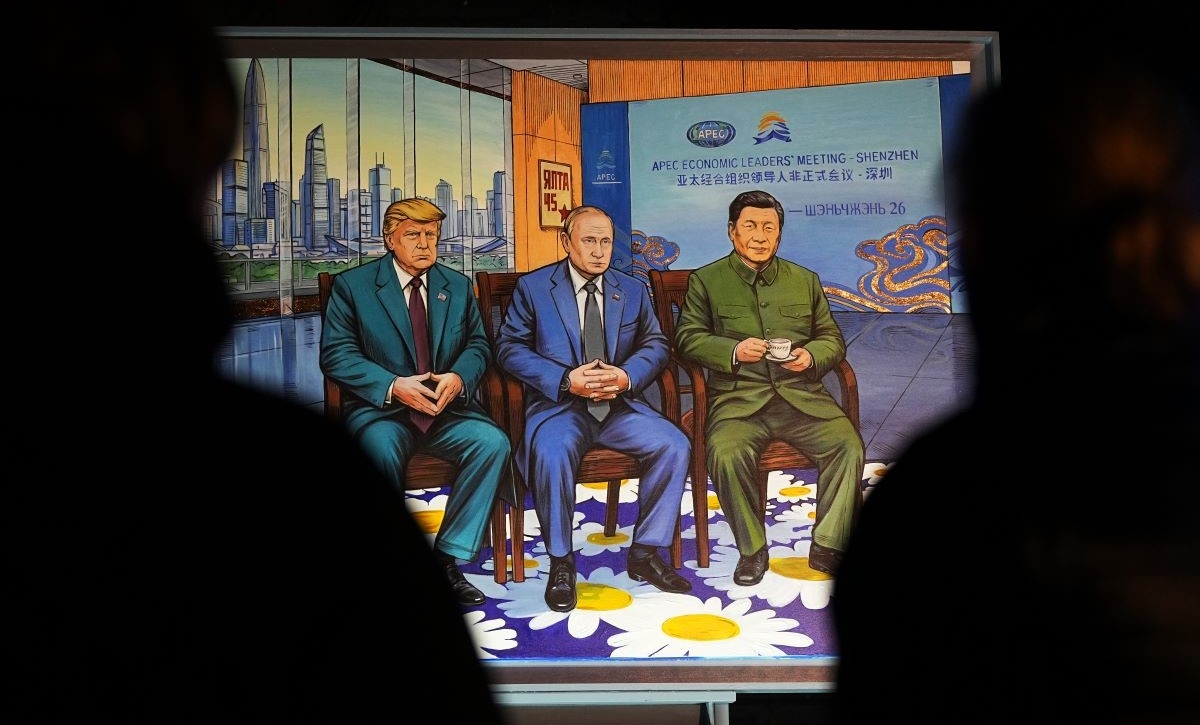
Some expectations
Although a major breakthrough may be unlikely, the US–Russia–China trilateral meeting could advance efforts to address some of the world's major challenges. The White House says President Trump will discuss the reduction of nuclear weapons in the world. That would be a significant development, particularly as the US-Russia New Strategic Arms Reduction Treaty (New START) expired in February, ending legally binding limits on the two largest nuclear arsenals. Successive US administrations have sought to bring China into trilateral discussions with Russia on nuclear arms reductions. But Beijing has consistently resisted joining trilateral nuclear negotiations, arguing that its nuclear arsenal is significantly smaller than those of the US and Russia.
UN Secretary-General Antonio Guterres said: “If there is a denuclearization program, we’re ready to be fully engaged in that and contribute to make it a success. But, of course, that’s what we’d like to see. It's not guaranteed that we'll get there.”
The three leaders will discuss the conflicts in the Middle East and Ukraine, topics that President Trump hinted at in media interviews before leaving for Asia.
Thitinan Pongsudhirak, a professor of political science at Chulalongkorn University in Thailand, said: “When you see Putin in a room like this, it'll mean something for the Russia-Ukraine war. I think Trump wants to see the winding down of that war, and I think there may be some leverage from China.”
The three leaders will also discuss trade, tariffs, AI, and the Korean Peninsula, although those are unlikely to be priorities.