







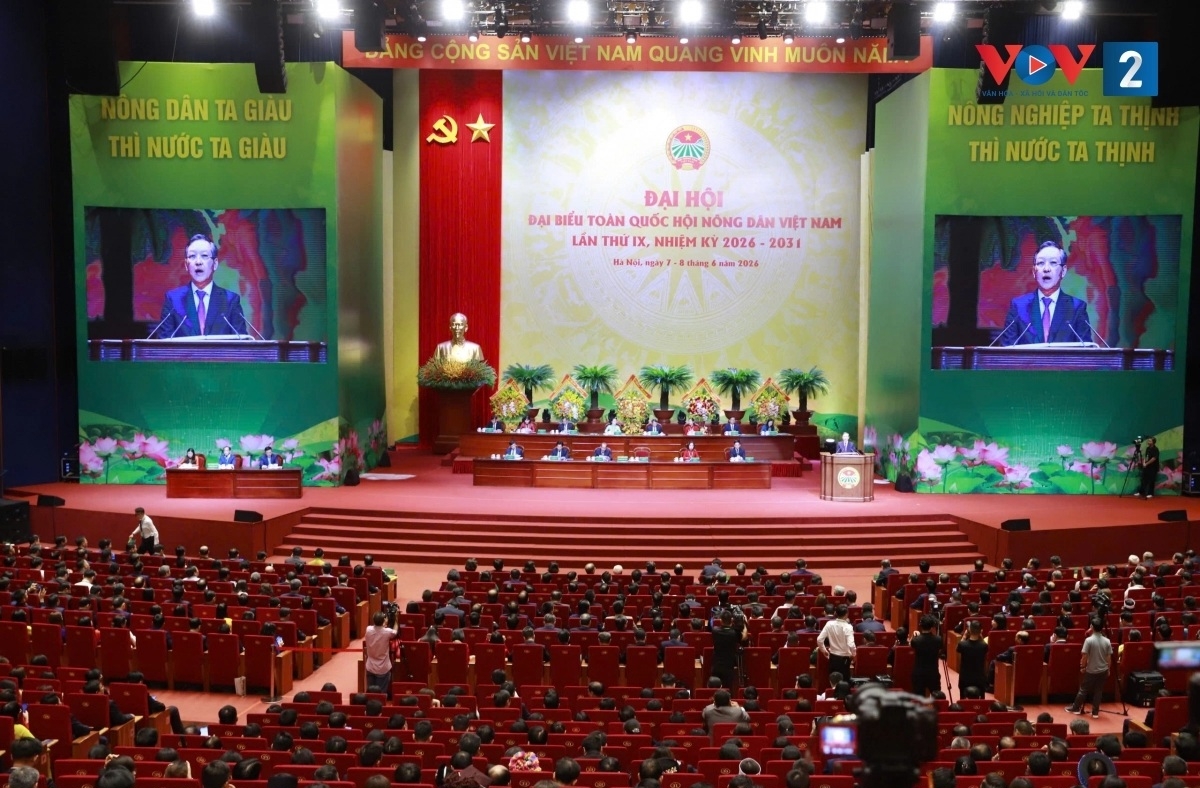
The 14th National Party Congress’s documents emphasize the goal of building a modern, comprehensively developed Vietnamese farmer class that is resilient, self-reliant, ambitious, and capable of playing a central role in agricultural and rural economic development and in building prosperous new-style rural areas.
Agriculture, farmers and rural areas: strategic pillars of development
Farmers, agriculture, and rural communities have long played a vital role in Vietnam’s renewal, national development, and defense and are a fundamental driver of socio-economic growth.
Agriculture guarantees food security, sustains the livelihoods of millions of households, generates significant export revenues, preserves rural cultural values, and safeguards the nation’s ecological landscape. Under the Party’s leadership, Vietnam has become one of the world’s top three rice exporters, a historic achievement that helped establish the economic, political and social foundations for Vietnam’s renewal and development.
Today, Vietnamese agricultural products are exported to more than 200 countries and territories. Some agricultural commodities have earned billions of dollars in export, placing Vietnam among the world’s leading agricultural exporters.
Farmers, a substantial force in society, account for more than one-third of the national workforce. The farming community is a major source of labor for other economic sectors, and rural areas continue to offer significant potential for investment, resource mobilization, and market expansion.
A new mindset for a new era
Agriculture has always been one of Vietnam’s most important economic sectors. Throughout the nation’s history, it has had a direct and profound impact on national stability and development, generated major foreign-exchange earnings, and enhanced Vietnam’s international standing.
However, the sector now faces new challenges, with increasing areas of farmland being left uncultivated as many rural farmers abandon agriculture due to low, unstable incomes.
To address these challenges, Vietnam is undertaking a strategic shift, from viewing agriculture purely as production to developing it as a comprehensive agricultural economy, with farmers placed firmly at the center of the transformation.
Key policy documents, including Resolution 19 on agriculture, farmers, and rural development through 2030 with a vision to 2045, as well as the documents of the 14th National Party Congress, affirm that farmers are the driving force and the central beneficiaries of development.
The overarching goal is to build a modern, knowledgeable, and well-rounded farmer class. In today’s world, farmers must do more than cultivate crops. They need to understand value chains, embrace digital technologies, tell the stories behind their products, and build personal and community brands.
The role of the Vietnam Farmers’ Union is being redefined to help members navigate this new ecosystem of knowledge, technology, and markets.
Bui Thi Thom, Vice Chairwoman of the Union, said: “One of our four breakthrough priorities is to help successful farmers expand their businesses and establish agricultural enterprises. We will focus on training and equipping them with the skills needed to become leaders of cooperatives and small and medium-sized enterprises. At the same time, we will strengthen financial support through the Farmers’ Support Fund and bank credit programs, while providing guidance and assistance for farmers seeking to establish businesses.”
Agriculture is one of Vietnam’s comparative advantages, an important national resource, and an indispensable way to ensure sustainable development.
Rural areas are becoming the front line of innovation and transformation. Empowered by knowledge, resilience, and ambition, Vietnam’s farmers are poised to play an even greater role in shaping the nation’s future and writing the next chapter of its development story.


