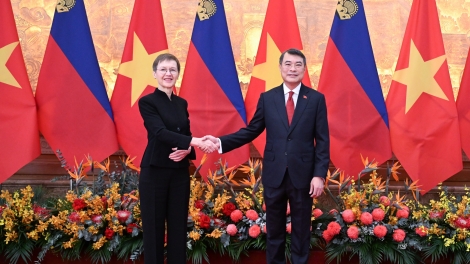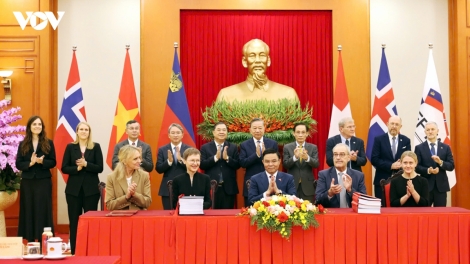




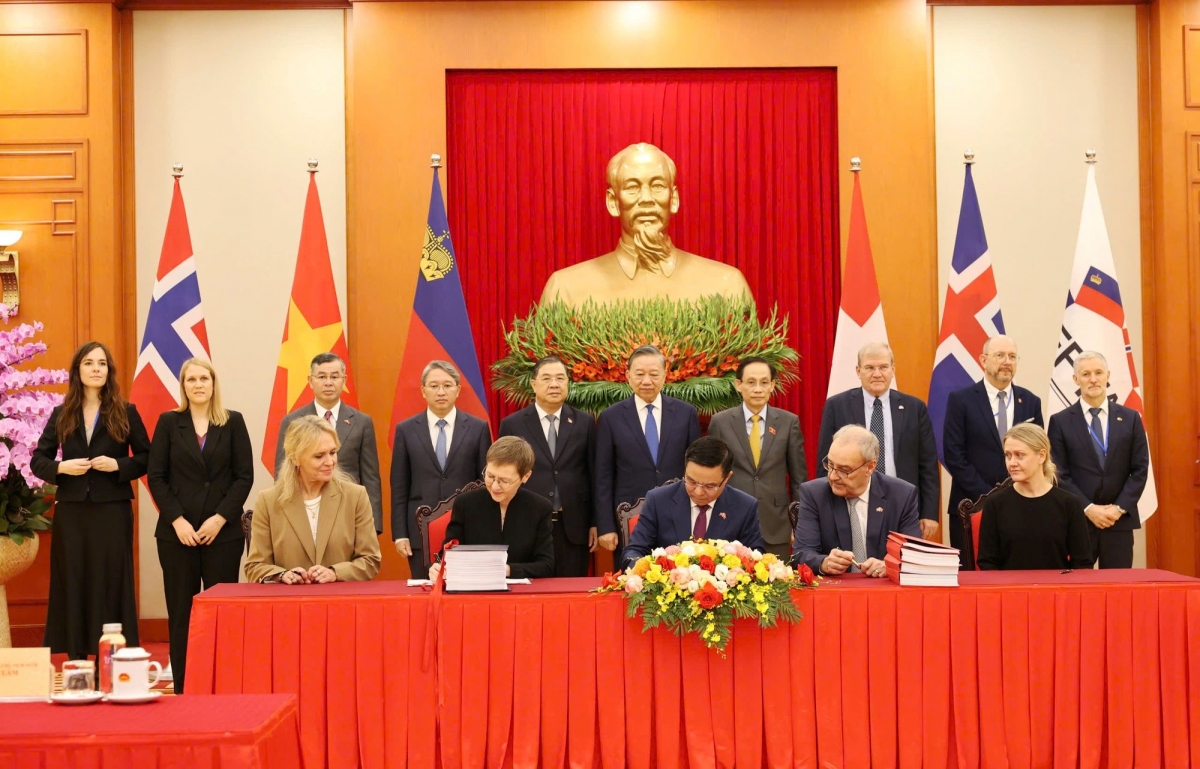
The EFTA comprises leading economies in innovation, finance, and high technology. The Vietnam-EFTA Free Trade Agreement marks a milestone in Vietnam’s efforts to expand its network of free trade agreements and comprehensively connect the country with Europe.
A milestone in Vietnam–EFTA trade relations
The pact demonstrates the commitment of all parties to solidify economic ties based on shared rules and opens a bright prospect for bilateral trade. For Vietnam, this is a step forward in expanding its partnerships with European nations. For the EFTA, the agreement provides an opportunity to deepen its presence in the Southeast Asian market.
"The free trade agreement between the EFTA states and Vietnam is signed with a backdrop of strengthening cooperation between EFTA states and Vietnam. We are like-minded countries. There are a lot of things happening, a lot of headwinds in international trade. I'm glad that we are together on the basis of rules based international open system so that we can promote trade and investment together, not only for a couple of years ahead, but for our next generation," Luong Hoang Thai, Deputy Minister of Industry and Trade, said.
Guy Parmelin, the President of Switzerland said, "This agreement is exceptionally vital within a shifting global geopolitical landscape. It enables EFTA members, particularly Switzerland, to diversify international ties and forge new global partnerships. For Vietnam, it creates ideal conditions to reinforce relations with EFTA members."
Astrid Bergmål, the State Secretary of Norway, said, "The FTA will bring immediate benefits for businesses both in Vietnam and in Norway. It's also very good because it complements the green partnership that Norway and Vietnam already have established. I really believe that this can be the start point of many new opportunities for many Norwegian businesses in Vietnam."
Unlocking broader scope for cooperation
Over the past decade, economic, trade, and investment cooperation between Vietnam and EFTA countries has expanded robustly, with annual bilateral trade averaging 2 billion USD and surging to 5.3 billion USD in 2025. EFTA investors have established a strong presence in Vietnam’s key sectors, such as manufacturing, food processing, pharmaceuticals, energy, and technology, and are increasingly targeting innovation, high-tech projects, logistics, and precision engineering.
Economist Le Duy Binh, Director of Economica Vietnam, said signing this agreement underscores Vietnam’s strong commitment to international integration and rules-based free trade.
"The agreement will help Vietnam diversify its supply chains, both export markets and production inputs. Vietnam will have new opportunities to access diverse sources of technology, raw materials, auxiliary components, pharmaceuticals, and industrial inputs for domestic manufacturing and processing, thereby mitigating risks," he said.
The Vietnam-EFTA FTA contains comprehensive commitments on goods trading, tariffs, technical barriers, sanitary and phytosanitary measures, customs procedures, among others.
"I hope a new free trade agreement can bring collaboration and sharing and cooperation in the area of seafood trade that we have not utilized as much as today. And hopefully in the future Norwegian seafood businesses can set up in Vietnam together with local partners, processing for instance, to create jobs and opportunities locally here," Ashild Nakken, Regional Director for Southeast Asia at the Norwegian Seafood Council, said.
The agreement opens an important new framework for cooperation between Vietnam and European countries known for their technological prowess, innovation, and product quality. Turning commitments into practical gains will depend on businesses from both sides actively seeking out partners to navigate market standards and cultivate long-term collaboration.