



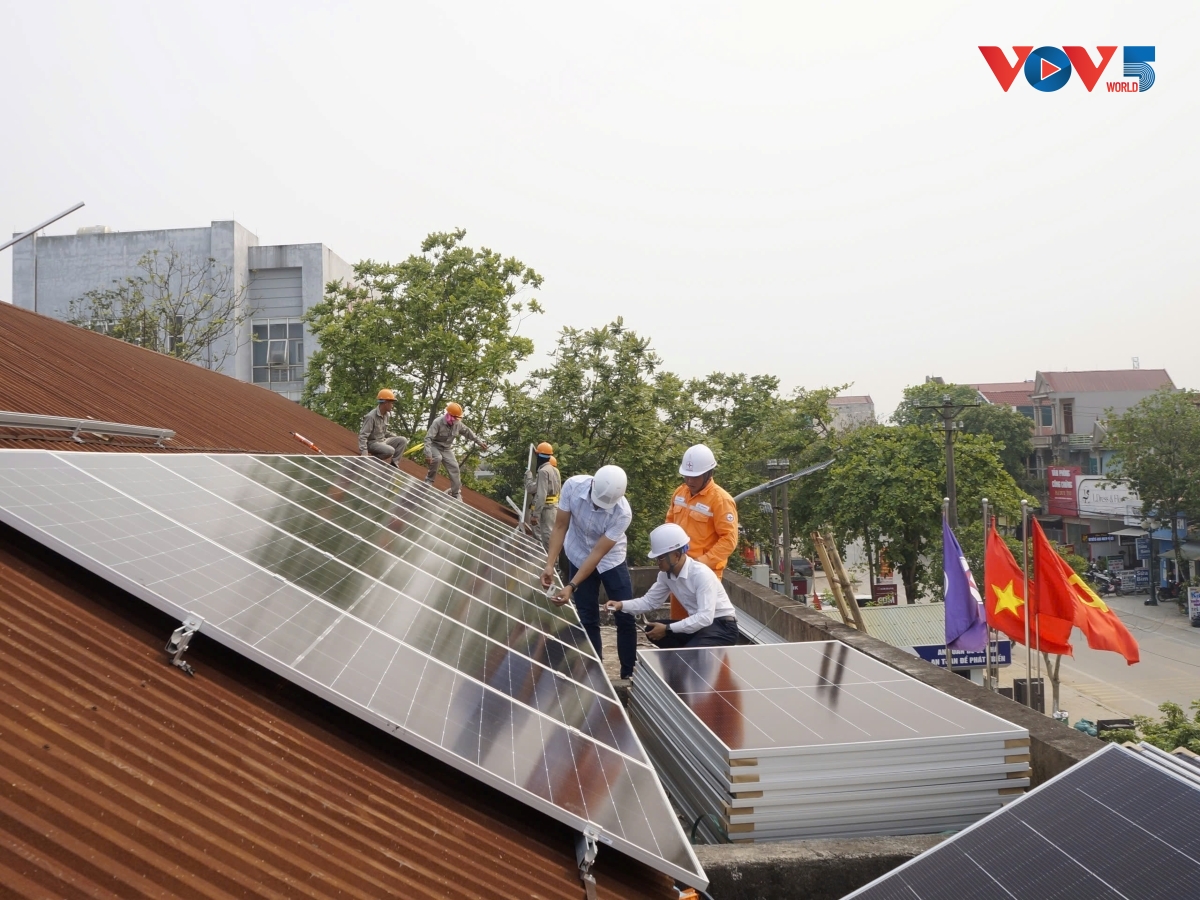
Located in the north central region with high temperatures and abundant sunlight, Thanh Hoa province has favorable conditions for rooftop solar power. Le thi Nga of Hac Thanh ward says her family has used rooftop solar for five years, with clear benefits.
“Since I installed solar power, my monthly electricity bill has been halved. I can sell back roughly 20% to the power company. My 3.1 kilowatt-peak system powerstwo air conditioners, a fridge, and a TV. In the past, I paid 40 to 60 USD per month. Now it’s only 24 USD," Nga told VOV.
By installing rooftop solar system, households and businesses gain greater energy autonomy and pay less for electricity consumption. Solar panels also provide an added layer of thermal insulation for buildings. With investment costs dropping sharply and installation now quick and easy, users can tap into a sustainable source of clean energy.
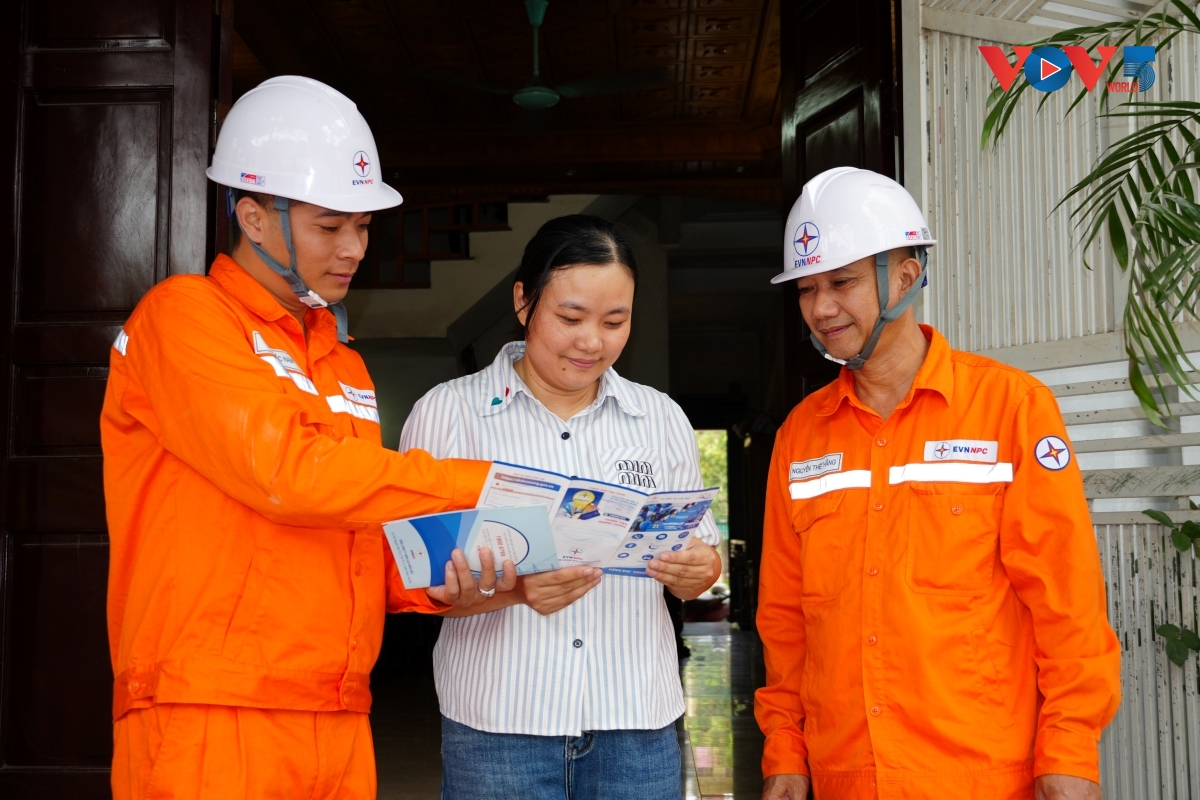
Le Thanh Binh, Deputy Director of the Thanh Hoa Power Company, said that in addition to our energy-saving program, all highly value solar installation. "In the future, we’ll encourage customers to install solar panels at public agencies and factories. All Thanh Hoa Power employees have been mobilized to participate in the RSP program, which is being implemented across all provincial electricity branches," Binh added.
Rooftop solar power is now rapidly expanding beyond Thanh Hoa as installation costs have fallen 40-50% compared to 5 years ago. Energy expert Ha Dang Son said, “RSP offers many advantages. It’s clean, easy to install, has a fast payback period, and supports the Government’s climate commitments. Its peak generation coincides with hot weather, helping ease pressure on the grid during periods of high cooling demand."
"But it’s weather-dependent and not a fully controllable source. Unregulated large-scale deployment could destabilize the distribution grid or cause local outages. Combining RSP with Battery Energy Storage Systems (BESS) can help balance supply and demand and provide backup during peak periods," Son noted.
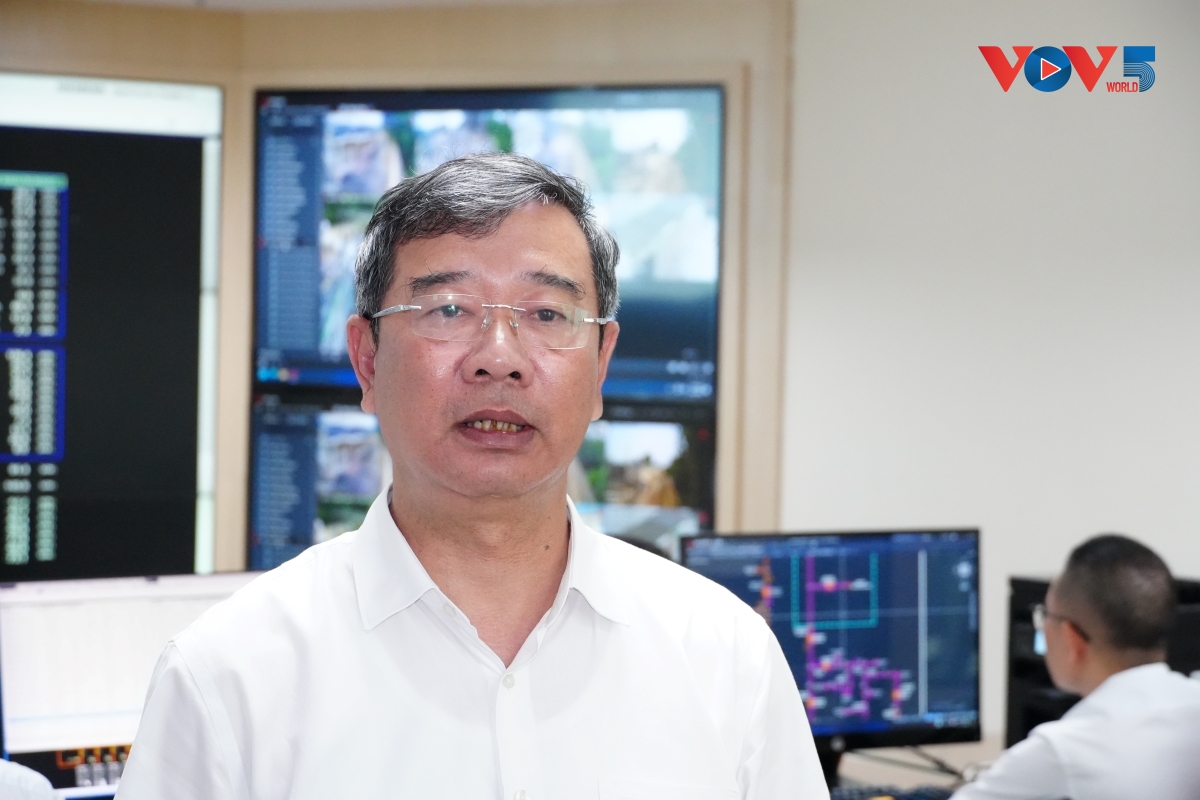
The Prime Minister’s Directives 09 and 10 on efficient energy use underscore energy transition as a way toensure security amid “double-digit” growth aligned with sustainable development goals. Tran Hoai Trang, Deputy Director of the Electricity Regulatory Authority at the Ministry of Industry and Trade, said Power Development Plan 8 has set out a target that 50% of office buildings and 50% of households will use self-produced rooftop solar by 2030.
Rooftop solar has a critical role in safeguarding energy security. The model has the advantages of rapid deployment, use of existing rooftop space, and on-site consumption that reduces the need for any transmission investment.
As solar technology becomes more efficient and affordable, rooftop solar power is expected to play a key role in strengthening the power system and mitigating electricity shortages in the short and medium term, Trang said. She added, “To fully tap RSP, beyond upcoming incentives, we must develop regulations to ensure stable system operation. The Ministry of Industry and Trade will propose policies to integrate BESS into rooftop solar system to enhance stability and supply autonomy.”
By 2030, if 14 million households participate in electricity generation into the grid, with an average capacity of 3 kilowatt-peak per household, rooftop solar power could account for 12% of total system capacity. This vast, locally consumed energy will minimize transmission losses and play a pivotal role in securing economic growth.