(VOVWORLD) - Located along the Chao Phraya River on the edge of Bangkok’s Chinatown, Song Wat Road may be short, but offers one of the city’s most compelling blends of heritage and modern creativity. Once a busy trading street lined with spice merchants and warehouse shophouses, it is now home to artisanal shops, minimalist cafés, street art, and carefully preserved architecture. This week’s Culture Rendezvous takes you to Song Wat—often described as an open-air museum and one of Bangkok’s most fascinating creative districts.
Just a short walk from Talad Noi, Bangkok’s oldest neighborhood, Song Wat has become one of the capital’s trendiest creative streets. Its appeal lies in the contrast: old warehouses and traditional shopfronts stand side by side with youthful businesses and contemporary art spaces.
Historically, Song Wat was a major commercial hub where imported goods arrived via the river. Over time, communities of different ethnic and religious backgrounds settled here, forming a neighborhood known for coexistence and cultural exchange.
 Masjid Luang Kocha Itsahak — a European-style mosque dating back to the reign of King Rama V — tucked away in a small alley off Song Wat Road. (Photo: Ngoc Diep) Masjid Luang Kocha Itsahak — a European-style mosque dating back to the reign of King Rama V — tucked away in a small alley off Song Wat Road. (Photo: Ngoc Diep) |
A multi-layered cultural space
Walking along Song Wat today feels like moving through layers of culture and time. The architecture tells the story. Shophouses sit beside mosques, shrines stand near Buddhist temples, and unusual historic buildings peek out between renovated cafés.
Daily life and cuisine reflect the same diversity, and contemporary artists draw inspiration from the neighborhood’s heritage to create works that respect the past while moving forward.
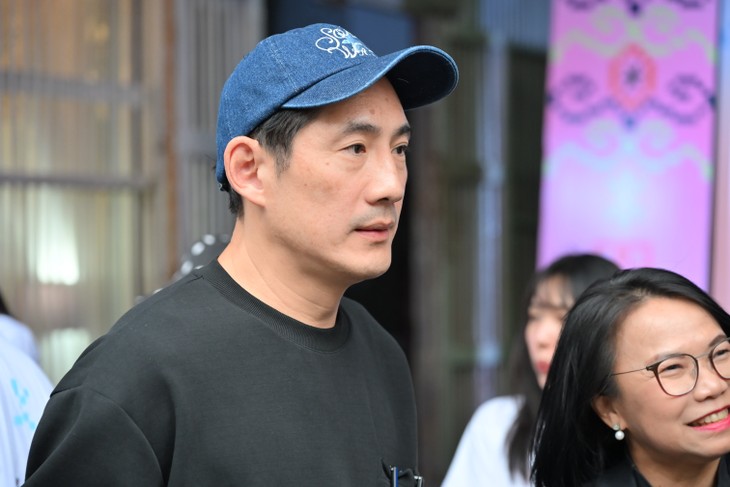 Kiattiwat Srichanwanpen, founder of PLAY Arthouse in Song Wat (Photo: Ngoc Diep) Kiattiwat Srichanwanpen, founder of PLAY Arthouse in Song Wat (Photo: Ngoc Diep) |
Kiattiwat Srichanwanpen, founder of PLAY Arthouse and a lifelong resident, has watched Song Wat transform itself through several phases. Now part of the area’s management team, he says the coexistence of long-established businesses and creative newcomers makes the street unique in Bangkok.
"We have old business and new business. All blend together, it’s different from other places in Bangkok,” Kiattiwat said, adding, “Right now, everyone loves vintage. They want to recall when they were young. And here, right now, we have a lot of food, culture, art, and architecture. Also, we have fashion. That’s why I think this is the one and only place everyone should visit if you come to Bangkok."
Kiattiwat admits that rapid tourism growth brings management challenges, but the community is working toward sustainable development. Currently about 70% of visitors are foreign tourists, while Thai visitors account for 30%.
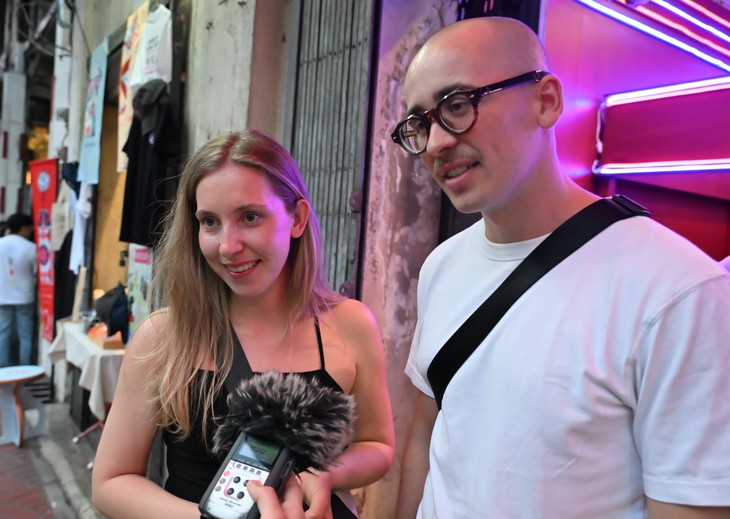 Laura Westrum and Stephan Wolff, visitors from Germany, explore Song Wat before leaving Thailand. (Photo: Ngoc Diep) Laura Westrum and Stephan Wolff, visitors from Germany, explore Song Wat before leaving Thailand. (Photo: Ngoc Diep) |
German travelers Laura Westrum and Stephan Wolff have returned to Song Wat for the second time.
"Today's our last day and we decided to return because it's really nice, so colorful, vibrant, full of life, and a lot of young people, and it still has the retro-chic of Bangkok," said Laura.
Meanwhile Stephan said, "What I like is that it wasn't made for tourists. In each shop, you can see that the owners put their heart into the whole shop and it’s really unique. Really, when you come there, everybody is just like, 'Do you want to try this? Do you want to see this?' It's very well-curated, I would say."
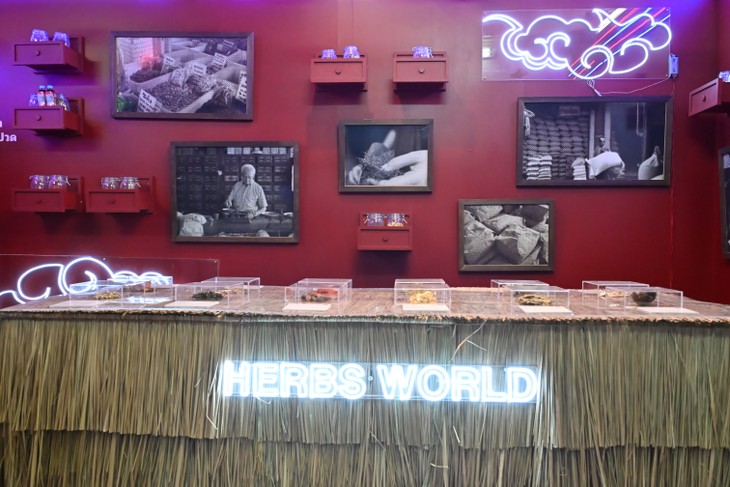 A space introducing the origins and history of Thailand’s traditional herbs at Song Wat (Photo: Ngoc Diep) A space introducing the origins and history of Thailand’s traditional herbs at Song Wat (Photo: Ngoc Diep) |
A living canvas shaped by people and time
Song Wat’s revival is not the result of a single project but of ongoing cooperation between young residents, local businesses, and authorities. Initiatives such as the annual Awakening Song Wat light festival and support from Bangkok’s municipal administration aim to connect heritage preservation with contemporary urban life.
After the pandemic, Kiattiwat and fellow entrepreneurs launched the “Made in Song Wat” initiative. This promotes the idea that preservation means allowing the past to live within the present rather than freezing it. Through art events, guidebooks, and social media campaigns, the community has successfully introduced the neighborhood to a wider audience while maintaining close cooperation with long-time residents.
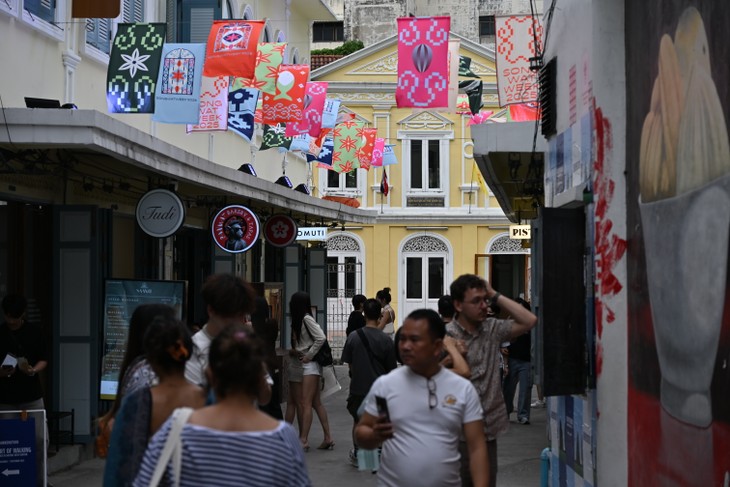
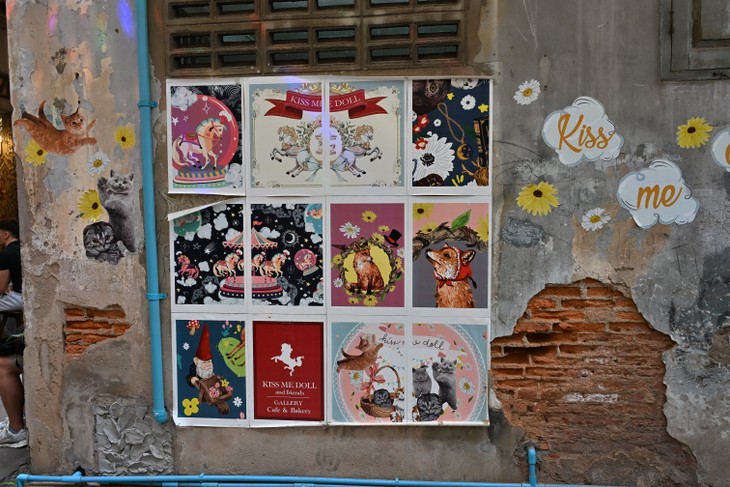 Song Wat, a premier example of old-meets-modern in Thailand (Photo: Ngoc Diep) Song Wat, a premier example of old-meets-modern in Thailand (Photo: Ngoc Diep) |
Beyond its stylish façades, Song Wat’s enduring charm lies in how nostalgia and innovation coexist. And for visitors ready to explore this living heritage themselves, Song Wat is best experienced on foot. Here are a few stops you shouldn’t miss.
Song Wat is perfect for a walking tour. If you’re planning a visit, here are some suggested stops:
Start at the European-style mosque Masjid Luang Kocha Itsahak, then visit the nearby Lao Pun Tao Kong shrine, a Taoist landmark closely tied to Bangkok’s oldest Chinese–Thai school.
Experience the retro-chic contrast of minimalist cafés and art galleries, such as PLAY Arthouse, nestled inside century-old spice warehouses and among “Xiang Gong” second-hand auto parts shops.
Finish your journey by tasting the area’s heritage through century-old Chinese bun recipes or browsing local shops that are thoughtfully curated and full of character.
Song Wat is a living canvas where the past is not frozen but continues to thrive in the present.