(VOVWORLD) - A name is one of the first things we receive in life and one of the last things that remain after we’re gone. In his latest book “Full Names”, Tran Quang Duc, a cultural researcher, turns names into a revealing lens through which Vietnamese history and human identity are re-examined.
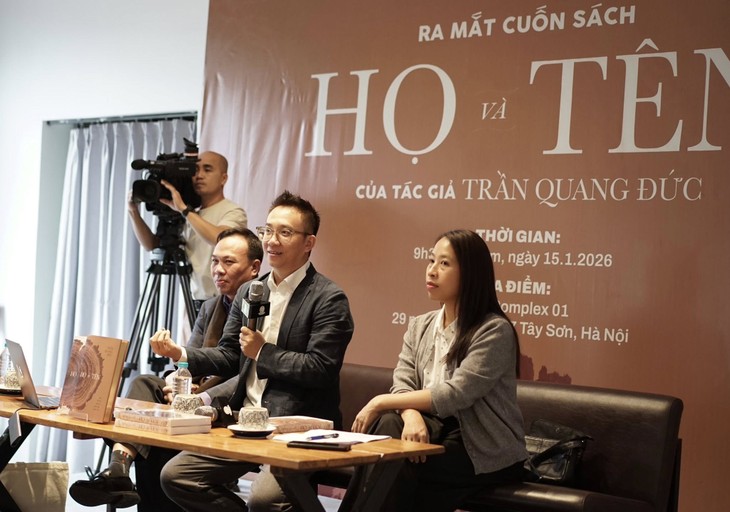 Researcher Tran Quang Duc (C) at the book launch in Hanoi on January 15, 2026 (Photo: Nha Nam) Researcher Tran Quang Duc (C) at the book launch in Hanoi on January 15, 2026 (Photo: Nha Nam) |
Published by Nha Nam, “Full Names” follows Duc’s “A Thousand Years of Robes and Hats” and “The Story of Tea”.
The first explored personal appearance and social order. The second dealt with cultural storytelling. The latest work moves closer to what he considers the core – the human being.
For Duc, clothing, tea, and names are surfaces beneath which lie the inner lives of people—the way they think and relate to the world.
“Full Names” shows how naming practices reflect deep transformations in Vietnamese society across centuries, revealing an inseparable link between personal identity and historical context.
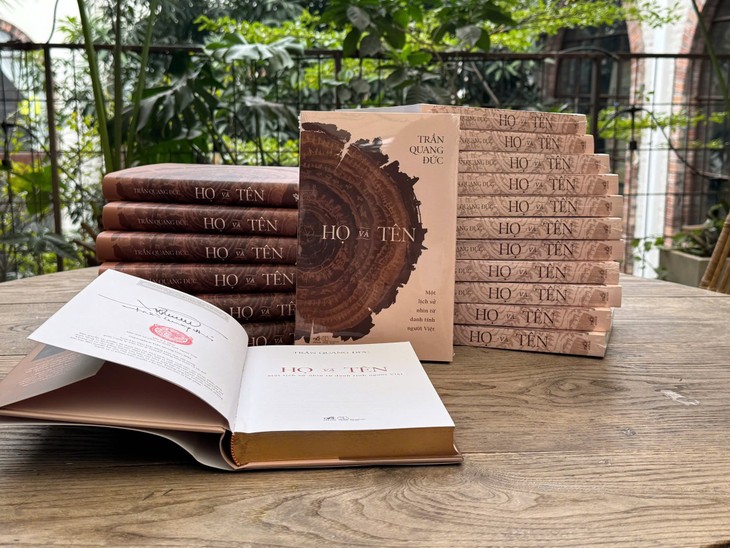 After 10 days of release, 3,000 copies of “Full Names” have reached readers nationwide. (Photo: Nha Nam) After 10 days of release, 3,000 copies of “Full Names” have reached readers nationwide. (Photo: Nha Nam) |
Duc says that during the Ly-Tran period between the 11th and the 15th centuries, Vietnamese names often consisted of two meaningful characters forming a single semantic unit. These names conveyed moral ideals and a worldview rooted in order and permanence. But from the 16th century onward, prolonged conflict and fragmentation reshaped naming structures.
"In such a turbulent society, what protected people was not the state, but the clan. The lineage had to bind together into a unified entity, to the extent that simply by looking at your name, I would immediately know which clan you belonged to in order to survive," said Duc.
This context gave rise to the familiar surname–middle name–given name structure. The middle name served as a vital connector, linking individuals to extended families and ancestral lines.
Dr. Pham Van Anh, Deputy Director of the Institute of Literature, praises “Full Names” for its innovative approach—using intimate, everyday details to illuminate broader historical questions.
“From something as close to us as names, the book opens up much larger questions about history, culture, and society across different eras. This is a micro-historical approach that begins with the small, seemingly mundane details of everyday life, but stands as an enormous explanatory power,” Anh commented.
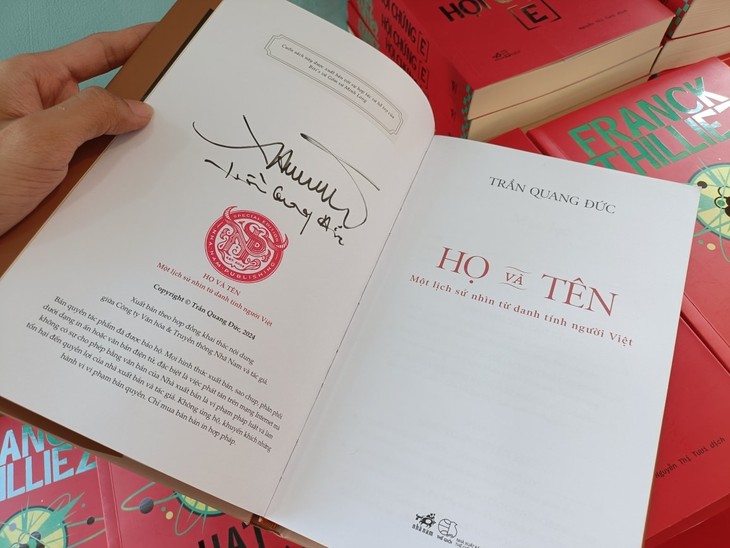 Photo courtesy of Tran Quang Duc Photo courtesy of Tran Quang Duc |
“Full Names” also examines contemporary naming trends, from 4-character names to foreign-sounding or purely aesthetic choices. Duc observes that modern names often function as expressions of individuality rather than carriers of inherited meaning.
He told VOV, "In the final chapter, I lean toward freedom, expanding the vision to show that everything we call 'surnames' or 'names' are ultimately imagined structures of the mind. We will realize that we always carry on our shoulders the legacy of countless ancestors from numerous regions, cultures, and languages."
Through the seemingly simple question of what we are called, “Full Names” opens a rich conversation about who we are, where we come from, and how identity continues to be shaped across generations.
“Full Names” is available at bookstores nationwide and on major e-commerce platforms, priced at 12 USD.